
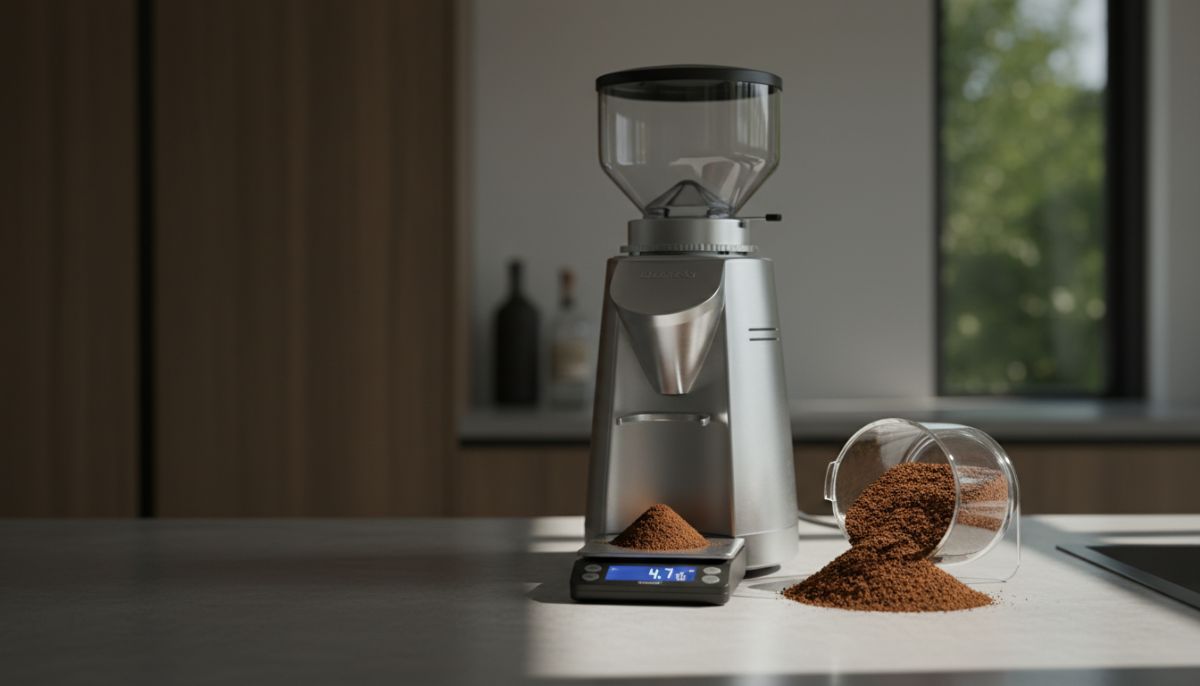
Is your coffee grinder stealing your beans? Learn what grinder retention is, how it affects espresso flavor, and actionable steps to minimize waste for a better brew.
Key Takeaways
- Definition: Grinder retention refers to the coffee grounds that get stuck inside your grinder after grinding, which can stale and mix with future brews.
- Impact: High retention leads to inconsistent dosing and a mix of fresh and stale coffee, negatively impacting flavor clarity.
- Solutions: You can manage retention through techniques like RDT (Ross Droplet Technique), purging, or upgrading to single-dosing grinders.
- Maintenance: Regular deep cleaning is essential to prevent oil buildup and excessive retention.
You buy a bag of premium specialty beans, check the roast date, and prepare for a morning ritual that rivals your favorite café. You weigh 18 grams, dump them in the hopper, and grind. But when you weigh the output, your portafilter only holds 17.2 grams. Where did the rest go?
Or perhaps worse: you extract your first shot of the morning, and it tastes flat, bitter, or noticeably faster than the perfect shot you pulled yesterday afternoon. The culprit in both scenarios is often the same: grinder retention.
While much of the conversation in home espresso focuses on machines, the grinder is arguably more critical. Understanding retention is vital for anyone looking to stop wasting coffee and start brewing consistently.
What Exactly Is Grinder Retention?
Grinder retention is the amount of ground coffee that remains inside the grinder—stuck in the chute, between the burrs, or in the grinding chamber—after the motor stops spinning. It is essentially the difference between the weight of whole beans you put in and the weight of the grounds you get out.
Retention generally falls into two categories:
- Exchange Retention: This occurs when old grounds from a previous session are pushed out by new fresh grounds. You might get 18g out for 18g in, but 1g of that output is stale coffee from yesterday.
- Total Retention: The total amount of coffee permanently lodged in the nooks and crannies of the machine, which only comes out during a deep clean.
Why Retention Destroys Consistency
If your grinder retains 2 grams of coffee, your morning espresso contains 2 grams of grounds that have been sitting and oxidizing for 24 hours. Oxidized coffee loses its volatile aromatics and CO2, leading to flat flavors and reduced crema.
Furthermore, retention messes with your extraction variables. Dialing in espresso requires precision. If you are struggling to maintain a consistent ratio, check out our guide on how to dial in espresso ratios and yield. If your output weight fluctuates by 0.5g to 1g due to retention, your shot times will wander, and your taste profile will suffer.
Hopper vs. Single Dosing: The Design Battle
Traditionally, commercial grinders utilized large hoppers. In a busy café environment, a few grams of retention doesn’t matter because the grinder is running constantly; the “old” coffee is never more than a few minutes old. However, for the home barista making one or two drinks a day, that retention sits overnight.
The Rise of Single Dosing
To combat this, the market has shifted toward single-dosing grinders designed with “zero retention” in mind. These grinders usually feature:
- Steep Angles: Allowing gravity to clear the chute.
- Bellows: To puff air through the chamber and dislodge grounds.
- Direct Paths: Minimizing the distance between burrs and the basket.
Interestingly, manual grinding is often the ultimate low-retention solution. Because they lack complex chutes and electronics, many hand grinders naturally output exactly what you put in. If you are debating between convenience and raw performance, read our comparison on high-end hand grinders vs. electric options.
Burr Geometry and Retention
Does the shape of your burrs affect how much coffee gets stuck? Generally, yes. Flat burrs, which spin horizontally, rely on centrifugal force to eject grounds. Depending on the carrier design and sweepers, they can sometimes retain more coffee than conical burrs, which often benefit from gravity assisting the flow.
However, the difference in flavor profile between the two is distinct. While minimizing retention is key, you shouldn’t choose a grinder solely on that metric if the flavor profile doesn’t suit your palate. Learn more about how geometry impacts taste in our guide to flat vs. conical burrs.
How to Minimize Retention on Your Current Grinder
You don’t need to buy a new $2,000 grinder to fix this issue. Here are three strategies to manage retention on standard equipment.
1. The Purge Method
The simplest, albeit most wasteful, method is purging. Before your first shot of the day, grind a small amount of beans (2-3 grams) and discard them. This pushes out the stale grounds sitting in the chute and primes the chamber with fresh coffee. This ensures that what lands in your basket is fresh, respecting the coffee roast dates and integrity of the beans.
2. RDT: The Ross Droplet Technique
Static electricity is a major cause of retention, causing grounds to cling to the exit chute. RDT involves adding a tiny droplet of water (or a spray) to your beans before grinding. The moisture reduces static, allowing grounds to fall freely. Note: Be cautious with this technique if your grinder has non-stainless steel burrs susceptible to rust.
3. Bellows Modifications
Many aftermarket companies now create silicone bellows that fit onto the hoppers of popular grinders. Pumping the bellows at the end of the grind cycle forces air through the chute, expelling the retained grounds. It effectively converts a standard grinder into a single-dosing hybrid.
Maintenance and Deep Cleaning
Even with low-retention grinders, coffee oils and fines will eventually build up. This buildup can go rancid and even affect the alignment of your burrs over time. If your grinder isn’t aligned, retention can worsen as fines get trapped in uneven gaps. (See our guide on burr alignment and shimming for more).
To keep retention low, you must adhere to a schedule. A vacuum can remove loose grounds daily, but you need to open the chamber periodically. For a structured approach, follow our cleaning manifesto, which covers both machine and grinder maintenance schedules.
Conclusion
Grinder retention is a silent budget-killer and flavor-destroyer. Whether you are losing 0.5g of expensive geisha coffee per grind or drinking stale grounds from yesterday, it prevents you from getting the best out of your beans.
By understanding your grinder’s design, utilizing techniques like RDT, or perhaps upgrading to a single-dosing workflow, you can drastically improve the consistency and clarity of your espresso. Stop wasting coffee, and start tasting exactly what you paid for.
Frequently Asked Questions
For single-dosing grinders, anything under 0.1g or 0.2g is considered excellent (often called ‘zero retention’). For standard hopper grinders, retention can range from 2g to 5g, which requires purging.
Generally, no, provided you use a very small amount of water (a mist). However, if your burrs are made of high-carbon steel rather than stainless steel, they may be prone to rust if exposed to moisture frequently.
Purging clears out the ‘stale’ grounds that have been sitting in the chute since your last grind. This prevents oxidized coffee from mixing with your fresh grounds, ensuring a better tasting espresso.