
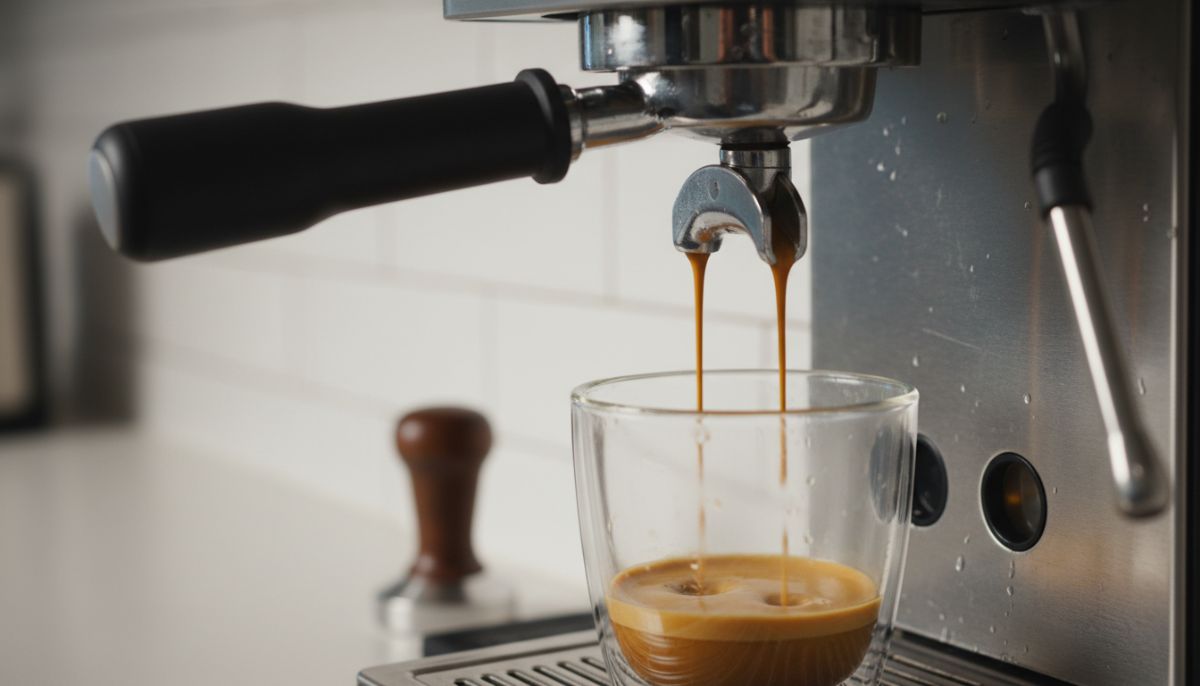
Is your espresso channeling without you knowing? Discover how a bottomless portafilter acts as the ultimate diagnostic tool to visualize your extraction, improve your puck prep, and perfect your shots.
Key Takeaways
- Visual Feedback: Bottomless portafilters allow you to see exactly how water flows through the puck, revealing flaws instantly.
- Identifies Channeling: They are the best tool for spotting spraying, spurting, and uneven extraction patterns.
- Improves Technique: The immediate feedback loop forces you to refine your distribution and tamping skills.
- Easier Maintenance: With no spouts to hide coffee oils, cleaning is faster and more effective.
There is a specific image that dominates the world of social media coffee: the mesmerizing, syrupy cone of espresso dripping from a naked basket. It is beautiful, satisfying, and undeniably photogenic.
However, the bottomless portafilter—often called a "naked" portafilter—is far more than a prop for Instagram. For the home barista pursuing the god shot, it is arguably the most important diagnostic tool in your arsenal.
When you use a standard spouted portafilter, the extraction is hidden. The liquid hits the bottom of the basket, funnels into a spout, and flows into your cup. It masks a multitude of sins.
By removing the floor of the portafilter, you expose the raw truth of your extraction. This guide explores why you should make the switch and how to read the signs your coffee is giving you.
What is a Bottomless Portafilter?
A bottomless portafilter is exactly what it sounds like. It is a handle and a ring holder for your filter basket, but the bottom metal floor and spouts have been machined away.
This modification exposes the bottom of the filter basket completely. When you pull a shot, the espresso emerges directly from the sieve holes of the basket and falls straight into your cup without touching any other metal surfaces.
Originally developed as a quality control tool for espresso machine technicians and competitive baristas, it has now become a staple for home enthusiasts who want to troubleshoot their brew.
The Diagnostic Power: Seeing the Unseen
The primary reason to buy a naked portafilter is diagnosis. Standard spouts homogenize the flow. Even if your shot is channeling severely on the left side, the spout collects the liquid and makes it look like a steady stream.
With a bottomless setup, you cannot hide. You will see exactly where the water is moving fast and where it is stalling. This visual data correlates directly with taste.
To understand what you are seeing, you need to know what to look for. If you see huge gaps in the flow or violent sprays, you are dealing with uneven water flow. For a deep dive into fixing this specific issue, read our guide on Channeling 101: How to Spot and Fix Uneven Water Flow.
Signs of a Perfect Extraction
When your puck prep is flawless, a bottomless extraction is a thing of beauty. Initially, you will see droplets forming evenly across the entire surface of the basket.
These droplets effectively sweat through the steel mesh. As pressure builds, they join together in the center to form a single, unified stream. This is often referred to as "tiger striping," where rich, dark oils and lighter crema merge in a striped pattern.
The stream should remain centered and steady throughout the shot. This indicates that the water is finding equal resistance across the entire bed of coffee.
Common Extraction Flaws Revealed
When things go wrong, the bottomless portafilter lets you know immediately. Here are the most common visual cues of a bad extraction.
1. The Spritz (Spurting)
This is the most dramatic and messy sign of trouble. A fine jet of hot espresso shoots sideways, spraying your machine (and sometimes your shirt).
Diagnosis: This is severe channeling. A crack or a pocket of low density exists in the puck. Water, being lazy, rushes through that hole under high pressure.
2. The Donut Effect
This occurs when the espresso extracts from the outer edges of the basket first, leaving a dry or slow-flowing dead spot in the center. It looks like a ring or a donut.
Diagnosis: This usually suggests that your tamper is slightly too small for the basket, or you are sealing the edges better than the center. It can also happen if you tap the side of the portafilter after tamping, breaking the seal between the puck and the basket wall.
3. The Multiple Streams
Instead of coalescing into one beautiful cone, the espresso rains down in two or three separate streams that never join.
Diagnosis: This indicates uneven distribution. One side of the puck is likely denser than the other. This is often solved by revisiting your distribution technique. For a detailed look at tools that help this, check out The Science of Puck Prep: Does the WDT Tool Really Matter?.
4. The Blonding Gusher
The flow starts dark but turns pale yellow and watery almost instantly, flowing very fast.
Diagnosis: Your grind is too coarse, or your dose is too low. The water is meeting little resistance. While you can see this with spouted filters, the naked filter shows you the lack of texture immediately.
Improving Your Puck Prep
Once the bottomless portafilter exposes your flaws, the next step is fixing them. The "naked" view usually forces home baristas to take puck preparation much more seriously.
If you are consistently seeing spurts or uneven flow, your first line of defense is the Weiss Distribution Technique (WDT). Breaking up clumps and fluffing the grounds ensures consistent density.
Furthermore, the basket itself plays a huge role. Standard stock baskets sometimes have inconsistent hole patterns which can look like channeling but are actually manufacturing defects. Many enthusiasts pair their bottomless handle with high-quality filters. You can learn more about this upgrade in our comparison of Stock vs. Precision Baskets.
Beyond Diagnosis: Other Benefits
While troubleshooting is the main draw, there are other practical advantages to going bottomless.
Increased Cup Clearance
Spouts take up vertical space. If you like brewing into tall travel mugs or have a machine with low clearance, a bottomless portafilter gives you an extra inch or two of height.
Easier Cleaning
Spouted portafilters are notorious for collecting stale coffee oils inside the metal elbow. Unless you soak them in detergent regularly, that rancid oil can taint your fresh shots. A bottomless filter has nowhere for oil to hide. A simple rinse and a wipe are usually enough. However, general machine hygiene is still vital—read our Cleaning Manifesto to keep the rest of your gear sparkling.
Thermal Mass Considerations
A bottomless portafilter has less metal. This means it heats up faster than a heavy, double-spouted brass handle. While thermal stability is complex, less metal mass can sometimes be beneficial for quick warm-ups.
The Learning Curve: Embrace the Mess
A word of warning to the uninitiated: your first few shots with a bottomless portafilter will likely be messy.
When channeling occurs, there is no spout to catch the spray. Hot coffee will hit the backsplash of your machine, the drip tray, and your counter. This is a rite of passage.
Do not be discouraged. This mess is the feedback you paid for. It is telling you exactly what needs to change. If you are struggling with taste despite fixing the visuals, you might be dealing with underextraction unrelated to puck integrity. In that case, review our guide on Why Your Espresso Tastes Sour.
Visual Feedback and Flow Control
If you own a machine with flow control capabilities (like an E61 group with a flow profiler), a bottomless portafilter is practically mandatory.
Flow control involves manipulating the water debit during the shot. To do this effectively, you need to see how the puck is responding in real-time. The visual feedback allows you to save a shot that might be channeling by lowering the flow rate to "heal" the puck. For those interested in advanced manipulation, see our Flow Control Explained article.
Conclusion
The bottomless portafilter is the mirror of the barista. It reflects your technique without flattery or concealment. While it can be frustrating to see your mistakes sprayed across the drip tray, it is the fastest route to better espresso.
By using naked extraction as a diagnostic tool, you stop guessing and start knowing. You learn to distribute better, tamp harder, and grind smarter. The result isn’t just a pretty video for social media—it is a sweeter, more balanced cup of coffee.
Are you ready to see the naked truth? Grab a bottomless portafilter, prepare your cleaning cloth, and start diagnosing.
Frequently Asked Questions
Directly, no. The portafilter handle itself doesn’t change the flavor. However, because it forces you to improve your puck preparation and eliminate channeling, the result is almost always a better-tasting, more evenly extracted espresso.
Not all portafilters are universal. While 58mm is a common standard (E61 style), the locking lugs (ears) vary in size, position, and thickness. You must buy a bottomless portafilter specifically designed for your machine model.
Spraying, or ‘spritzing,’ indicates channeling. This means water is finding a path of least resistance through a crack or low-density area in your coffee puck. You likely need to improve your distribution (WDT) or adjust your grind size.
It can appear thicker and more abundant because the espresso doesn’t slide down a spout, which can break some bubbles. However, the actual amount of CO2 released (crema) remains the same based on the beans and pressure.