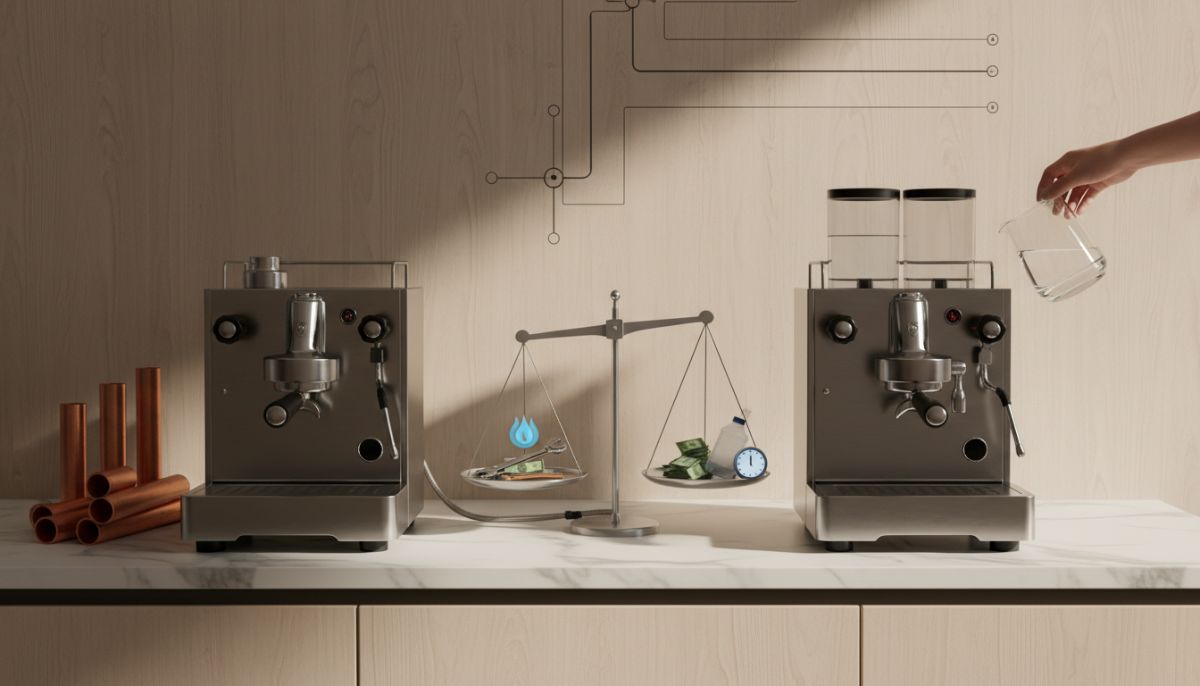
Tired of the ‘low water’ light flashing mid-shot? We break down the pros, cons, and costs of upgrading to a plumbed-in espresso machine versus sticking with a reservoir.
Key Takeaways
- Workflow Efficiency: Plumbed-in machines eliminate the need to manually refill tanks, preventing shots from being interrupted by low water levels.
- Line Pressure Benefits: Direct connection allows for natural pre-infusion using line pressure, which can improve extraction consistency.
- Installation Requirements: Plumbed machines generally require rotary pumps, filtration systems, and access to a water line, increasing initial setup costs.
- Flexibility: Reservoir machines offer plug-and-play simplicity and are easier to move, making them ideal for renters or those with limited counter space.
There is a specific kind of panic known only to the home barista. You have carefully weighed your beans, distributed your grounds, and tamped to perfection. You lift the lever or hit the brew button, and just as the first drops of liquid gold appear—the machine beeps. The pump cuts out. The low-water light flashes mockingly.
Your shot is ruined, and you are left holding an empty pitcher, wondering if there is a better way.
This scenario is the primary driver behind the debate: Plumbed-in vs. Reservoir. Should you stick with the plug-and-play simplicity of a water tank, or is it time to drill holes in your countertop for a direct water connection? While the convenience of never refilling a tank is the obvious selling point, the decision impacts your workflow, your wallet, and even the taste of your coffee.
The Reservoir (Pour-Over) Machine: Plug-and-Play Simplicity
Most home espresso machines, especially entry-level and mid-range models, come with a built-in water reservoir. This is the standard for a reason: it is accessible and requires zero infrastructure.
The Pros of Using a Reservoir
Portability and Flexibility: A reservoir machine can live anywhere there is a power outlet. If you rent your apartment or like to rearrange your kitchen frequently, a reservoir machine is your best friend. You aren’t tethered to a water line.
Lower Initial Cost: Generally, machines designed exclusively for reservoir use are cheaper. They often utilize vibratory pumps, which are smaller and less expensive than the rotary pumps required for direct plumbing. If you are working with limited counter real estate, check out our guide on the best espresso machines for small spaces to see how compact these units can be.
No Installation Headache: You unbox it, fill it, and brew. There is no need to call a plumber, buy braided hoses, or figure out how to drill through granite.
The Cons of Using a Reservoir
The Refill Dance: Depending on your consumption, you might be refilling that tank daily. If your machine is under low cabinets, dragging the unit forward to access the tank can be a tedious chore.
Hygiene and Maintenance: Standing water in a warm machine is a breeding ground for bacteria. Reservoirs can develop a slimy biofilm if not cleaned regularly. As detailed in our cleaning manifesto, the water tank requires weekly scrubbing to ensure your coffee doesn’t taste like a pond.
The Plumbed-In Machine: The Commercial Experience at Home
Plumbing in your machine brings the café workflow into your kitchen. It involves connecting the machine directly to your home’s cold water supply and, optionally, connecting the drip tray to a drain.
The Pros of Direct Connection
Seamless Workflow: The most obvious benefit is never seeing a “low water” light again. You have an infinite supply of fresh water. If you also plumb in the drain, you never have to carefully balance a full drip tray of dirty water on your way to the sink.
Silent Operation (Rotary Pumps): Almost all machines capable of being plumbed in use rotary pumps. Unlike the buzzing sound of a vibratory pump, rotary pumps are whisper-quiet. This is a significant quality-of-life upgrade, especially early in the morning. For a deeper technical comparison, read our analysis on rotary vs. vibratory pumps.
Line Pressure Pre-Infusion: This is the secret weapon of plumbed machines. Because the water is fed by your home’s pressure (usually 3-4 bar), you can open the grouphead without engaging the pump. This gently saturates the puck at low pressure before the full 9 bars hit.
This “blooming” phase reduces the chance of channeling and improves flavor clarity. It is particularly effective if you are struggling with inconsistent shots. To understand why even water flow matters, review our guide on spotting and fixing channeling.
The Cons of Direct Connection
Installation Complexity: You cannot simply hook a machine up to tap water. Chlorine and sediment will ruin the taste of your coffee, and limescale will destroy your boiler. You absolutely must install a filtration system inline. Understanding water chemistry is critical here; tap water is often the silent killer of high-end machines.
Immobility: Once it’s plumbed, your machine is a permanent fixture. Moving it requires shutting off valves and disconnecting hoses.
The Middle Ground: Switchable Machines
Many high-end prosumer machines, particularly those in the dual boiler category, offer the best of both worlds. They come with a reservoir but include the hardware to switch to a direct water connection later.
This is an excellent option for homeowners who aren’t ready to drill holes yet but want the option for the future. Machines like the Rocket R58, ECM Synchronika, or Profitec Pro 700 usually feature a simple switch behind the drip tray to toggle between reservoir and plumbed modes.
Is It Worth the Hassle? A Decision Matrix
To help you decide, ask yourself these three questions:
1. What is your volume?
If you pull 1-2 shots a day, a reservoir is fine. If you are entertaining guests or have a multi-coffee-drinker household, the convenience of a plumbed line is transformative.
2. What is your budget?
Plumbed-in capabilities usually start at a higher price point because they require rotary pumps. Furthermore, you must budget an extra $200-$500 for a proper filtration system (like BWT or Homeland) and potentially a plumber’s labor.
3. Do you own or rent?
Drilling a hole in a quartz countertop is a permanent decision. If you are renting, a reservoir is likely your only choice unless you have a very understanding landlord and a temporary faucet adapter.
Conclusion
Choosing between a plumbed-in and a reservoir machine comes down to how much you value workflow versus flexibility. The reservoir machine offers freedom of movement and lower entry costs, making it ideal for most home setups. However, for the enthusiast chasing the perfect workflow and the technical advantage of line-pressure pre-infusion, a plumbed-in machine is the ultimate luxury.
If you are ready to commit to a permanent coffee station, the hassle of installation pays off every morning when you pull shot after shot in silence, without ever reaching for a water pitcher.
Frequently Asked Questions
Not necessarily. If you are handy with basic tools and have an accessible water line (like under a kitchen sink), you can often do it yourself using push-fit fittings. However, drilling through granite or quartz countertops usually requires professional tools.
No. You should never run raw tap water directly into a high-end espresso machine. You must install a filtration system inline to remove chlorine, sediment, and scale-causing minerals to protect the machine and ensure good taste.
Generally, no. Most machines designed for direct plumbing utilize rotary pumps because they can handle the inlet pressure of a water line. Vibratory pumps are typically designed to draw water from a static reservoir.
Line pressure pre-infusion uses the natural pressure of your home’s water line (usually 3-4 bars) to gently saturate the coffee puck before the pump engages. This helps settle the grounds and reduce channeling.