
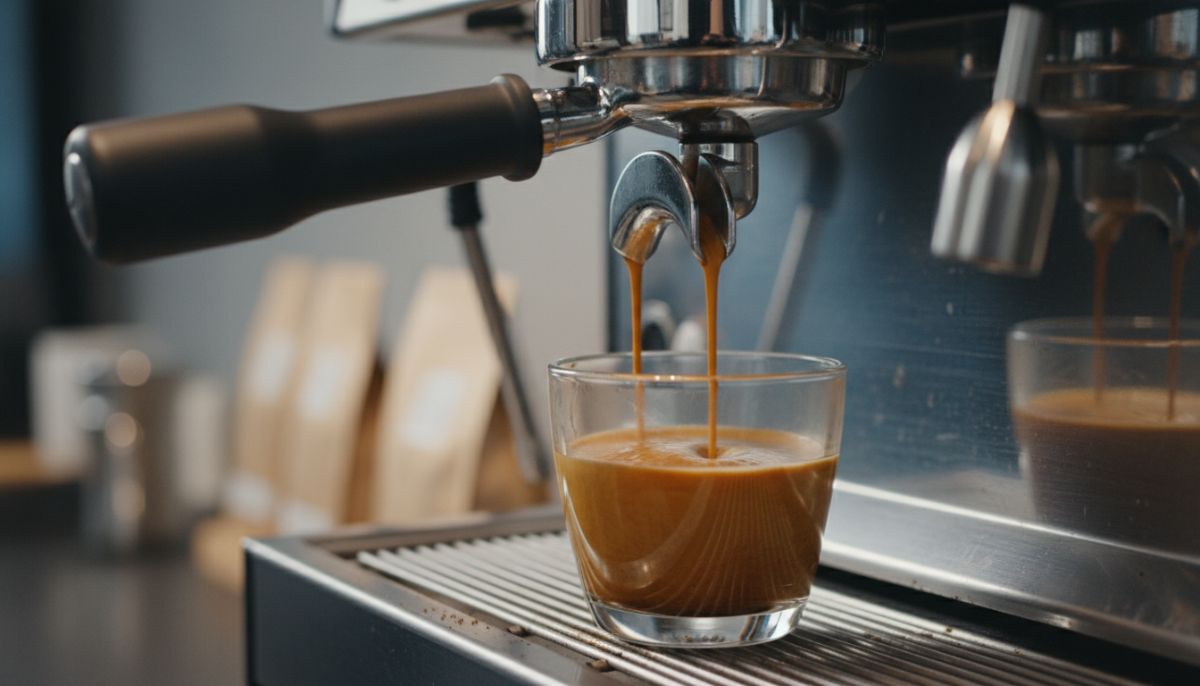
Discover why naked (bottomless) portafilters are essential for diagnosing espresso extraction issues. Learn to read flow patterns, eliminate channeling, and improve your puck preparation.
Key Takeaways
- Visual Feedback: Naked portafilters expose the bottom of the filter basket, allowing you to see extraction flaws like channeling and uneven flow in real-time.
- Puck Prep is Critical: Without spouts to hide the mess, poor distribution leads to spraying (spurters). Techniques like WDT become mandatory.
- Crema Quality: Eliminating the spouts prevents crema from breaking up on metal surfaces, often resulting in a richer, more uniform texture.
- Clearance: Bottomless portafilters provide extra vertical space, accommodating taller cups and scales under the group head.
Introduction
In the world of specialty coffee, the naked portafilter—also known as a bottomless portafilter—is often regarded as a badge of honor. While it certainly looks impressive on social media, its primary function is not aesthetic; it is diagnostic. A standard portafilter with spouts hides the extraction process. The liquid funnels into a stream, masking chaos occurring within the basket. By removing the bottom, you expose the truth of your puck preparation.
For the home barista seeking consistency, the naked portafilter is the most brutal yet effective teacher. It reveals channeling, dead spots, and uneven tamping instantly. This guide details how to utilize this tool to diagnose extraction errors and refine your workflow for superior espresso.
The Mechanics of the Naked Portafilter
A standard portafilter collects espresso from the bottom of the basket and directs it through one or two spouts. This design serves two purposes: it splits the shot for two cups and creates a tidy stream regardless of how the extraction proceeded inside the puck.
A naked portafilter removes this floor. The espresso falls directly from the basket holes into the cup. If the water flows through the coffee bed evenly, the droplets coalesce into a single, honey-like stream in the center. If the water finds a path of least resistance (a channel), it will spray sideways, indicating a flaw in the puck.
Diagnosing Extraction Flaws
The primary reason to switch to a bottomless setup is to identify and correct errors. Learning to "read" the pour is an essential skill for palate development.
1. Channeling and Spurting
If you see fine jets of coffee spraying in different directions, you are experiencing severe channeling. This occurs when high-pressure water finds a crack or a low-density area in the coffee puck. Instead of extracting flavor evenly, the water rushes through that gap.
This results in a shot that is both sour (under-extracted in the dense areas) and bitter (over-extracted in the channel). To understand the flavor impact, read our guide on how to troubleshoot and fix over-extracted espresso. Channeling is almost always a result of poor distribution or clumps in the grind.
2. The "Donut" Extraction
A donut extraction occurs when coffee begins flowing from the outer edges of the basket first, leaving a dry spot in the center that fills in late. This indicates that the center of the puck was denser than the edges. This is frequently caused by a tamper that is too small for the basket or uneven distribution where grounds are piled in the middle but not moved to the sides before tamping.
3. Dead Spots
If certain areas of the basket bottom remain dry or flow significantly slower than the rest throughout the shot, you have dead spots. This suggests uneven dosing or localized over-tamping. It creates an unbalanced flavor profile, often contributing to astringency and dryness.
The Importance of Puck Preparation
Because the naked portafilter is unforgiving, it necessitates a rigorous puck preparation routine. You cannot simply dump coffee in, tamp, and brew without risking a mess.
Distribution Techniques
To ensure the water flows evenly through the entire bed of coffee, the density must be uniform. The Weiss Distribution Technique (WDT)—using fine needles to rake through the grounds—is highly recommended when using a naked portafilter. This breaks up clumps and evens out the bed.
However, vigorous WDT can be messy. Using dosing funnels is critical here. A funnel keeps the grounds contained while you distribute, ensuring you do not lose expensive coffee or create a mess on the counter.
Managing Static
Static electricity causes grounds to cling to the basket walls or clump together, which leads to the channeling described above. If your grinder produces high static, a naked portafilter will expose this immediately via uneven flow. Implementing the Ross Droplet Technique (RDT) effectively neutralizes static, allowing for a fluffier, more even coffee bed.
Cleanliness and Maintenance
One under-discussed benefit of the bottomless portafilter is cleanliness. Spouted portafilters accumulate stale coffee oils inside the spouts and the floor of the device. Even with regular rinsing, this buildup can go unnoticed and eventually impart a rancid flavor to fresh shots.
A naked portafilter has no crevices to hide oil. A simple rinse and wipe after each use keeps it perfectly clean. Furthermore, many baristas pair naked portafilters with puck screens. The screen sits on top of the puck, keeping the group head clean, while the naked portafilter keeps the exit path clean. This combination minimizes maintenance time significantly.
Visualizing Flavor Stages
Using a naked portafilter allows you to visualize the viscosity changes throughout the shot. Initially, the extract is dark and syrupy (rich in solids and oils). As the shot progresses, it lightens to a caramel color, and finally to a watery blonde.
Watching this transition helps you understand when to cut the shot. If you are experimenting with a salami shot exercise, the visual cues from a bottomless basket provide a clearer indication of flow rate changes than looking at a stream emerging from spouts.
Is a Naked Portafilter Right for You?
If you are a beginner solely interested in a quick caffeine fix, a naked portafilter may be frustrating. It requires patience and practice to stop the spraying. However, if you are pursuing the perfect shot, it is indispensable.
The feedback loop is immediate. You adjust your grind or distribution, pull a shot, and see the result instantly. Once you master the flow on a naked portafilter, you can return to a spouted one if you wish, but most baristas prefer the extra cup clearance and the mesmerizing visual of a perfect extraction.
Frequently Asked Questions
Directly, no. However, it forces you to improve your puck preparation to prevent spraying. This improved technique leads to better extraction and less channeling, which significantly improves the taste.
Spraying, or ‘spurting,’ is caused by channeling. This happens when water finds a low-resistance path through the puck due to clumps or uneven distribution. Use WDT (Weiss Distribution Technique) to fix this.
It can be very messy if your puck preparation is poor. Once you master distribution and tamping, the flow becomes smooth and contained, but the learning curve often involves some cleanup.
Yes, it is possible to use a hole saw to cut out the bottom of a standard portafilter, but it requires metalworking tools and safety precautions. Buying a pre-made bottomless portafilter is generally safer and easier.