
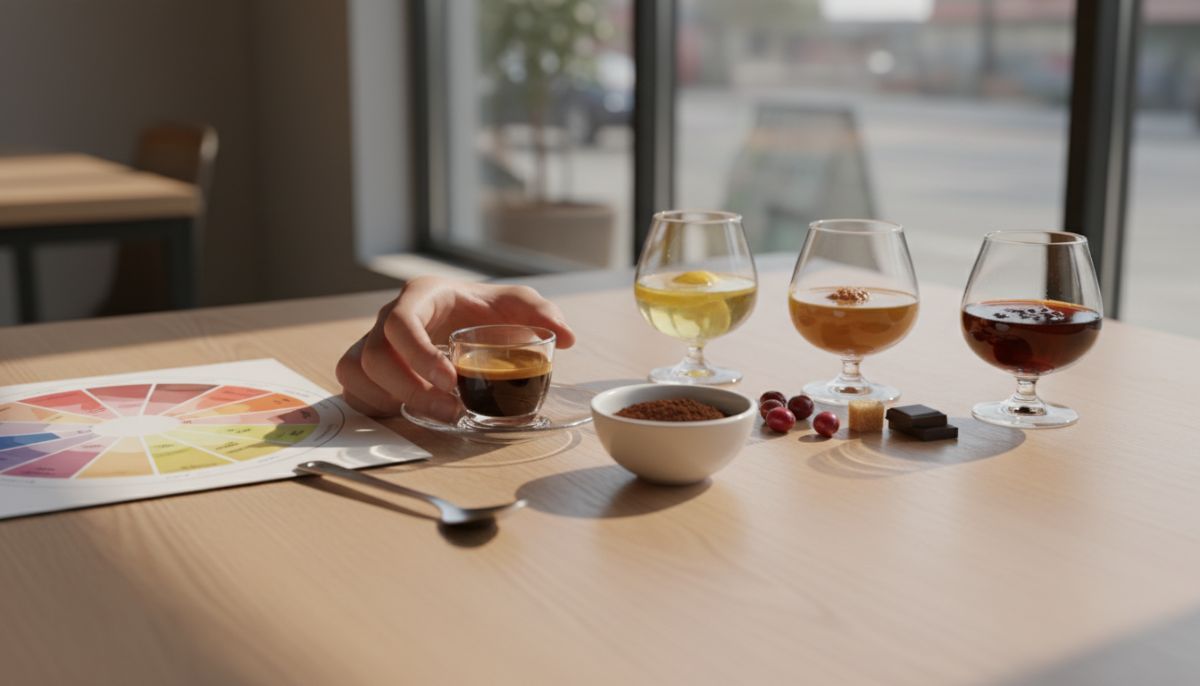
Unlock the hidden flavors in your cup. This guide teaches you professional sensory analysis techniques to identify acidity, sweetness, and body in your espresso like a certified Q-Grader.
Key Takeaways
- Taste is a Skill: Developing your palate is a learned discipline, not just an innate talent.
- Retro-nasal Olfaction: Most of what we perceive as “flavor” actually comes from our sense of smell, not the tongue.
- Temperature Matters: Espresso flavor profiles shift dramatically as the shot cools; professional tasting requires patience.
- Reference Points: You cannot identify a flavor in coffee (like blackberry or jasmine) if you haven’t consciously tasted it in isolation.
You have invested in a high-end machine and a precision grinder. You buy fresh specialty beans. Yet, when you read the tasting notes on the bag—”candied lemon, jasmine, and earl grey”—you often find yourself wondering if the roaster is hallucinating. All you taste is “strong coffee.”
This is a common frustration for home baristas. The gap between pulling a technically correct shot and fully appreciating its sensory complexity is bridged by palate development. Certified Q-Graders (the sommeliers of the coffee world) undergo rigorous training to calibrate their sensory organs to objective standards. While you may not need a certification, adopting their techniques can revolutionize your morning ritual.
Here is how to deconstruct your espresso and taste with intention.
The Physiology of Flavor: Taste vs. Aroma
To analyze espresso, you must first understand the difference between taste and flavor. These terms are often used interchangeably, but biologically, they are distinct mechanisms.
The Tongue: Basic Tastes
Your tongue is a blunt instrument. It can only perceive five basic sensations: sweet, sour, salty, bitter, and umami (savory). When you take a sip of espresso, your tongue tells you if the shot is balanced or if it leans too heavily into acidity or bitterness.
The Nose: The Nuance of Flavor
The specific notes—hazelnut, blueberry, dark chocolate—are perceived through retro-nasal olfaction. When you swallow, aromatic volatiles travel from the back of your mouth up to your nasal cavity. This is where the magic happens.
To maximize this, proper vessel selection is crucial. The shape of your cup controls how aromas are trapped and directed to your nose. For a deeper dive into how geometry alters perception, read our guide on how cup shape and material affect espresso taste.
Building Your Sensory Library
You cannot recognize a flavor you do not know. If you have never tasted a currant, you will never find it in your Kenyan coffee. Q-Graders spend hours building a mental “sensory library.”
Start eating consciously. When you bite into an apple, ask yourself: Is this a Granny Smith (tart, acidic) or a Fuji (sweet, crisp)? Buy a high-percentage dark chocolate and compare it to milk chocolate. The goal is to move from passive consumption to active analysis. This practice creates the neural pathways required to spot these notes in the complex concentration of an espresso shot.
The Professional Tasting Protocol
Tasting espresso is different from drinking it for caffeine. It requires a protocol designed to maximize sensory input.
1. The Visual Inspection
Look at the crema. Is it thick and tiger-striped, or thin and pale? While crema isn’t the sole indicator of quality, it provides clues about the freshness and the roast level.
2. The Stir
Espresso stratifies immediately after brewing. The bottom is heavy and acidic, while the top is bitter and foamy. Before tasting, stir the shot to homogenize the liquids. This ensures a consistent representation of the extraction.
3. The Slurp
Take a spoon and slurp the coffee loudly. This sprays the liquid across your entire palate and aerates it, pushing those aromatic volatiles up to your olfactory bulb. It may feel rude, but it is essential for analysis.
4. The Temperature Assessment
Human taste receptors are less sensitive at high temperatures. Espresso straight from the machine is often too hot to taste accurately. Analyze the shot in three stages:
- Hot: Focus on body and balance.
- Warm: Sweetness and acidity become more pronounced.
- Cool: Defects become obvious. If the coffee tastes awful when cool, it is likely a poor roast or bad extraction.
Deconstructing the Shot: What to Look For
When analyzing the liquid, focus on these three pillars of sensory analysis.
Acidity vs. Sourness
Acidity is a desirable trait in specialty coffee; it gives the cup “brightness” and “life.” It should remind you of fruit—lemon zest, green apple, or berries. Sourness, however, is a defect. It is a harsh, puckering sensation often caused by under-extraction.
Learning to distinguish between pleasant acidity and defect-driven sourness is the hardest hurdle for beginners. If you are struggling with sharp, unpleasant flavors, check our troubleshooting guide on why your espresso tastes sour.
Body and Mouthfeel
Body refers to the tactile sensation of the coffee. Is it watery and tea-like? Or is it syrupy, coating your tongue? This texture is heavily influenced by your equipment choices, particularly your grinder.
Grinders with conical burrs often produce a distinct texture compared to flat burrs. Conicals tend to produce a heavier body with more separation of flavors, while flat burrs often yield high clarity and sweetness. Understanding how grinder geometry changes flavor profiles can help you set realistic expectations for your gear.
Sweetness and Balance
Espresso should have an inherent sweetness. In darker roasts, this manifests as caramel, molasses, or dark chocolate. In lighter roasts, it appears as fruit sugar or honey. If the shot lacks sweetness entirely, you may need to adjust your ratio or temperature.
The Impact of Processing and Roast
Your ability to detect notes is also dependent on knowing what the bean should taste like. The processing method—how the fruit was removed from the seed—is the biggest driver of flavor.
- Washed Process: Look for clarity, high acidity, and floral or citrus notes. These coffees are “clean.”
- Natural Process: Look for heavy body, fruit bombs (blueberry, strawberry), and sometimes a wine-like fermentation funk.
If you are brewing a Natural Ethiopian bean but dialing it in like a Washed Colombian, you might mute the very flavors you are trying to highlight. Learn how to adjust your recipe for different processing methods to maximize the potential of your beans.
Practical Exercise: The Salami Shot
The best way to train your palate to understand extraction is to perform a “Salami Shot.” This involves using three different cups to catch the beginning, middle, and end of a single extraction.
The first cup will be intense, sour, and oily. The second will be sweet and complex. The third will be bitter and watery. Tasting these components individually helps you identify what is happening in your final cup. For a step-by-step walkthrough, read our article on deconstructing espresso flavor stages.
Conclusion
Developing a Q-Grader’s palate does not happen overnight. It requires drinking coffee with focus and intention. Stop multitasking while you sip. Close your eyes, inhale the aroma, and try to name just one specific flavor in the cup. Write it down. Over time, your vocabulary will expand, and you will begin to experience your daily espresso in high definition.
Frequently Asked Questions
Tasting notes are subjective associations. If you can’t taste them, it could be due to palate inexperience, water quality, incorrect brewing parameters, or simply that your sensory references differ from the roaster’s.
Taste refers to the five sensations perceived by the tongue (sweet, sour, salt, bitter, umami). Flavor is the combination of taste plus aroma perceived through the nose (retro-nasal olfaction).
Yes. Smoking damages olfactory receptors and taste buds, significantly muting your ability to perceive delicate nuances and acidity in espresso.
Professional cuppers use sparkling water or a bite of plain cracker or apple slice to neutralize the palate between tastings.