
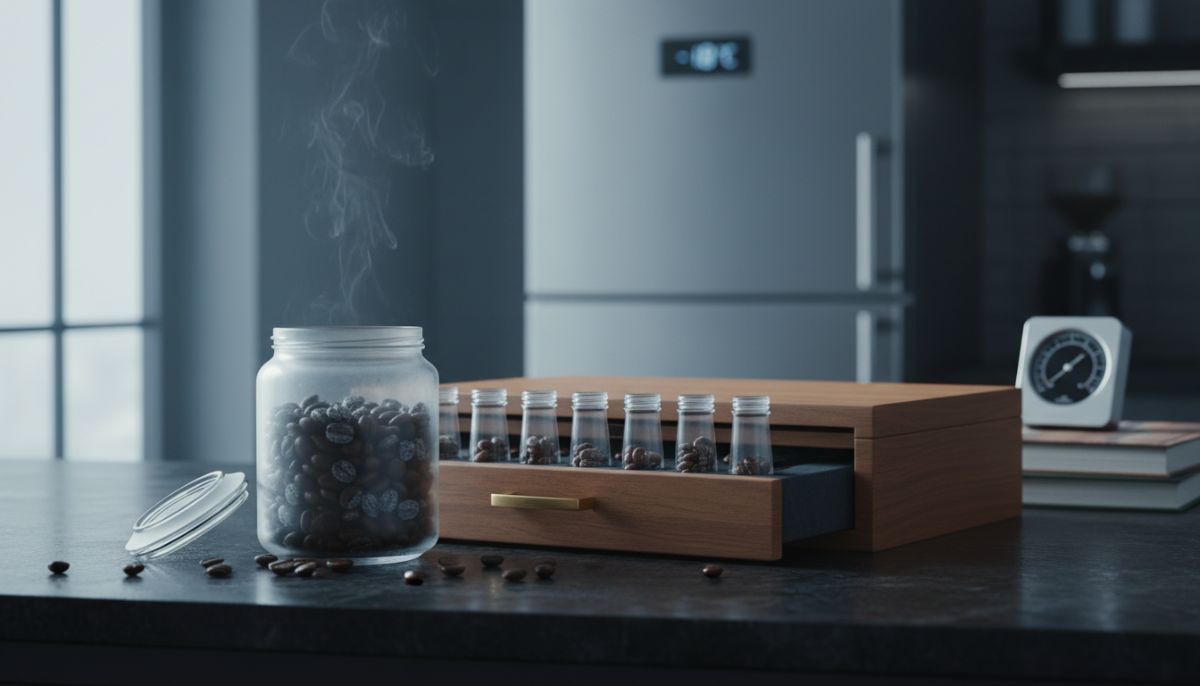
Is your freshly roasted coffee tasting sour or metallic? You might be brewing too soon. Discover the science of degassing and the perfect resting timelines for every roast type.
Key Takeaways:
- Fresh isn’t always best: Brewing immediately after roasting causes uneven extraction and sour flavors due to excess Carbon Dioxide (CO2).
- The Carbonic Acid effect: Trapped CO2 combines with water to form carbonic acid, giving fresh coffee a sharp, metallic taste.
- Roast matters: Dark roasts degas in 3-5 days; light roasts may need 10-14 days to peak.
- Espresso is sensitive: High pressure magnifies the negative effects of gas, requiring longer resting periods than drip coffee.
- Processing plays a role: Natural process coffees often require more time to settle than washed coffees.
There is a pervasive myth in the coffee world. It screams from marketing emails and packaging labels: “Fresh is Best.” While true that stale coffee is flat and uninspiring, there is such a thing as too fresh. If you have ever bought a bag of beans roasted yesterday, rushed home to brew it, and found the resulting cup sharp, sour, or strangely metallic, you haven’t done anything wrong. Your coffee was just gas-heavy.
This phenomenon is the degassing dilemma. Coffee roasting is a violent chemical process. It transforms the cellular structure of the green bean, creating massive amounts of Carbon Dioxide (CO2) trapped inside the bean. Until that gas escapes, it acts as an invisible barrier to flavor. Understanding how to navigate this resting period is the difference between a good cup and a spectacular one.
The Science: Why Does Fresh Coffee Taste Sour?
To understand why waiting matters, we must look at what happens when hot water meets fresh roasted coffee. When you pour water over grounds that are full of CO2, the gas rushes out. This is what creates the “bloom” in a pour-over or the crema on an espresso. It looks beautiful, but it is chaotic.
This rapid release of gas pushes water away from the coffee particles. If the water cannot touch the coffee, it cannot extract flavor. This creates channeling and uneven extraction. Worse, there is a chemical reaction at play. When trapped CO2 dissolves into your brew water, it creates Carbonic Acid. This acid has a distinct, sharp, and sour flavor profile that masks the sweet, complex notes you paid for. By waiting a few days, you allow the CO2 to dissipate naturally, preventing this acidic interference.
If you are struggling to understand why your expensive beans taste off, checking the coffee roast dates explained on the bag is your first step toward better flavor.
Resting Timelines: The Roast Rule of Thumb
Not all coffee degases at the same speed. The darker the roast, the more porous the bean structure becomes. Think of a dark roast like a sponge with large holes; gas escapes quickly. A light roast is denser, holding onto its gas like a vault. Here is how to time it.
Dark Roasts
Darker beans have been exposed to higher temperatures for longer. Their structural integrity is weakened, allowing CO2 to escape rapidly. Oils usually migrate to the surface faster as well.
- Optimal Window: 3 to 5 days after roasting.
- Risk: They go stale faster. Use them up within 3 weeks.
Medium Roasts
The sweet spot for many specialty coffee drinkers. These beans retain some density but have developed enough porosity to degas steadily.
- Optimal Window: 5 to 7 days after roasting.
- Risk: Brewing before day 5 usually results in a muted flavor profile.
Light Roasts
These are the stubborn ones. Light roasts retain their cellular structure, trapping gas deep inside. They require patience. It is not uncommon for a high-quality light roast to peak three weeks after roasting.
- Optimal Window: 10 to 14 days (sometimes longer).
- Risk: Brewing too early guarantees high acidity and a hollow sweetness.
Brew Method: Espresso vs. Filter
Your brewing equipment dictates your resting schedule just as much as the roast level does. The mechanics of extraction change how gas interferes with flavor.
The Espresso Factor
Espresso is brewed under intense pressure (usually 9 bars). This pressure forces water into the coffee puck aggressively. If the coffee is gassy, the CO2 fights back against this pressure. The result is often a “volcanic” puck where gas pockets rupture, causing severe channeling. The shot pulls too fast, looks bubbly, and tastes incredibly sour.
Because the environment is so volatile, espresso requires a longer rest. If you are troubleshooting why espresso tastes sour, simply waiting three more days can often fix the problem entirely without changing your grind size.
Filter and Drip Coffee
Gravity-fed methods like Pour-over or French Press are gentler. The water has time to interact with the grounds at atmospheric pressure. Furthermore, the “bloom” stage—where you wet the grounds and pause—is specifically designed to let this gas escape before the main brew. Because the method allows for off-gassing during the brew, you can use beans sooner than you would for espresso.
Proper blooming technique is essential here. If you skip the bloom on fresh beans, the gas will prevent the water from saturating the grounds evenly. For more on this, check out our guide on blooming espresso and filter methods.
Processing Methods: Washed vs. Natural
The processing method—how the fruit was removed from the seed—affects the bean’s density and sugar content. This subtly shifts the degassing timeline.
- Washed Coffees: Generally cleaner and more consistent in structure. They tend to follow standard timelines reliably.
- Natural Process: These beans are dried with the fruit intact, leading to higher sugar content and often a different cellular density. They can sometimes retain gas longer or behave erratically if brewed too fresh. If you switch between types, you may need to consult a washed vs natural process recipe guide to adjust your extraction expectations.
Data Comparison: Optimal Resting Periods
| Roast Level | Filter / Drip Wait Time | Espresso Wait Time |
|---|---|---|
| Dark Roast | 2 – 4 Days | 4 – 6 Days |
| Medium Roast | 4 – 6 Days | 7 – 10 Days |
| Light Roast | 7 – 10 Days | 14 – 21 Days |
Storage During Degassing
While you wait, how you store the beans matters. You want the CO2 to escape without letting Oxygen in. Oxygen is the enemy; it causes staling and oxidation. This is why high-quality coffee bags have one-way valves. These little plastic circles allow pressure (CO2) to exit the bag but seal tight against air trying to enter.
Do not open the bag until you are ready to start brewing. Opening it breaks the seal and introduces oxygen, accelerating the aging process. If you buy in bulk and need to halt the aging process after the resting period, consider freezing coffee beans. This pauses the chemical changes, locking in the flavor profile at its peak.
Did You Know?
Grinding your coffee speeds up the degassing process exponentially. Because grinding increases the surface area, the gas has more escape routes. If you are desperate to brew a roast that is too fresh, you can grind it and let it sit on the counter for 30 minutes before brewing. However, you risk losing volatile aromatics (flavor) along with the gas.
The Pros and Cons of Resting
Is it really worth the wait? Here is the breakdown.
Pros of Resting
- Higher Extraction Yield: Water contacts coffee surfaces more effectively without gas interference. Read more on understanding TDS and extraction yield.
- Better Flavor Clarity: Disappearance of carbonic acid allows fruit, chocolate, and nut notes to shine.
- Consistent Brewing: Less channeling means your recipe works repeatedly.
Cons of Resting
- Planning Required: You cannot just buy and brew; you must manage your inventory.
- Oxidation Risk: If the bag seal is poor, waiting too long leads to stale, flat coffee.
Conclusion
Coffee is a food product that requires aging, much like beef or cheese. While the aroma of roasting coffee is intoxicating, the flavor in the cup needs time to settle. By respecting the roast date and understanding the science of CO2, you can avoid the sour disappointment of brewing too early. Patience is not just a virtue; in coffee, it is an ingredient.
Frequently Asked Questions
For espresso, it is best to rest beans for at least 7-10 days. Light roasts may require up to 14-21 days to avoid sourness and channeling caused by excess gas.
Fresh coffee releases significant Carbon Dioxide. When this gas mixes with water, it forms Carbonic Acid, which creates a sharp, sour, and metallic flavor.
Yes. Grinding increases surface area, allowing gas to escape rapidly. However, it also speeds up oxidation, so you may lose desirable flavor notes if you let it sit too long.
You can, but it will likely taste uneven and acidic. The extraction will be poor because escaping gas prevents water from saturating the grounds properly.
No. Dark roasts are more porous and degas faster, typically reaching peak flavor in 3-5 days. Light roasts are denser and trap gas longer, often needing 10+ days.