Don’t toss that espresso puck! Discover safe, effective ways to repurpose spent coffee grounds for gardening, skincare, and cleaning while avoiding common plumbing and pet safety pitfalls.
Every morning, millions of home baristas perform the same ritual: the shot finishes, the portafilter comes off, and with a satisfying thud, a dark, dense disc of coffee lands in the bin. We spend hundreds of dollars on equipment to extract the perfect flavor, yet we treat the byproduct like garbage. That spent coffee puck is not just waste; it is a resource rich in nitrogen, oil, and texture.
However, the internet is flooded with bad advice. Dumping grounds down the sink? That is a plumber’s nightmare. dumping wet pucks directly onto your houseplants? That is a recipe for mold. To truly embrace a zero-waste coffee routine, you need to separate the myths from the practical science of repurposing.
Key Takeaways
- Dry Before You Store: Wet coffee pucks mold within 24 hours. You must dehydrate them before long-term storage.
- Plumbing Hazard: Never use coffee grounds to clean drains. They mix with grease to form concrete-like clogs.
- Pet Warning: Spent grounds still contain caffeine, which is toxic to dogs and cats. Use with caution in accessible garden areas.
- Soil pH Myth: Used grounds are not highly acidic; they are close to neutral (pH 6.5–6.8), making them safe for most plants, not just acid-lovers.
The Crucial First Step: Proper Drying and Storage
Most guides skip this step, and it is the primary reason people give up on repurposing. An espresso puck is a dense, wet brick. If you throw it into a jar or a plastic bag immediately after brewing, it will develop fuzzy white mold in a day or two. To create a stable shelf-life, you must remove the moisture.
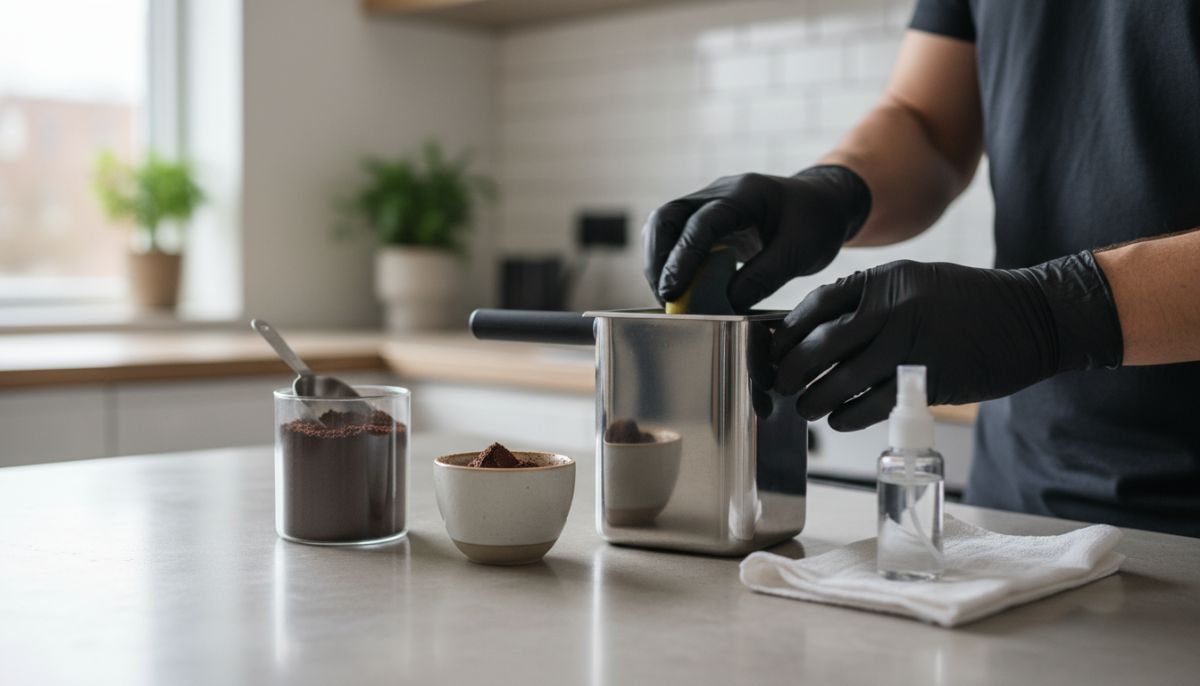
Start by establishing good knock box hygiene. Do not let old pucks sit in a warm, dark knock box for a week. Empty your container daily. To dry the grounds, break the pucks apart onto a baking sheet. You can let them air dry in a sunny spot for a few days, or for a faster method, bake them in the oven at a low temperature (200°F / 95°C) for 20-30 minutes until they feel like dry sand.
If you use a closed drawer-style knock box, moisture gets trapped, accelerating spoilage. Ensure you are processing the waste frequently.
Gardening with Grounds: Fertilizer vs. Mulch
Gardening is the most popular use for spent coffee grounds, but it is also where the most misinformation lies.
The pH Myth
Fresh coffee beans are acidic. However, the brewing process washes most of that acidity into your cup. The remaining chemical structure of spent grounds is nearly neutral, typically sitting between a pH of 6.5 and 6.8. This means you don’t need to limit their use strictly to hydrangeas or blueberries. They are safe for a wide variety of vegetation.
Composting vs. Direct Application
While you can sprinkle dry grounds directly on soil as a slow-release nitrogen fertilizer, composting is superior. Coffee grounds are considered “green” compost material (despite being brown in color) because they are rich in nitrogen. For the best breakdown, aim for a ratio of 1 part coffee grounds to 3 parts carbon-rich “brown” materials like dry leaves or cardboard.
Did You Know?
Earthworms love coffee grounds. The gritty texture helps their digestion, and the nutrient content attracts them to the soil, which in turn improves soil aeration and drainage.
A Warning for Pet Owners
This cannot be stressed enough: Caffeine is toxic to dogs and cats. While spent grounds have less caffeine than fresh beans, they still retain enough to be dangerous if ingested in large quantities. If your dog has a habit of eating dirt or digging in the garden, mix the grounds thoroughly into your compost pile rather than using them as a top-layer mulch.
DIY Skincare: The Espresso Scrub
Commercial coffee scrubs can cost upwards of $20, but the main ingredient is sitting in your portafilter. The texture of espresso-ground coffee is generally finer than drip coffee, making it ideal for body exfoliation without being too abrasive on the skin.
Simple Body Scrub Recipe:
- 1 cup dried spent espresso grounds
- 1/2 cup coconut oil (melted) or sweet almond oil
- 1 tbsp brown sugar (optional for extra grit)
Mix the ingredients until the grounds are fully saturated but not swimming in oil. The caffeine (what little remains) may help temporarily tighten skin and reduce puffiness, but the real benefit is mechanical exfoliation. It sloughs off dead skin cells, leaving skin smooth. Just be careful in the shower—the oil can make the floor slippery.
Household Cleaning and Odor Control
While we strive for precision in mastering espresso ratios, cleaning with grounds is brute force. The abrasive nature of the grounds makes them excellent for scouring cast iron pans or removing stuck-on food from grill grates.
The Plumbing Trap
Here is where many DIY guides fail you. You might read that coffee grounds sharpen garbage disposal blades or clear drains. Do not do this. Coffee grounds are heavy and do not dissolve in water. When they mix with the oils and fats already in your pipes, they create sludge that hardens over time, leading to severe blockages. Always dispose of your cleaning grounds in the trash or compost, never the sink.
Neutralizing Odors
Carbon is excellent at trapping odors, and coffee grounds are essentially carbon skeletons. Dry grounds can be placed in an open jar at the back of your refrigerator to absorb food smells. You can also fill an old sock with dried grounds and tie it off to create a deodorizer for gym shoes or closets.
Data Comparison: Fresh vs. Spent Grounds
Understanding the chemical difference helps in application.
| Feature | Fresh Coffee Grounds | Spent (Used) Pucks |
|---|---|---|
| Caffeine Content | High (~1.2% – 1.5%) | Low (~0.2% – 0.5%) |
| Acidity (pH) | Acidic (4.5 – 5.0) | Neutral (6.5 – 6.8) |
| Texture | Oily, cohesive | Gritty, loose (once dried) |
| Best Use | Brewing, infusing oils | Compost, scrubs, scouring |
| Garden Safety | Toxic to some plants | Safe for most plants |
Pros and Cons of Repurposing Pucks
Before you start hoarding your espresso waste, weigh the effort against the reward.
| Pros | Cons |
|---|---|
| Reduces household waste significantly | Requires time and space to dry properly |
| Free source of nitrogen-rich fertilizer | High risk of mold if stored wet |
| Effective natural abrasive for cleaning | Messy to work with (fine grounds scatter) |
| Natural odor absorber | Plumbing risk if rinsed down drains |
| Cost-effective skincare alternative | Pet toxicity risk in gardens |
Conclusion
While we often focus on stopping waste before the shot, managing the waste after the shot is just as important for a sustainable coffee routine. Repurposing spent coffee pucks is a practical way to extend the life of your beans. Whether you are boosting your compost pile, scrubbing a cast iron skillet, or making a DIY exfoliant, the key is preparation. Dry your grounds thoroughly, keep them away from your plumbing, and protect your pets. With these precautions in mind, your morning espresso habit can feed your garden just as well as it fuels you.
Frequently Asked Questions
Yes, for the most part. Unlike fresh beans, spent coffee grounds are nearly neutral in pH, making them safe for most plants. They provide nitrogen and improve soil texture, though they should be mixed with soil or compost rather than caked on top.
No. Coffee grounds do not dissolve in water. They are heavy and can accumulate in the U-bend or septic tank, mixing with grease to create stubborn clogs. Always throw them in the trash or compost.
You must remove the moisture. Spread the wet grounds on a baking sheet and bake at a low temperature or sun-dry them until they feel like dry sand. Once dehydrated, they can be stored in an airtight container for months.
Use caution. Spent grounds still contain trace amounts of caffeine, which is toxic to dogs. If your dog is a digger or eats dirt, it is safer to mix the grounds thoroughly into a compost bin rather than applying them directly to the soil surface.
Anecdotally, yes, but scientifically, the effects are temporary. The caffeine may cause slight vasoconstriction (tightening of blood vessels) and the massaging action increases circulation, which can temporarily reduce the appearance of cellulite, but it is not a permanent cure.