
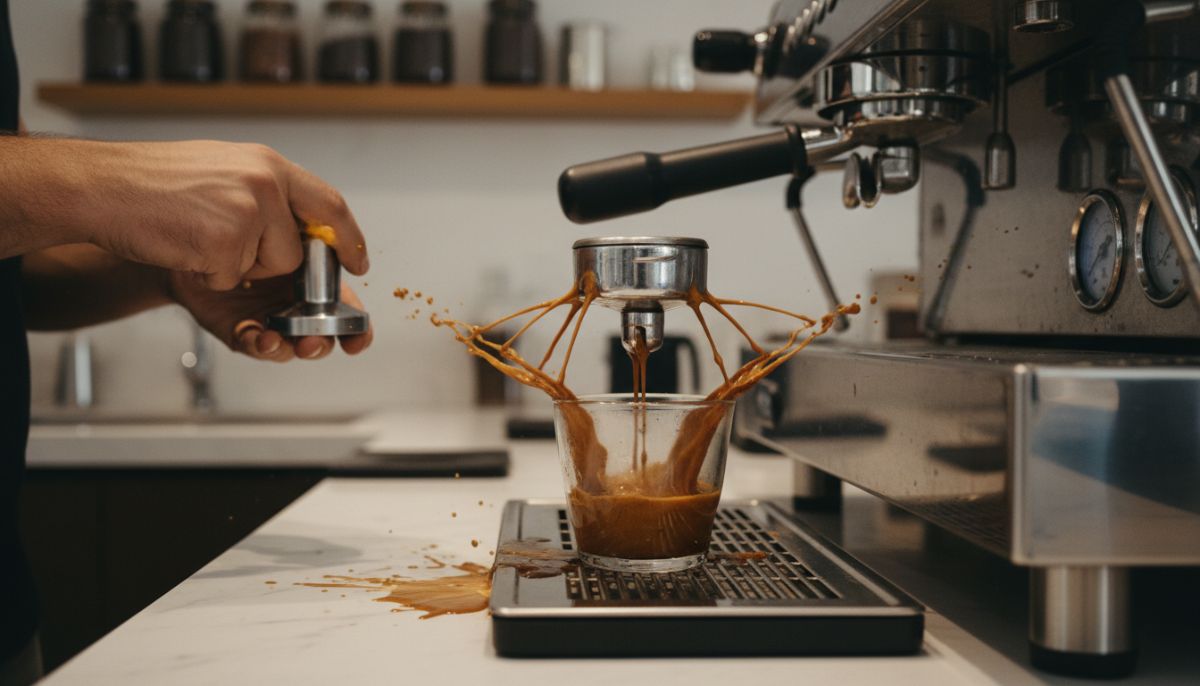
Is your espresso spraying or tasting inconsistent? You might be a victim of channeling. Learn how to diagnose uneven extraction and master your puck prep for the perfect shot.
Key Takeaways
- Define the Problem: Channeling occurs when water finds the path of least resistance through the coffee puck, leading to uneven extraction.
- Spot the Signs: Look for spraying, fast blonding, or holes in the puck, and taste for a confusing mix of sour and bitter notes.
- Master Puck Prep: Proper distribution (WDT) and a level tamp are your best defenses against uneven flow.
- Check Your Gear: Sometimes the issue isn’t your technique, but a dirty shower screen or inconsistent grinder.
Introduction
There is nothing quite as heartbreaking in the world of home barista skills as the "channeling spray." You have carefully weighed your beans, ground them fresh, and tamped with precision. You engage the pump, expecting liquid gold. Instead, a rogue jet of hot coffee shoots sideways onto your countertop—or worse, your shirt.
This phenomenon is known as channeling, and it is the arch-nemesis of a balanced espresso. Beyond the mess it creates, it wreaks havoc on the flavor in your cup. It turns what should be a sweet, complex shot into an unbalanced, astringent disappointment.
Fortunately, fixing uneven water flow is not rocket science. It requires a mix of observation, better preparation techniques, and a little bit of patience. In this guide, we will break down exactly what is happening inside your portafilter and how to stop it for good.
What is Espresso Channeling?
To understand channeling, you have to think like water. Water is inherently lazy; it always seeks the path of least resistance. Under the immense pressure of an espresso machine (usually 9 bars), water will exploit any weakness in your coffee puck.
If there is a crack, a lower density area, or a clump of coffee grounds, the water will rush through that specific tunnel—or "channel"—rather than flowing evenly through the entire bed of coffee. This results in two simultaneous problems.
First, the coffee along the channel gets over-extracted, releasing bitter, dry tannins. Second, the rest of the puck remains under-extracted because the water bypassed it, leading to sour, hollow flavors. The result is a cup that tastes confusingly sour and bitter at the same time.
How to Spot the Problem
Visual Cues
The easiest way to diagnose channeling is by using a bottomless (naked) portafilter. This tool exposes the filter basket, allowing you to watch the extraction in real-time.
In a perfect shot, the espresso droplets form on the bottom of the basket, coalesce into a single stream, and flow like warm honey. In a channeled shot, you might see:
- Spritzing: Thin jets of coffee shooting sideways.
- Multiple Streams: The coffee never gathers into a single stream.
- Bald Spots: Areas of the basket bottom where no coffee is coming through.
If you don’t have a bottomless portafilter, inspect the puck after brewing. Small pinholes or a muddy, uneven surface can indicate where the water drilled through.
Taste Indicators
Your palate is the ultimate judge. Because channeling causes both over- and under-extraction simultaneously, the flavor profile is often described as "muddy." You miss out on the sweetness and clarity of the bean.
If you are struggling to identify specific off-flavors, it helps to understand the basics of extraction faults. You can read more about how to troubleshoot underextraction and sour notes to distinguish between simple ratio errors and actual channeling issues.
The Culprits: Why Uneven Flow Happens
1. Poor Distribution and Clumping
The most common cause of channeling is uneven density within the coffee bed. If your grinder produces clumps, those clumps create high-density areas that water flows around. Conversely, empty pockets create low-density areas that water rushes through.
Simply tapping the side of the portafilter is rarely enough to break up these clumps. This is where specialized tools come into play. Many baristas have found that using a WDT tool creates a significant difference in shot consistency by breaking up clumps and fluffing the grounds before tamping.
2. Uneven Tamping
If you tamp at an angle, the puck will be thinner on one side. Water, following the path of least resistance, will rush through the thinner side. This leaves the thicker side under-extracted.
Your goal is a perfectly level tamp. The pressure amount matters less than the consistency and levelness. A specialized leveling tamper can help remove human error from this equation.
3. Incorrect Dosage
Overfilling your basket allows the shower screen to smash into the puck before water even touches it, fracturing the coffee bed. Underfilling can leave too much headspace, leading to a soupy puck that is prone to cracking under pressure.
Ensuring you have the right amount of coffee for your specific basket size is crucial. If you are unsure about the relationship between dose and output, review our guide on how to dial in espresso ratios and yield to find the sweet spot for your machine.
Step-by-Step: How to Fix Channeling
Step 1: Check Your Grinder
Ensure your grinder is clean and functioning well. Dull burrs produce more fines (dust-like particles) which can clog parts of the puck and force water to channel elsewhere.
Step 2: Weiss Distribution Technique (WDT)
Use a WDT tool (a tool with fine needles) to stir the grounds in the basket. Start deep to break up clumps at the bottom, then spiral up to level the surface. This homogenizes the density of the puck.
Step 3: Level and Tamp
Use a distribution tool (wedge) if you have one to flatten the surface, then follow with a straight, firm tamp. Do not knock the portafilter against the counter after tamping; this breaks the seal between the coffee and the basket wall, causing "side channeling."
Step 4: Pre-Infusion
If your machine allows it, use pre-infusion. This wets the puck under low pressure, allowing the coffee to swell and fill gaps before the full 9 bars of pressure hit. This heals minor imperfections in your puck prep.
Equipment Maintenance Checks
Sometimes, the barista is not to blame. If you have perfected your puck prep and still see channeling, check your machine.
A dirty shower screen—clogged with old coffee oils—will disperse water unevenly. Instead of a gentle shower, you get a high-pressure jet hitting one spot of the puck. Backflush your machine regularly and remove the screen for a deep clean if necessary.
Conclusion
Channeling is the frustrating barrier between a good shot and a great one. While it can be annoying, it is also a helpful diagnostic tool that tells you exactly where your technique needs improvement.
By focusing on consistent distribution, level tamping, and proper equipment maintenance, you can banish the spritz and enjoy the full, balanced potential of your beans. Slow down your process, pay attention to the details, and watch your extraction flow like honey.
Frequently Asked Questions
Channeling usually results in a shot that tastes both sour and bitter. The sourness comes from under-extracted areas, while the bitterness comes from the over-extracted channel.
No, a bottomless portafilter is a diagnostic tool, not a fix. It allows you to see the channeling so you can correct your puck preparation technique.
This is a visual sign of severe channeling. Water is finding a crack or hole in the puck and shooting through it under high pressure.
Not necessarily. Consistency and level tamping are more important than force. Tamping too hard can sometimes cause strain injuries without improving the flow.