
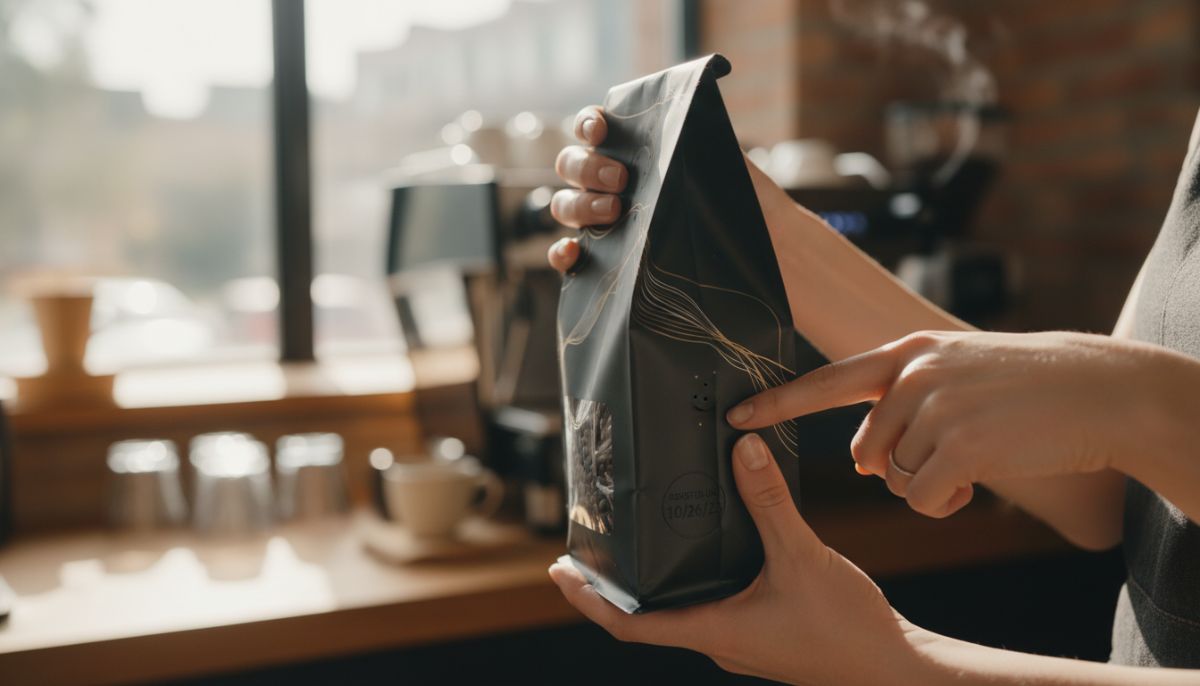
Stop guessing at the grocery store. Learn why the roast date is the most critical detail on your coffee bag, how degassing affects flavor, and the perfect window for brewing peak espresso.
Key Takeaways
- Roast Date > Best By Date: Always prioritize the specific day the beans were roasted over a generic expiration date.
- The Degassing Period: Freshly roasted coffee needs 3–7 days to release CO2; brewing too soon leads to sour extraction.
- The Sweet Spot: Most coffee peaks between 10 and 21 days post-roast, though espresso often benefits from a longer rest than filter coffee.
- Staleness Indicators: A lack of aroma, rapid extraction, and thin crema are tell-tale signs your beans have passed their prime.
The Most Important Number on the Bag
Walk into any supermarket, and you will see bags of coffee stamped with “Best By” dates that are months, sometimes years, into the future. Walk into a specialty cafe, and you will see something different: a specific date stamped on the bottom or back of the bag. This is the roast date.
For the home barista, understanding this date is the difference between a cup that tastes like cardboard and one that explodes with blueberry, chocolate, or jasmine notes.
Reading a coffee bag effectively is a skill. It requires ignoring marketing fluff and looking for the data that actually dictates flavor potential. In this guide, we will break down the science of coffee freshness and help you identify the perfect brewing window.
“Best By” vs. “Roast Date”: What is the Difference?
The “Best By” date is a suggestion regarding shelf stability, not flavor quality. Coffee is a shelf-stable dry good; it won’t technically spoil or make you sick if you drink it a year after roasting. However, the volatile aromatic compounds—the stuff that makes coffee taste good—evaporate long before that date.
The “Roast Date” tells you exactly when the beans left the roaster’s drum. This is your starting line. From this moment, a biological clock starts ticking where the chemical structure of the bean changes daily.
Buying coffee without a roast date is like buying milk without an expiration date. You simply don’t know what you are getting. If a bag doesn’t have a roast date, it is safe to assume it was roasted quite a while ago.
The Science of Degassing: Why “Fresh” Isn’t Always Best
There is a common misconception that coffee is best the second it cools down. In reality, coffee brewed immediately after roasting often tastes metallic, overly sharp, and grassy.
During the roasting process, complex chemical reactions occur, building up carbon dioxide (CO2) inside the bean. For the first few days after roasting, the beans aggressively release this gas. This process is called degassing.
If you brew during this volatile period, the escaping CO2 disrupts the contact between the water and the coffee grounds. In espresso, this creates massive bubbles and prevents water from extracting the oils and sugars properly.
This often results in a sharp, unpleasant acidity. If you are struggling with acidic shots, it might be the beans, not your technique. You can read more about how to troubleshoot sour flavors related to underextraction in our detailed guide.
Finding the Sweet Spot: When to Brew
So, if day one is too soon, when is the perfect time to open the bag? It depends on your brew method and the roast level.
Filter Coffee (Pour Over, Drip)
For filter methods, the water passes through the grounds relatively quickly and without pressure. You can usually start brewing these beans anywhere from 3 to 7 days post-roast. The bloom (the bubbling that happens when hot water hits the grounds) will be vigorous, indicating freshness.
Espresso
Espresso is a high-pressure environment. The presence of excess CO2 is magnified under 9 bars of pressure, creating carbonic acid which tastes sour. Furthermore, the gas creates resistance that is inconsistent.
For espresso, the rule of thumb is to wait 7 to 14 days post-roast. Many light roasts actually peak around day 20. This resting period allows the CO2 to dissipate enough to allow for a smooth extraction while retaining the volatile aromatics.
When your beans are in this prime window, you will find it much easier to dial in your espresso ratios and achieve that syrupy body everyone craves.
How Freshness Affects Extraction Mechanics
As coffee ages, it loses density and gas. This physical change dramatically affects how water flows through the puck.
The Impact on Flow Rate
Fresh coffee offers resistance. The gas bubbles and the remaining moisture help hold back the water pressure, allowing the espresso to drip like warm honey. Old coffee (4+ weeks) offers very little resistance.
When you use stale beans, you will often notice the shot runs extremely fast, gushing out in 15 seconds or less. No matter how fine you grind, you might struggle to slow it down. This lack of resistance often leads to water finding the path of least resistance, creating holes in the puck.
This phenomenon creates uneven extraction. If you are noticing bald spots in your extraction or spurting, you should learn how to spot and fix uneven water flow, but the first culprit to check is usually the age of your beans.
Puck Preparation and Stale Beans
Stale coffee also behaves differently in the grinder. It tends to produce more “fines” (dust) and staticky clumps because the beans are brittle and dry. This makes puck preparation even more critical.
While fresh coffee is forgiving, old coffee requires meticulous distribution to get a passable shot. Understanding the science of puck prep and WDT tools becomes essential when trying to salvage a bag that is slightly past its prime.
Storage: Extending the Shelf Life
Once you have bought fresh beans, how do you keep them that way? The enemies of coffee are oxygen, moisture, heat, and light.
The Golden Rules of Storage:
- Keep it sealed: Use an opaque, air-tight container with a one-way valve.
- Keep it stable: Store in a cool, dark cupboard. Avoid the spot right next to your oven.
- Don’t freeze (mostly): Unless you are vacuum sealing individual doses for long-term storage, putting the whole bag in the freezer introduces moisture condensation every time you open it.
When Good Beans Taste Bad
Sometimes, you buy the freshest beans, wait for the perfect degassing window, and the coffee still tastes flat or chalky. Before you blame the roaster, check your other variables.
Water quality is the silent killer of flavor. If your water is too hard (full of scale) or too soft (distilled), the chemical reaction that extracts flavor cannot happen correctly. You could have beans roasted yesterday, but bad water will ruin them. It is worth understanding how water chemistry impacts your machine and flavor profile.
Conclusion
Reading a coffee bag is the first step in the barista’s workflow. By ignoring the “Best By” date and strictly following the “Roast Date,” you gain control over your coffee’s potential.
Remember that freshness is a curve, not a fixed point. Coffee starts too active (gassy), enters a peak window (sweet and balanced), and eventually fades (flat). Your job is to catch it in that middle window. Next time you buy a bag, check the date, calculate the resting period, and enjoy the difference that timing makes.
Frequently Asked Questions
For peak flavor, consume coffee within 2 to 4 weeks of the roast date. While it is safe to drink for months, the volatile aromatics that provide distinct flavors degrade significantly after the first month.
You can, but it is not recommended. Freshly roasted coffee contains high levels of CO2, which causes sourness and uneven extraction. It is best to let it degas for at least 3-5 days.
Actually, espresso often benefits from older beans (7-14 days post-roast) compared to drip coffee. The high pressure of espresso machines reacts poorly to the excess gas in very fresh beans.
Stale beans lack internal pressure and oils. This results in fast extraction, very little crema, a thin body, and a flat, cardboard-like taste.