
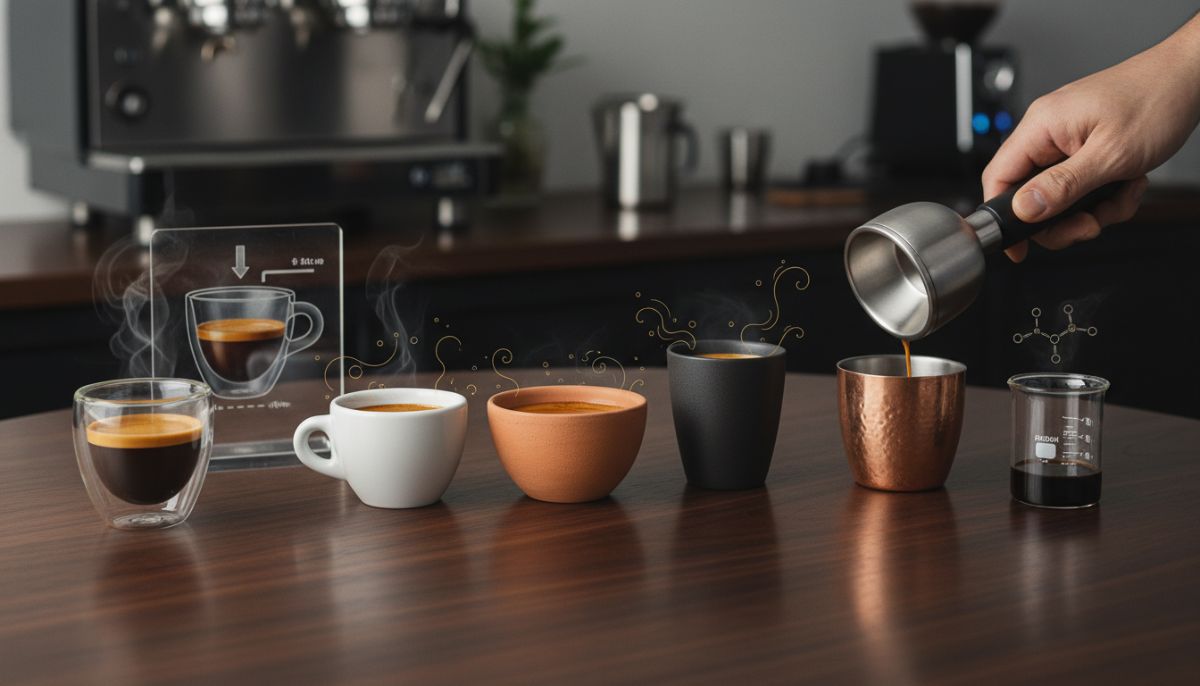
Think your espresso tastes the same in any vessel? Think again. We explore the science of cup anatomy, material thermal dynamics, and how the right shape can unlock hidden flavor notes in your coffee.
Key Takeaways
- Material dictates temperature stability: Thick-walled porcelain retains heat best, while glass offers visual appeal but faster heat loss.
- Shape alters flavor perception: Narrow rims concentrate aromatics for lighter roasts; wide bowls emphasize body and sweetness for darker roasts.
- Headspace is critical: The gap between the crema and the rim is essential for aeration and olfactory engagement.
- Tactile experience matters: The weight, texture, and lip feel of a cup psychologically influence the perceived quality of the coffee.
The Overlooked Variable in Your Espresso Workflow
You have likely spent hours researching the perfect grinder. You have debated the merits of flow control. You may have even invested in precision baskets. Yet, many home baristas pour their meticulously extracted shots into whatever small vessel is clean at the moment.
This is a critical error in the pursuit of the perfect espresso. The cup is not merely a container; it is the final instrument in your brewing orchestra. It is the interface between the machine and your senses.
In the world of wine, serving a Cabernet Sauvignon in a Champagne flute would be considered a travesty. The same logic applies to coffee. The anatomy of your cup—its material, rim thickness, internal curvature, and headspace—dramatically influences how your palate perceives flavor, acidity, and body.
Just as grinder geometry changes your espresso flavor profile, the geometry of your cup can either highlight the floral notes of an Ethiopian bean or mute the rich chocolate tones of a Brazilian roast.
The Psychology of Sensation: Why It Matters
Before diving into physics, we must acknowledge gastrophysics—the science of eating and drinking. Our perception of taste is multisensory. It is not just about what hits the tongue; it is about what the nose smells, what the eyes see, and what the hands feel.
A heavy cup conveys quality and substance. A thin, delicate rim suggests elegance and complexity. When you upgrade from a budget setup to a high-end machine, you are looking for that complete sensory experience. If you are considering moving up, check our guide on signs you are ready to upgrade from appliance grade machines. The cup you choose should match that level of sophistication.
Material Science: Thermal Mass and Texture
The material of your cup is primarily responsible for two things: temperature stability and tactile feedback. Espresso is a small beverage, usually between 30ml and 60ml. Because the volume is so low, it loses heat rapidly.
Porcelain and Ceramics
Thick-walled porcelain remains the gold standard for espresso service. High-fired ceramics have excellent thermal mass. When properly preheated, they keep the espresso within the optimal drinking temperature range (around 140°F to 150°F) for longer.
This temperature stability is crucial. If an espresso cools too instantly, the acidity can become sharp and unpleasant. This mirrors the importance of stability inside your machine; just as PID controllers ensure temperature stability during extraction, heavy porcelain ensures stability during consumption.
Double-Walled Glass
Glass cups have surged in popularity due to their modern aesthetic. They allow you to inspect the crema and the separation of layers. Double-walled borosilicate glass is fantastic for insulation, keeping the shot hot while the outer wall remains cool to the touch.
However, glass has a smoother, slicker lip feel than ceramic. Some coffee tasters argue that this “slickness” can make the body of the espresso feel thinner, even if the liquid is identical.
Metal and Stoneware
Metal cups are durable but problematic. Unless they are double-walled, they act as heat sinks, pulling temperature away from the coffee immediately. Furthermore, some metals can impart a faint metallic taste that interacts negatively with the acidity of the coffee.
Stoneware offers a rustic, textured surface. The rougher texture can psychologically enhance the perception of bitterness or earthiness, which might be desirable for traditional dark roasts but distracting for delicate light roasts.
The Shape of Taste: Rim, Bowl, and Base
The architecture of the cup changes how the liquid flows onto your tongue and how vapors reach your nose.
The Rim Design
The lip of the cup dictates the entry point of the coffee. A thick, rolled rim is classic for traditional Italian espresso. It provides a comforting mouthfeel and encourages the coffee to roll over the tongue slowly, emphasizing body and chocolate notes.
Conversely, a thin, flared lip directs the liquid to the tip of the tongue first. This highlights fruitiness and acidity. If you enjoy modern, third-wave espresso, a flared lip can act like a magnifying glass for those complex flavor compounds.
The Internal Curvature (The Base)
Look inside a high-quality espresso cup. You will likely see a rounded, parabolic bottom rather than a flat corners. This “schott” shape is functional, not just aesthetic.
When the espresso flows from the portafilter spouts, a rounded bottom allows the liquid to swirl gently. This preserves the crema. A flat bottom causes the liquid to splash and break apart the crema bubbles, leading to a faster dissipation of aromatics.
Headspace and Aroma
Headspace refers to the volume of air between the surface of the coffee and the rim of the cup. This space is where aromatic compounds gather.
If you fill a cup to the brim, there is no room for the nose to interact with the coffee. A vessel that allows for 1/3 to 1/2 of the volume to remain empty traps the bouquet. This is particularly vital when you are learning how to adjust your espresso recipe for washed vs. natural process beans. Natural processed coffees often have intense berry aromas that require headspace to be fully appreciated.
Matching the Cup to the Roast
Just as you adjust your grinder settings for different beans, you should consider adjusting your cup.
For Dark, Traditional Roasts
Goal: Maximize body, sweetness, and crema stability.
Best Vessel: A classic, thick-walled tulip or demi-tasse (2-3 oz).
Why: The narrow opening preserves the crema (which acts as an aromatic lid), and the thick walls keep the shot hot and syrupy.
For Light, Modern Roasts
Goal: Highlight acidity, florals, and complexity.
Best Vessel: A wider mouth cup or a miniature tasting glass.
Why: A wider diameter increases surface area, allowing the coffee to cool slightly faster (which opens up acidity) and spreads the liquid across the entire palate, ensuring you taste the full spectrum of notes.
The Hygiene Factor
Regardless of shape or material, the cleanliness of your cup is non-negotiable. Oils from previous coffees can cling to porous ceramics or gather in the crevices of poorly designed handles.
Rancid coffee oils will ruin a fresh shot instantly. Ensure your cups are as clean as your equipment. While you are maintaining your gear, revisit our cleaning manifesto for daily, weekly, and monthly maintenance to ensure your machine isn’t the source of any off-flavors.
Practical Tips for Buying Espresso Cups
When shopping for the ultimate vessel, keep these practical elements in mind:
- Volume Accuracy: If you pull a standard 36g yield, a 60ml (2oz) cup is tight. An 80-90ml cup provides better headspace. Understanding your yield is key; learn more in our guide on how to dial in espresso ratios.
- Handle Ergonomics: Can you actually hold it? Many espresso cups have loops too small for adult fingers, forcing an awkward pinch grip. Look for handles that allow for a stable hold, or handle-less cups with silicone sleeves.
- Stackability: If you have limited counter space, cups that stack safely are a lifesaver. This helps maintain order in a compact kitchen setup.
Conclusion
The “best” espresso cup is subjective, but the science behind it is objective. Physics dictates that mass retains heat, and fluid dynamics dictate how liquid hits your tongue.
Don’t let a generic vessel undermine your expensive equipment and careful puck preparation. Experiment with different shapes and materials. Try your favorite bean in a thick ceramic cup and then in a thin glass vessel. The difference in sweetness, acidity, and body will surprise you. Treat your cup as a component of your recipe, and you will unlock a new layer of espresso appreciation.
Frequently Asked Questions
Psychologically, yes. Studies in gastrophysics suggest that white cups often enhance the perception of intensity and bitterness, while pink or rounder shapes can enhance the perception of sweetness.
Thick-walled high-fired porcelain is generally the best for heat retention, provided the cup has been pre-heated on top of the machine or with hot water.
A rounded, narrow bottom allows the espresso to swirl as it pours. This prevents the crema from breaking apart upon impact, preserving the aromatics and texture.
For a standard double shot (approx. 36-40g output), a cup capacity of 70ml to 90ml (2.5 to 3 oz) is ideal. This leaves enough ‘headspace’ for aromas to circulate without the cup looking empty.