
Stop drinking watery iced lattes. This guide explores the science of thermal shock, compound chilling, and ratio adjustments to brew intense, cold espresso without unwanted dilution.
Key Takeaways
- The Dilution Problem: Brewing hot espresso directly over ice typically results in 30-50% added water weight, significantly lowering TDS (Total Dissolved Solids).
- Ratio Adjustment: To counteract melting, tighten your brew ratio to 1:1.5 or use a larger dose (updosing) to maintain body.
- Roast Selection: Cold temperatures suppress sweetness perception. Avoid ultra-light roasts which often taste sour when chilled; opt for medium or darker roasts.
- Zero-Dilution Methods: Use Hyperchillers, stainless steel whiskey stones, or the "Compound Chilling" technique for maximum intensity.
- Texture: Shaking espresso with ice (Shakerato method) creates a texturized foam that mimics crema, unlike stirring or direct pouring.
The Thermodynamics of Iced Espresso
The primary challenge in creating the perfect iced espresso is managing thermal mass. When liquid at 93°C (200°F) contacts ice at -18°C (0°F), immediate heat transfer occurs. The ice absorbs the energy from the coffee, causing a phase change from solid to liquid. In a standard setting, pouring a double shot (36-40g) over a glass of ice generates approximately 15-25g of meltwater within the first 30 seconds. This creates a drink that is no longer espresso, but a tepid, weak Americano.
Furthermore, rapid cooling can induce "thermal shock," locking certain volatile compounds while causing others (specifically chlorogenic acids) to break down differently, potentially leading to a sour profile if the extraction wasn’t perfect. Mastering iced espresso requires controlling two variables: the rate of cooling and the volume of dilution.
Method 1: The Calculated Melt (Direct Brewing)
If you prefer the workflow speed of brewing directly into a glass of ice, you must account for the inevitable water addition. You cannot simply use your standard recipe.
Adjusting the Ratio
Standard espresso ratios hover around 1:2 (e.g., 18g ground coffee yields 36g liquid). For iced drinks, this output is too watery once melted. You need to restrict the yield.
- The Fix: Aim for a 1:1.5 ratio. Dose 18g of coffee but stop the shot at 27g yield. This Ristretto-style shot has a higher concentration of solids and oils. When the ice melts, it dilutes the drink back to a standard strength rather than a watery mess.
If you are unsure how to adjust your output without choking your machine, review our guide on dialing in espresso ratios and yield.
Glassware and Ice Shape
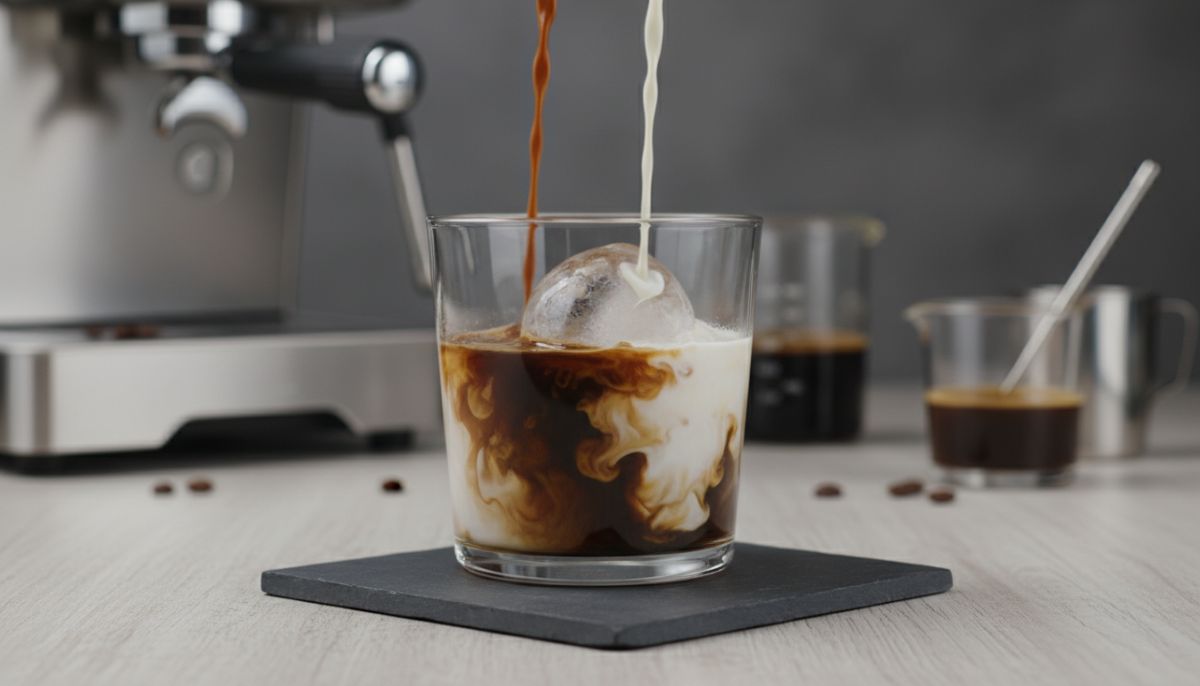
The surface area of your ice dictates the melt rate. Crushed ice melts instantly. Standard cubes are better, but large "king cubes" (spheres or large squares) are superior. They have high thermal mass but low surface area relative to volume, chilling the liquid effectively with slower dilution.
Method 2: The Shakerato (Texture and Chill)
The Shakerato technique borrows from mixology to solve the texture problem. Espresso loses its crema rapidly when poured over ice because the oils solidify and the CO2 bubbles collapse.
The Protocol:
- Extract a double shot of espresso into a small pitcher.
- Add sugar or simple syrup immediately while the espresso is hot to ensure dissolution.
- Pour the espresso into a cocktail shaker filled with ice.
- Shake vigorously for 10-15 seconds.
- Strain into a chilled glass (exclude the used ice).
Shaking aerates the coffee, creating a thick, persistent foam that replicates the mouthfeel of hot espresso crema. This method chills the coffee to near-freezing temperatures faster than any other method due to the forced convection of liquid moving over ice. The result is intense, cold, and velvety.
Method 3: Zero-Dilution Tools (Hyperchiller & Steel Cubes)
For those demanding pure espresso strength without a single drop of added water, thermal displacement tools are necessary.
The Hyperchiller
This device uses concentric stainless steel chambers filled with frozen water. The espresso is brewed or poured into the central chamber, where it is sandwiched between two layers of ice-cold steel. The liquid never touches the ice.
- Performance: Drops coffee from 93°C to 25°C in roughly 60 seconds without dilution.
- Workflow: Requires freezer space and pre-planning.
Stainless Steel & Whiskey Stones
Reusable cubes (steel or soapstone) can be kept in the freezer and placed in your catch cup. Brewing directly onto frozen steel cubes flash-chills the espresso. Since steel does not melt, the TDS remains identical to the hot extraction.
Warning on Acidity: When coffee is flash-chilled without dilution, acidic notes become more prominent. Cold temperatures mask sweetness. If you use this method with a light roast, it may taste sharp or "lemon-like." If you experience this, consult our guide on troubleshooting sour espresso.
Method 4: Compound Chilling
Compound chilling is the "gold standard" for coffee competitions and high-end cafes. It combines multiple cooling vectors to drop temperature instantly, preserving volatile aromatics that usually escape with steam.
The Setup:
- Place a metal frothing pitcher in the freezer.
- Place stainless steel whiskey stones inside the frozen pitcher.
- Brew your espresso directly into this super-chilled vessel.
The thermal shock is immediate. The steam is condensed back into liquid, trapping aromatic compounds that provide the "nose" of the coffee. This method produces the most flavorful, aromatic iced espresso possible, though it requires the most preparation.
Bean Selection and Roasts
Not all coffees perform well over ice. Heat facilitates the perception of sweetness and body. When you remove heat, you rely heavily on the coffee’s inherent solubility and roast profile.
- Light Roasts (Washed): Often perform poorly as iced espresso unless heavily sweetened. The high acidity translates to sourness when cold.
- Natural Process / Medium-Dark Roasts: These are ideal. Natural processed coffees often have fruit-forward, jammy notes that taste excellent cold. Darker roasts provide chocolate and caramel notes that cut through milk and dilution.
For a deeper dive on how processing affects flavor, read Washed vs. Natural Process: Adjusting Your Recipe.
Sweeteners and Workflow
Granulated sugar will not dissolve in cold liquid; it will settle at the bottom of the glass. You must create a workflow that incorporates sweetener while the espresso is hot.
- Bottom Dosing: Put sugar or syrup in the cup before brewing. The hot espresso falling onto the sugar, combined with the turbulence of the flow, dissolves it instantly.
- Syrups: Liquid simple syrup (1:1 sugar to water) mixes instantly with cold liquids. This is the preferred method for high-volume bars.
Keeping your station tidy with different syrups is crucial for speed. See our tips on organizing syrups and coffee stations.
Milk and Alternatives
If you are making an Iced Latte, the milk makes up the majority of the drink. Unlike steaming, where you can improve the texture of milk, cold milk is static. However, you can use a French Press or a handheld frother to cold-foam milk, adding texture without heat.
Plant-based milks often curdle in iced coffee due to the acidity of the espresso and the temperature shock. To prevent this, pour the espresso slowly into the milk, rather than the milk into the espresso, or use a lower-acidity bean. For more on handling non-dairy options, refer to Mastering Plant-Based Milks.
Conclusion
Making excellent espresso over ice is not just about temperature; it is about managing concentration. By understanding that ice is an ingredient (water), you can adjust your ratios and tools to compensate. Whether you choose the texture of the Shakerato, the purity of the Hyperchiller, or the convenience of a recipe-adjusted direct brew, the goal is high TDS and low bitterness.
Frequently Asked Questions
Brewing over ice doesn’t inherently make espresso bitter; in fact, the rapid cooling can lock in acidity, sometimes making it taste sour. However, if the ice melts excessively, the drink becomes watery and loses sweetness, which can be perceived as bitter or harsh. Using a darker roast or a tighter brew ratio helps prevent this.
You cannot prevent ice from melting if you pour hot liquid on it. To minimize melting, you can use a Hyperchiller to flash-cool the espresso before pouring, use stainless steel ‘whiskey stones’ to cool the liquid without dilution, or use ‘coffee ice cubes’ made from frozen brew so that the melt adds flavor rather than water.
Medium to Medium-Dark roasts are generally best for iced espresso. Cold temperatures suppress the palate’s ability to perceive sweetness, making Light roasts taste overwhelmingly acidic or sour. Darker roasts provide the chocolate and caramel notes that persist even when chilled or mixed with milk.
Sourness in iced espresso is usually caused by underextraction or thermal shock accentuating natural acidity. To fix this, try grinding finer, using a slightly higher brew temperature, or switching to a coffee bean with lower natural acidity (like a washed Central American or a Dark Roast).
Subjectively, yes, if you value texture. A Shakerato creates a thick, creamy foam and chills the drink faster than stirring. However, it requires more effort and equipment (a cocktail shaker). If you prefer a pure black coffee liquid without foam, a regular iced espresso or Americano is preferred.
For a standard double shot (40g liquid), use at least 150g of ice if you want the drink to remain cold without melting instantly. The higher the thermal mass of the ice, the slower it will dilute. Filling the glass to the rim with ice is always better than using just a few cubes.