Tired of dripping coffee grounds on your way to the trash? We compare open-style versus drawer-style knock boxes to help you decide which espresso accessory fits your workflow and counter space best.
Key Takeaways
- Workflow Efficiency: A dedicated knock box speeds up the cleaning process and reduces mess between shots.
- Space Considerations: Open boxes are portable and small; drawer boxes require a larger footprint but can often sit underneath your grinder.
- Hygiene & Odor: Drawer styles conceal old pucks, while open styles promote airflow but leave grounds visible.
- Noise Control: High-quality knock boxes feature shock-absorbing rubber bars to dampen the loud ‘thump’ of cleaning your portafilter.
There is a specific sound that signals the completion of a morning ritual for home baristas: the solid, satisfying thump of a portafilter hitting a rubber bar, dislodging a spent puck of coffee. If you are still walking across the kitchen to bang your portafilter against the side of a plastic trash can, you are risking damage to your equipment and creating an unnecessary mess.
Enter the knock box. While it may seem like a simple bucket, choosing the right style—specifically the debate between the Drawer and the Open Style—can significantly impact your daily workflow. Whether you are working with a compact setup or a sprawling coffee station, the right choice depends on your specific needs regarding space, noise, and aesthetics.
The Role of the Knock Box in Home Espresso
A knock box is essentially a durable container with a transverse bar (usually covered in rubber) designed to catch spent coffee grounds. It prevents you from having to scoop hot, wet grounds out of the basket or bang your expensive heavy brass portafilter against fragile kitchen bins.
However, as you move from beginner setups to more advanced gear, you will realize that accessories are just as important as the machine itself. If you are showing signs you are ready to upgrade from appliance grade gear, a dedicated knock box is likely next on your shopping list. Let’s break down the two main contenders.
The Open Style Knock Box: The Classic Cylinder
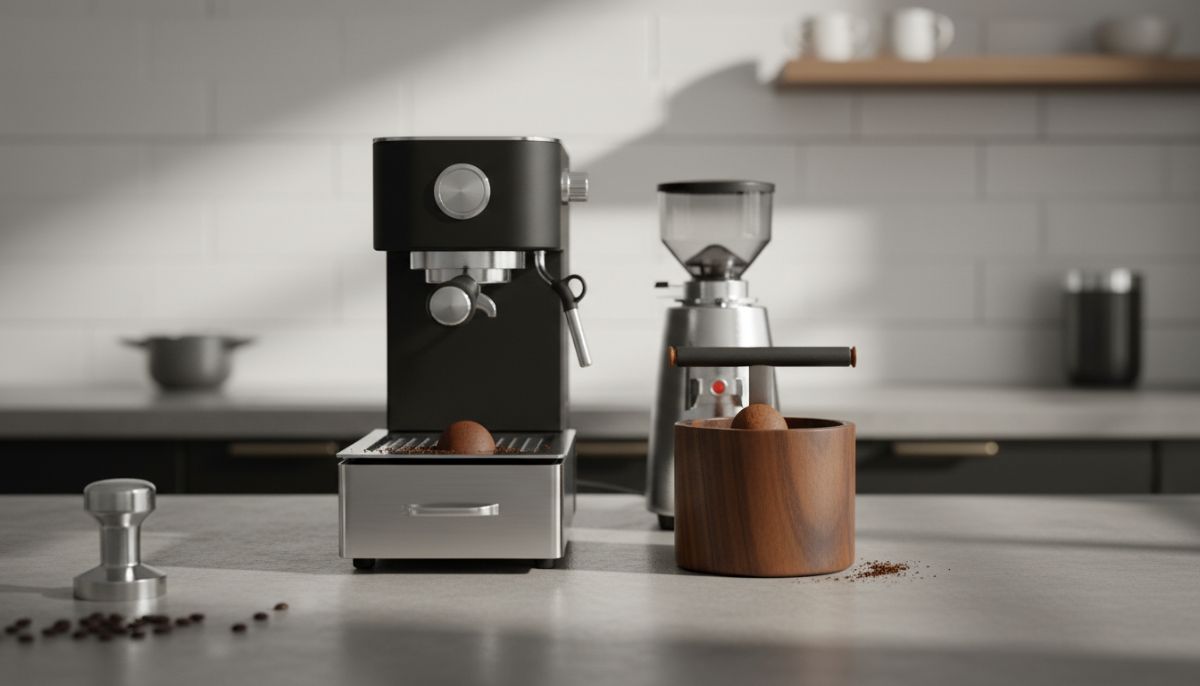
The open-style knock box is what you typically see in small cafes or tucked into the corner of a home espresso bar. They are usually cylindrical, resembling a small bucket with a bar across the top.
Pros of Open Style
- Portability: You can move it around easily. If you need to clean behind your machine or bring the bin to the trash, it is effortless.
- Easy to Clean: Most open boxes are made of plastic or stainless steel with removable parts. You can quickly dump the grounds and rinse the container.
- Footprint: They take up very little counter space and can be tucked away in a cupboard when not in use.
Cons of Open Style
- Stability: Lighter models can shift or bounce when you strike them hard, requiring you to hold the box with one hand while knocking with the other.
- Capacity: They typically hold fewer pucks than drawers, meaning more frequent trips to the compost bin.
- Mess: Because they are open, coffee splatters can sometimes escape the rim if you strike too aggressively.
The Drawer Knock Box: The Professional Foundation
Drawer-style knock boxes are rectangular units designed to sit flat on the counter. Often, they are reinforced so you can place your grinder directly on top of them, effectively saving counter space by utilizing verticality.
Pros of Drawer Style
- Workflow Ergonomics: The drawer integrates seamlessly into the workspace. You grind, tamp, brew, and then knock the puck out right below the grinder without moving your feet.
- Aesthetics & Odor Control: The drawer slides shut, hiding the sight of molding coffee pucks and keeping odors contained.
- Stability: These units are heavy. They do not slide around, allowing for a confident, one-handed knock.
Cons of Drawer Style
- Size Requirements: While they save space by acting as a base, they are physically large. If you have low cabinets, the added height to your grinder might be an issue.
- Maintenance: Removing the drawer to dump grounds can sometimes be more cumbersome than grabbing a small bucket.
- Price: High-quality stainless steel drawers are significantly more expensive than plastic open boxes.
Critical Comparison Factors
1. Counter Space and Layout
Before buying, measure your dedicated coffee area. If you are struggling with a lack of real estate, you might assume the smaller open box is better. However, a drawer box that sits under your grinder actually consumes zero additional footprint. For those dealing with tight quarters, check out our guide on best espresso machines for small spaces to see how a drawer setup might complement a compact machine.
2. The Noise Factor
Espresso preparation can be noisy. Between the pump and the grinder, adding a loud “BANG” to the mix can be jarring, especially for the rest of your household in the morning. Drawer boxes, due to their mass and rubber feet, often absorb sound better than hollow, plastic open boxes. If minimizing decibels is a priority for you, pairing a solid drawer box with one of the quietest coffee grinders for early risers creates the ultimate stealth setup.
3. Hygiene and Mold
Coffee grounds are wet, warm, and organic—a perfect breeding ground for mold. In an open box, airflow helps dry the pucks out slightly, but they are unsightly. In a closed drawer, pucks stay moist longer, which can lead to mold growth if you aren’t diligent about emptying it. regardless of which style you choose, cleaning is non-negotiable. We recommend incorporating the knock box into your routine outlined in our cleaning manifesto to prevent bacterial buildup.
4. The Workflow
Think about your puck prep. After you weigh your beans and distribute the grounds—perhaps debating the science of the WDT tool—you pull your shot. The immediate next step is clearing the portafilter. If you use a drawer, the motion is subtle and contained. If you use an open box, you generally have to pick it up or move toward it. For baristas who value efficiency and speed, the drawer wins.
Final Verdict: Which One Should You Buy?
Choose the Open Style if:
- You are on a budget.
- You have a unique counter configuration where a drawer won’t fit under your grinder.
- You prefer washing your accessories in the sink frequently.
Choose the Drawer Style if:
- You want a cleaner, “cafe-style” aesthetic.
- You have limited counter width but plenty of vertical clearance.
- You want a heavy, stable base that doesn’t slide when you knock.
Conclusion
Ultimately, both the drawer and open-style knock boxes serve the same essential function: keeping your portafilter clean and your trash can free of hot coffee pucks. The choice comes down to your kitchen layout and how much you value the streamlined look of a drawer versus the portability of an open bin. Whichever you choose, your portafilter (and your floors) will thank you.
Frequently Asked Questions
You can, but it is not recommended. Banging a heavy metal portafilter against a plastic trash can rim can damage both the bin and your equipment. It also creates a mess as wet coffee grounds tend to splatter.
Ideally, you should empty it every 2-3 days. Coffee grounds are moist and organic, making them prone to mold growth if left sitting in a dark, warm container for too long.
Most are designed to fit standard home and commercial grinders, but it is crucial to measure the height. Ensure that placing your grinder on the drawer doesn’t make it too tall to fit under your kitchen cabinets.
Yes! Spent coffee grounds are excellent for composting or can be used directly in the garden for nitrogen-loving plants.