
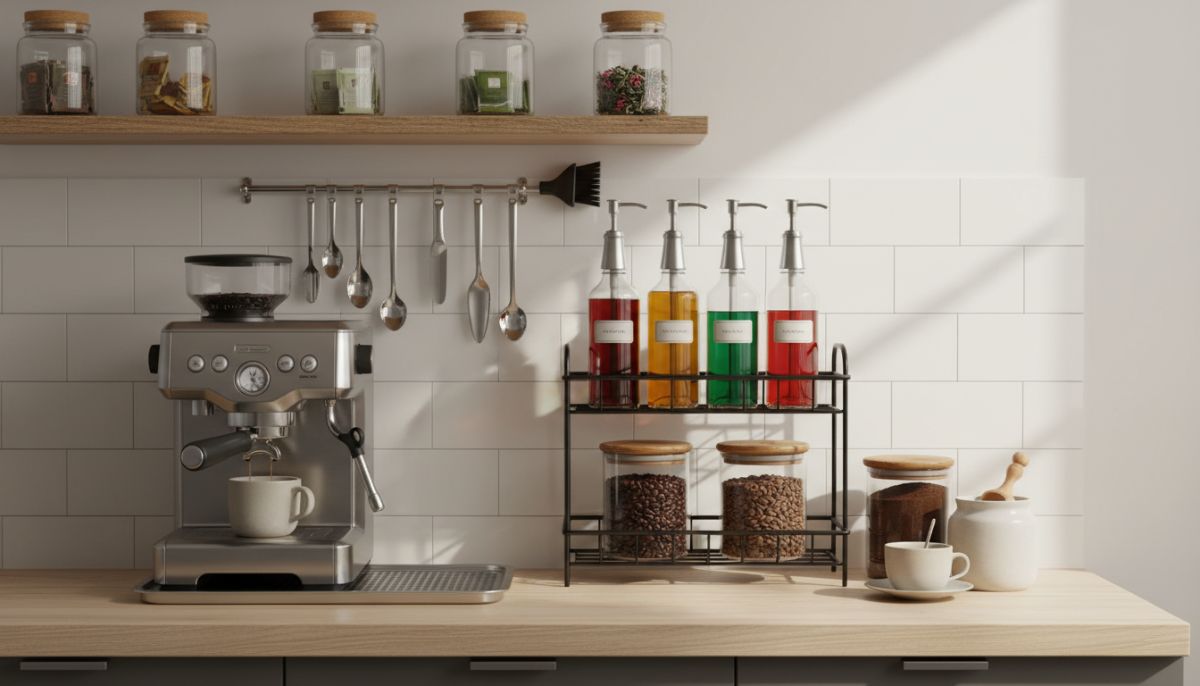
Maximize your home coffee bar with expert storage solutions for syrups and beans. Discover specific height clearance guides, drip-free hacks, and freshness-preserving organization strategies for small spaces.
Key Takeaways
- Verticality is Key: Use tiered racks and floating shelves to maximize counter space in small kitchens.
- Mind the Height: Monin and Torani bottles with pumps require 13.5–15 inches of vertical clearance.
- Preserve Freshness: Store beans in opaque, airtight containers with CO2 valves to prevent oxidation and UV damage.
- Workflow First: Arrange items ergonomically—beans near the grinder, syrups near the final assembly zone.
- Drip Defense: Utilize silicone mats or washable trays under syrup pumps to protect porous countertops.
A cluttered coffee station destroys the workflow of your morning ritual. While the espresso machine is the centerpiece, the sprawling collection of syrup bottles, bean bags, and accessories often creates chaos. Organizing these elements requires more than just aesthetic baskets; it demands a strategy that balances visual appeal with barista-level ergonomics. This guide covers the specific logistics of storing syrups and beans effectively, addressing the nuances of bottle heights, freshness preservation, and limited counter real estate.
The Syrup Conundrum: Height, Drips, and Access
Syrup bottles are notoriously difficult to organize due to their height and sticky nature. The two most common brands found in home cafes, Monin and Torani, present specific spatial challenges that standard kitchen shelving often fails to accommodate.
Clearance Requirements for Vertical Storage
Before purchasing shelving, you must account for the added height of the syrup pump. Standard 750ml bottles fit in most cabinets, but once a pump is attached, they often become too tall.
- Monin 750ml: Bottle height is approx. 12.25 inches. With pump: ~14.5–15 inches.
- Torani 750ml: Bottle height is approx. 11.5 inches. With pump: ~13.5–14 inches.
If you plan to place these under upper cabinets, ensure you have at least 16 inches of clearance to allow your hand to comfortably depress the pump.
Tiered Racks vs. Lazy Susans
The layout of your corner determines the best organizer:
- Tiered "Step" Shelves: Best for straight walls. Acrylic risers allow you to see the labels of the back row. However, ensure the "step" depth is at least 3.5 inches to accommodate the 3-inch diameter of standard syrup bottles. This setup is ideal for visual inventory but requires significant horizontal width.
- Lazy Susans (Turntables): The superior choice for tight corners. A 12-inch rotating tray can hold 5-7 bottles. This keeps everything accessible without requiring you to reach over hot equipment. Look for turntables with high walls or a non-slip liner to prevent bottles from tipping during rotation.
Solving the "Sticky Drip" Issue
Even the best pumps drip eventually. Sugar residue can ruin porous countertops like marble or unsealed wood. To combat this, place a bar service mat or a slim silicone tray directly under the nozzle zone. These are easily washable and delineate the "flavor zone" from the brewing zone. Regular cleaning is essential; failing to wipe down sticky residue attracts pests and bacteria. For a deeper dive into station hygiene, review our cleaning manifesto for maintaining a pristine setup.
Bean Storage: Balancing Aesthetics and Freshness
Displaying coffee beans in glass jars looks beautiful on Instagram, but it is often detrimental to the coffee’s quality. Light and oxygen are the enemies of freshness.
The UV Light Problem
Direct sunlight and even ambient kitchen light degrade the volatile oils in roasted coffee, leading to flat flavors. If you use clear containers for aesthetic purposes, they must be stored inside a cabinet or in a windowless corner. For open-air countertops, use opaque ceramic or stainless steel canisters.
Air-Tight vs. CO2 Valves
Freshly roasted coffee degasses carbon dioxide. A completely sealed jar can trap this gas, preventing the beans from aging properly, or in extreme cases, causing the lid to pop. The gold standard for storage is a canister with a one-way CO2 valve (like the Airscape or Fellow Atmos). These allow gas to escape without letting oxygen in. Understanding the roast date is crucial here; older beans degas less and are safer in standard jars. Learn more about reading dates in our guide on how to read a coffee bag like a professional.
Single Dosing Vials vs. Hoppers
For those aiming for extreme precision and minimal clutter, single-dosing cellars (racks of glass test tubes containing pre-weighed doses) are a high-end solution. This workflow reduces the need for large bags on the counter and speeds up the morning routine. However, it requires prep time. If you prefer keeping beans in the hopper, ensure your grinder has a UV-tinted hopper, or only fill it with what you will use that day. For a detailed comparison of workflows, read our analysis on single dosing vs. hopper grinders.
Workflow Ergonomics: The "Barista Triangle"
Organizing is not just about storage; it is about movement. Arranging your station based on the sequence of usage minimizes cross-over motion and spills.
- Zone 1: Prep (Dry). This area should house your scale, grinder, and beans. Keep your portafilter tools here. If you use WDT tools or levelers, a small drawer organizer or magnetic strip can keep them off the counter. See how tools impact the process in our article on the distribution tool vs. tamper debate.
- Zone 2: Brew (Wet). The espresso machine dominates this zone. Keep this area clear of clutter to allow for steam wand purging and puck knocking.
- Zone 3: Finish (Flavor). This is where syrups, cups, and spoons reside. Placing syrups after the machine prevents sugar splashes on the brew group.
Creative Solutions for Small Spaces & Renters
When counter space is at a premium, you must think vertically and utilize hidden areas.
Wall-Mounted "Floating" Racks
Installing floating shelves above the machine is the most efficient way to clear the counter. Use heavy-duty anchors, as glass bottles are heavy. For renters who cannot drill, avoid suction cups for heavy syrups. Instead, look for magnetic spice racks. If your fridge is next to your coffee station, these high-strength magnetic shelves can hold 2-3 syrup bottles or coffee canisters securely without damaging walls.
Under-Cabinet Tension Rods
If you have a gap between your upper cabinets and the wall, a tension rod system can hold S-hooks for hanging mugs or lightweight tools, freeing up the surface below for your bean storage.
Decanting for Cohesion
If the visual noise of mismatched branded packaging stresses you out, decanting is the answer. Transfer syrups into uniform glass bottles with minimalist labels. Ensure the bottles are food-grade and easy to clean. For beans, transferring them from the bag to a uniform canister instantly elevates the look of the station. However, save the original bag’s tag with the tasting notes and tape it to the bottom of the canister for reference.
Conclusion
Organizing a coffee station requires a balance between the visual appeal of a home cafe and the functional requirements of a commercial bar. By accounting for the height of pump bottles, protecting beans from UV light, and establishing a logical workflow, you can create a clutter-free zone that enhances your brewing experience. Whether you choose premium tiered racks or clever renter-friendly hacks, the goal remains the same: a seamless path from bean to cup.
Frequently Asked Questions
You should plan for at least 15 inches of clearance. A Monin bottle with a pump is approximately 14.5 inches tall, while Torani is slightly shorter at around 13.5 to 14 inches. Extra space is needed to comfortably use the pump.
It is not recommended unless they are kept in a dark cupboard. Clear glass allows UV light to penetrate, which degrades the coffee oils and accelerates staling. Opaque or UV-blocking containers are superior for countertop display.
Place a silicone bar mat or a washable ceramic tray underneath your syrup organizer. This catches drips, prevents sticky residue from damaging porous countertops, and makes cleaning significantly easier.
A Lazy Susan (rotating turntable) is typically best for corners. It allows easy access to bottles stored in the back without needing to reach over equipment or knock items over.
Freezing is excellent for long-term storage (over a month) if the bag is unopened and vacuum-sealed. For daily use, keep a small amount in an airtight canister at room temperature to avoid condensation issues.