
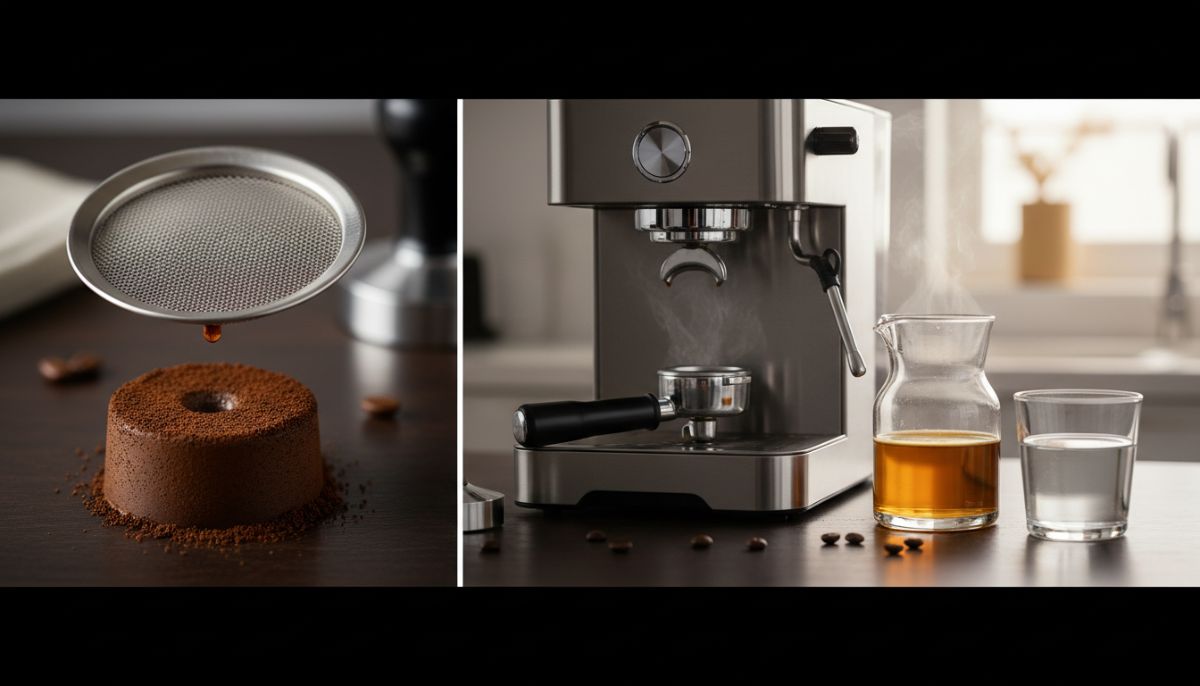
Are espresso puck screens a necessary upgrade or just another accessory? We break down how they impact extraction, flavor clarity, and machine maintenance to help you decide.
Key Takeaways
- Cleanliness King: Puck screens drastically reduce the amount of coffee grounds sucked back into the grouphead, keeping your shower screen spotless.
- Improved Water Distribution: They act as a secondary shower screen, helping to soften water impact and reduce the risk of channeling.
- Thermal Considerations: Thicker screens can absorb heat, meaning they must be preheated to avoid lowering your brew temperature.
- Flavor Impact: While they don’t magically fix bad beans, they often result in slightly higher extraction yields and a cleaner, albeit lighter-bodied, shot.
If you have spent any time browsing espresso forums or Instagram reels lately, you have likely seen a small, circular mesh disc sitting on top of a coffee puck. This accessory, known as a puck screen, has rapidly transitioned from an obscure modification to a staple in many home barista setups. But in a world filled with endless gadgets promising the “God Shot,” it is healthy to be skeptical.
Is the puck screen a genuine innovation that improves the taste of your morning espresso, or is it simply a prophylactic tool to keep your machine clean? The answer, as with most things in coffee, is a bit of both. Let’s dive deep into the mechanics, the flavor impact, and the workflow changes required when using a puck screen.
What Exactly is a Puck Screen?
A puck screen is a multi-layered, sintered stainless steel mesh disc (usually 1.7mm thick, though thinner versions exist) that sits directly on top of your tamped coffee bed inside the portafilter basket. It acts as a barrier between the coffee and the grouphead’s shower screen.
While it looks simple, its function is twofold: it physically separates the coffee from the machine’s plumbing, and it modifies how water enters the puck during extraction. It fits most standard sizes (51mm, 53mm, and 58mm), making it compatible with everything from entry-level appliances to prosumer espresso machines.
The Cleanliness Factor: A Maintenance Dream
Let’s start with the most undisputed benefit: hygiene. When you stop a shot on a traditional espresso machine, a 3-way solenoid valve typically opens to release pressure. This sudden vacuum can suck coffee fines and oils up toward the shower screen and into the grouphead. Over time, this buildup affects flavor and requires chemical backflushing.
A puck screen effectively blocks this material. After brewing, you will notice that the top of the screen is wet but generally free of grounds, and your machine’s shower screen remains pristine. If you hate the daily chore of scrubbing the grouphead, this accessory is worth the investment for the time it saves alone.
However, keep in mind that using a screen doesn’t eliminate the need for maintenance entirely. You still need to follow a routine for cleaning your espresso machine, but the screen certainly extends the time between deep cleans.
Impact on Extraction and Channeling
Beyond cleanliness, the puck screen serves as a secondary water dispersion tool. Even high-end machines can sometimes deliver water a bit aggressively from the shower screen, digging a small crater into the center of the puck before pressure builds up. This disrupts the puck integrity and leads to uneven extraction.
Softening the Water Flow
By placing a mesh screen on top of the coffee, the water hits the screen first, breaks up, and rains down gently and evenly across the entire surface area of the coffee bed. This creates a more uniform saturation phase.
This mechanism is particularly helpful in preventing channeling—the phenomenon where water finds the path of least resistance, resulting in sour, weak coffee. If you are struggling to spot and fix uneven water flow, adding a puck screen can act as a safety net, compensating for minor errors in your tamping or distribution technique.
Puck Integrity
Because the screen compresses the puck slightly and prevents the water from disturbing the surface, the spent puck usually comes out as a solid, dry “cookie.” This makes knocking it out easier and cleaner. If you use a knock box, you will appreciate how cleanly the puck releases from the basket.
Does It Actually Improve Flavor?
This is the controversial part. Does a cleaner machine and better water distribution translate to a noticeable difference in the cup?
The Consensus: Yes, but it is subtle. Because the screen promotes even extraction, you can often grind slightly finer without choking the machine or causing channeling. Finer grinds increase surface area, allowing you to extract more flavor compounds. Many baristas report that shots pulled with a puck screen have slightly higher clarity and sweetness.
The Trade-off: Some users note a slight reduction in texture or body. By filtering the water entry so effectively and compressing the puck, the flow dynamics change. If you love a thick, syrupy, heavy-bodied ristretto, a puck screen might lean the shot out slightly. However, if you prefer modern, light-roast espresso where clarity is key, the screen is a fantastic tool.
Workflow and Thermal Mass
Implementing a puck screen does add a step to your workflow. You have to place it carefully, brew, and then fish it out of the knock box (be careful—it retains heat like crazy).
The Temperature Variable
Standard puck screens contain a significant amount of metal. If you place a cold screen onto your coffee and insert it into the machine, that metal will absorb heat from the brew water, potentially lowering the slurry temperature by several degrees. This can be detrimental, especially for light roasts that require high heat.
To combat this, you should store your puck screen on top of your cup warmer or flush it with hot water before use. This is crucial for maintaining temperature stability, which is vital for consistent espresso.
Compatibility: Headspace Matters
Before you buy one, check your headspace. The gap between the top of your coffee puck and the shower screen is called headspace. A 1.7mm screen eats up a lot of that room.
If you overfill your basket, the screen might press too hard against the shower screen when you lock the portafilter in, potentially damaging the gasket or the coffee puck. You may need to dose down (e.g., use 17g in an 18g basket) or switch to precision baskets that are designed to accommodate specific doses more accurately.
The Verdict: Essential or Gimmick?
The espresso puck screen sits comfortably in the “highly recommended” category for most home baristas. While it isn’t strictly necessary to make good coffee, the benefits regarding machine cleanliness and extraction consistency are undeniable for the low price point.
It won’t fix a bad grinder or stale beans, and it doesn’t replace the need for good puck prep tools like the WDT tool. However, if you want to keep your grouphead clean and give your water distribution a helping hand, the puck screen is a winning addition to your bar.
Frequently Asked Questions
Yes, you should rinse it immediately to prevent oils from hardening. Once a week, soak it in a solution of coffee machine cleaner (like Cafiza) to dissolve stubborn buildup inside the mesh.
No. You still need to distribute and tamp your coffee to remove air pockets. The screen sits on top of the tamped puck to assist with water dispersion.
Often, yes. Because the screen improves water flow and reduces channeling, you may find you can grind slightly finer without choking the machine, leading to higher extraction.
Most likely, but you must buy the correct diameter. Common sizes are 58mm (commercial/Gaggia/E61), 54mm (Breville/Sage), and 51mm (Delonghi). Always measure your basket first.