
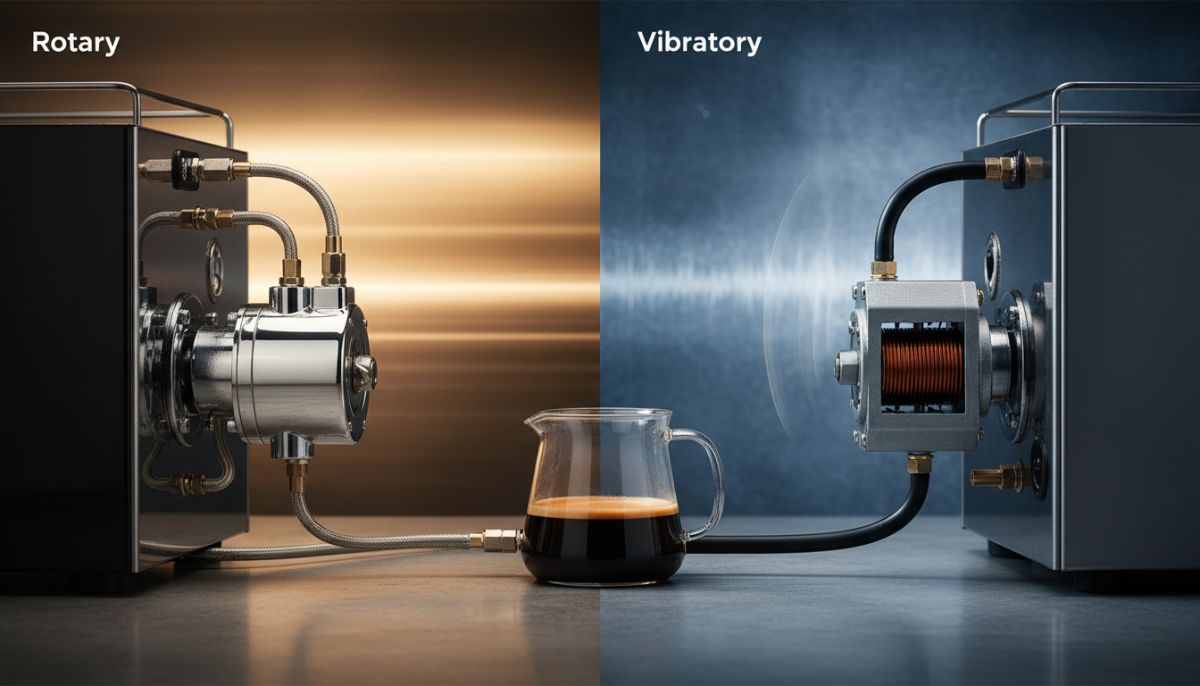
Stuck choosing between a rotary and a vibratory pump? We break down the differences in noise, plumbing capabilities, pressure profiles, and price to help you pick the perfect espresso machine.
Key Takeaways
- Noise Level: Rotary pumps are nearly silent; vibratory pumps produce a distinct buzzing sound.
- Plumbing: Only rotary pumps allow you to plumb your machine directly into a water line.
- Pressure Profile: Rotary pumps offer instant pressure, while vibratory pumps have a slower, progressive ramp-up.
- Cost: Rotary pumps significantly increase the price of an espresso machine due to their complex motor assemblies.
You have decided to upgrade your home coffee setup. You have spent hours researching boilers, grinders, and aesthetics. Then, you hit the spec sheet and see a line item that changes the price tag by several hundred dollars: the pump type.
The debate between rotary and vibratory pumps is one of the most common crossroads for home baristas. Is the extra cost of a rotary pump just for the luxury of silence? Or does it actually change the quality of the espresso in your cup?
While both pumps perform the same fundamental task—moving water from a reservoir to the grouphead at 9 bars of pressure—how they achieve this differs greatly. Let’s dive into the mechanics, the acoustics, and the workflow implications of both options.
The Vibratory Pump: The Industry Workhorse
If you have ever owned an entry-level to mid-range espresso machine, you likely owned a machine with a vibratory pump (often called a “vibe pump”). Invented in the 1970s by Ulka, these small devices revolutionized home espresso by making high pressure affordable and compact.
How It Works
A vibratory pump uses a piston inside a metal coil. An electric current runs through the coil, creating a magnetic field that pulls the piston back. A spring then pushes it forward. This oscillation happens roughly 60 times per second (based on the electrical frequency).
Because of this rapid back-and-forth motion, the pressure builds up progressively. It isn’t instant. This natural “ramp-up” can actually be beneficial for the puck, acting as a form of soft pre-infusion.
The Pros and Cons
Pros:
- Cost-Effective: They are cheap to manufacture and replace.
- Compact Size: They fit easily into smaller machine casings.
Cons:
- Noise: They create a noticeable buzzing or humming sound.
- Lifespan: They generally last 5-7 years before needing replacement.
- Not Plumbable: They rely on atmospheric pressure and cannot handle the line pressure of a direct water connection.
The Rotary Pump: The Commercial Standard
Rotary vane pumps are the heavyweights of the coffee world. You will find these in almost every commercial café machine and high-end home unit. They are larger, heavier, and rely on a dedicated electric motor.
How It Works
A mechanical motor spins a disc located inside a large brass chamber. This disc has offset vanes that slide in and out against the chamber walls. As the disc spins, it creates a vacuum that draws water in and pushes it out with immense force.
Unlike the vibe pump, the pressure here is immediate. When you lift the lever, you hit 9 bars almost instantly unless your machine utilizes a restrictor or a specific pre-infusion chamber.
The Pros and Cons
Pros:
- Silence: The motor hum is barely audible; you mostly hear the water flowing.
- Plumbing Capability: These pumps can handle line pressure, allowing you to connect directly to a water supply.
- Durability: With proper care, they can last for decades.
Cons:
- Size: They require a larger chassis, meaning a bigger footprint on your counter.
- Cost: The motor and pump assembly is significantly more expensive than a vibe pump.
Direct Comparison: Noise Levels
This is the biggest selling point for the rotary pump. If you are an early riser making espresso while your family sleeps, a vibratory pump can be a problem. The sound is a rhythmic, metallic buzz that can resonate against your kitchen cabinets.
A rotary pump, by comparison, emits a low hum. It feels luxurious. It sounds like a commercial operation. If you pair a rotary pump machine with a silent grinder, your morning routine becomes a meditative experience rather than a noisy industrial process.
Plumbing In: The Ultimate Convenience
For many home baristas, the ability to plumb the machine in is the deciding factor. Vibratory pumps generally draw from a reservoir. This means you must manually refill the tank and, more importantly, manually clean it.
Rotary pumps allow for direct plumbing. This unlocks two major benefits:
- Never refilling the tank: You have an endless supply of water.
- Line-pressure pre-infusion: On machines like those with the classic E61 grouphead, you can use the water line’s natural pressure (usually 2-3 bar) to gently wet the coffee puck before engaging the pump.
However, once you plumb a machine in, you must be vigilant about filtration. Direct lines require a robust filtration system to prevent calcification. Neglecting this is a fast track to expensive repairs. For a deeper dive on this, read our guide on managing your water chemistry.
Pressure Profile and Taste
Does the pump change the flavor? This is controversial. In a blind taste test, it is very difficult to distinguish a shot pulled on a vibe pump versus a rotary pump, provided the pressure is set correctly on both.
However, the consistency differs. Rotary pumps offer unwavering pressure. Vibratory pumps can sometimes be affected by the resistance of the coffee puck. If you grind too fine, a vibe pump might struggle to maintain full pressure, leading to flow issues.
If you are experiencing inconsistent flow regardless of your pump type, you should first look at how the water is moving through the puck. Check for signs of channeling before blaming the motor.
Which One Fits Your Setup?
Choosing between these two technologies often comes down to budget and space, rather than just performance. It also depends on the overall architecture of the machine. For example, you will rarely find a rotary pump in a compact single-boiler unit.
If you are looking at high-end Dual Boiler machines, you often have a choice. To understand where these pumps fit into the broader machine ecosystem, check our comparison of heating system architecture.
Choose a Vibratory Pump If:
- You are budget-conscious and want to save $300-$500.
- You have limited counter space (vibe pump machines are smaller).
- You don’t mind a little noise in the morning.
- You have no intention of plumbing the machine in.
Choose a Rotary Pump If:
- Silence is a priority for your household.
- You want the convenience of direct plumbing.
- You prefer the tactile feel of commercial-grade equipment.
- You want a machine with a longer operational lifespan.
Maintenance Considerations
Regardless of the pump type, longevity comes down to maintenance. A rotary pump is robust, but if scale builds up inside the vane chamber, it can seize the motor. A vibratory pump is cheaper to replace, but it works harder and heats up faster.
To ensure either pump lasts as long as possible, stick to a strict routine maintenance schedule. Backflushing puts stress on the pump, but it is necessary for a clean machine—just ensure you aren’t running the pump dry.
Conclusion
Is silence worth the extra cost? If you plan to keep your machine for a decade and value a quiet, seamless workflow, the answer is a resounding yes. The rotary pump offers a level of refinement and plumbing capability that transforms the home barista experience.
However, do not feel like you are settling if you choose a vibratory pump. They are capable of producing God-tier espresso shots and have powered the home espresso revolution for decades. Analyze your budget, measure your counter space, and choose the motor that keeps your morning routine running smoothly.
Frequently Asked Questions
Generally, no. Rotary pumps are significantly larger and require a different motor assembly. Most machines designed for vibratory pumps do not have the physical space or mounting brackets to accommodate a rotary pump.
Not inherently. Both pumps can generate the required 9 bars of pressure. While rotary pumps offer more consistent pressure, the taste difference in the cup is negligible for most users. The main benefits are silence and plumbing capability, not flavor.
A vibratory pump typically lasts 5 to 7 years depending on usage. A rotary pump is built for commercial use and can last 10+ years with proper water filtration and maintenance.
A healthy rotary pump should be quiet. If it is making a loud grinding or rattling noise, it may be due to cavitation (lack of water supply), scale buildup inside the pump head, or a failing bearing in the motor.