
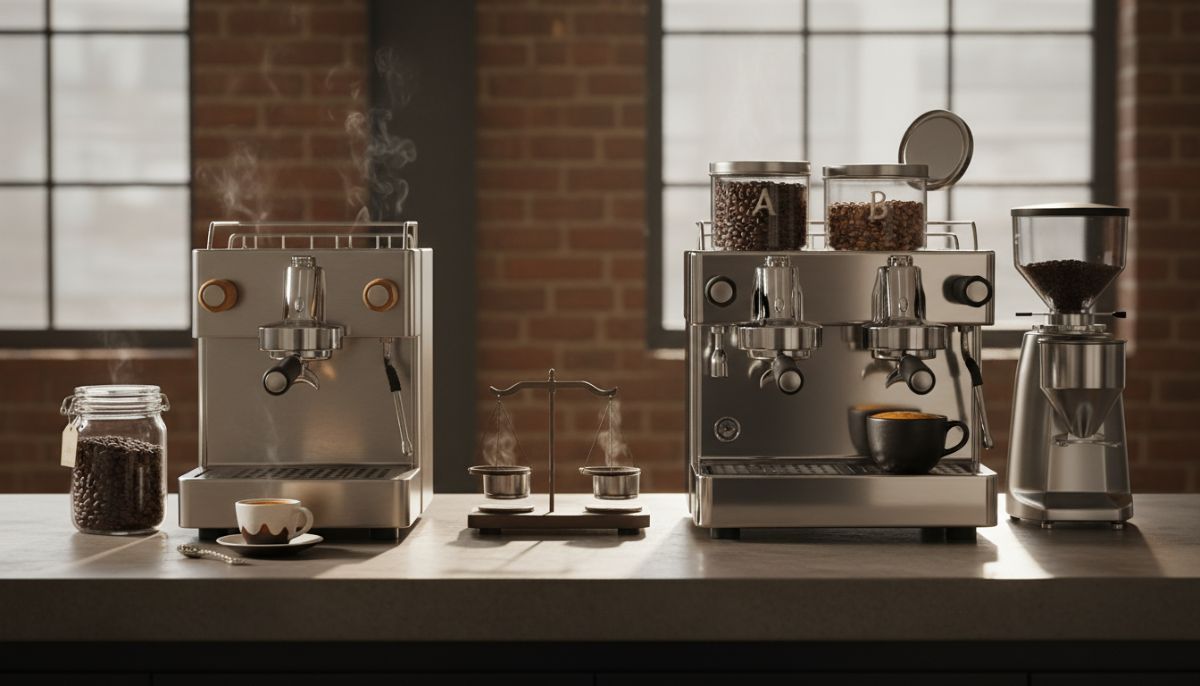
Should you pull shots with a consistent blend or chase the terroir of a single origin? We break down the flavor profiles, brewing challenges, and equipment needs for both.
Key Takeaways
- Consistency vs. Character: Blends offer a balanced, reliable flavor profile year-round, while Single Origins highlight unique, region-specific tasting notes.
- Brewing Difficulty: Single origins are generally less forgiving and require precise dialing in compared to blends.
- Milk Compatibility: Traditional espresso blends are designed to cut through milk; delicate single origins are often best enjoyed black.
- Equipment Impact: High-clarity grinders and precise temperature control benefit single origins significantly more than dark roast blends.
Walk into a modern third-wave café, and you are likely to be presented with a choice: “Would you like the house blend or the single origin guest espresso?” For the uninitiated, this question can feel like a pop quiz. For the home barista, it represents a fundamental fork in the road of your coffee journey.
The debate between Single Origin (SO) coffees and Blends is not just about geography; it is about philosophy, flavor goals, and extraction physics. While one promises a comforting, chocolatey hug, the other offers a wild, fruity adventure. But which one actually works best for espresso extraction? The answer depends heavily on your equipment, your palate, and your patience.
Defining the Contenders
The Espresso Blend
An espresso blend is a mix of beans from different origins, and sometimes different species (Arabica and Robusta), roasted together or post-blended. The goal of a roaster when creating a blend is balance and consistency.
Roasters design blends to produce a specific flavor profile—often chocolate, nuts, and caramel—that remains static regardless of the season. If a component bean from Brazil goes out of season, the roaster substitutes it with a similar Peruvian bean to keep the taste identical. Blends are engineered to produce high body, rich crema, and a flavor that creates a harmonious base for milk drinks.
The Single Origin
Single Origin coffee comes from one specific place. This could be a country, a specific region, or even a single farm (often called a microlot). The goal here is to highlight terroir—the unique characteristics imparted to the bean by the soil, climate, and altitude of that specific location.
Single origins are seasonal and finite. A washed Ethiopian Yirgacheffe might taste like jasmine and lemon zest, while a natural process Costa Rican might taste like strawberry jam. Once the harvest is sold out, it’s gone. In espresso, these coffees offer clarity and complexity but sacrifice the heavy body and consistency of a blend.
The Flavor Profile Showdown
The primary driver for your decision should always be taste. What are you looking for in your cup?
Blends are traditionally roasted darker to lower acidity and increase body. They are the comfort food of the coffee world. They provide that classic “espresso” punch. If you enjoy a thick, syrupy mouthfeel and traditional notes of dark chocolate or toasted hazelnut, blends are your best bet.
Single Origins are often roasted lighter to preserve delicate floral or fruit acids. This makes them polarizing. A shot of light-roast Kenyan espresso can be vibrant and juicy, but to a palate accustomed to Italian roasts, it might be shocking. However, if you are chasing distinct flavor notes—like blueberry, stone fruit, or Earl Grey tea—you will only find them in single origins.
Because flavor perception relies heavily on how the coffee is ground, your equipment plays a massive role here. For example, the geometry of your grinder burrs changes how these flavors are perceived. For a deeper dive, read our analysis on flat vs. conical burrs, as flat burrs typically favor the clarity needed for single origins.
Brewing Difficulty: The Forgiveness Factor
This is where the rubber meets the road for the home barista. Blends are generally “forgiving.” Because they are often roasted darker and designed for balance, a shot that runs 5 seconds too fast or too slow will still taste relatively good. They are easier to extract because the bean structure is more porous from the roast process.
Single origins, particularly light roasts, are notorious for being difficult to dial in. They are denser and harder to extract. If your puck prep isn’t perfect, or your temperature is slightly off, the result can be punishingly sour or astringent. Achieving the “God Shot” with a single origin is rewarding, but the window for success is much narrower.
To succeed with lighter single origins, you often need to adjust your brewing parameters significantly. You might need a finer grind and a longer ratio. For guidance on manipulating these variables, check out our step-by-step guide to dialing in espresso ratios.
The Milk Test
Are you a straight espresso drinker, or do you love cappuccinos and lattes? This answer heavily influences which bean you should buy.
- For Milk Drinks: Blends are the reigning champions. The bold, low-acid, chocolatey notes of a blend are strong enough to “cut through” the sweetness of steamed milk. A delicate, floral single origin often gets lost in a latte, or worse, its high acidity can make the milk taste slightly sour or curdled.
- For Straight Espresso/Americanos: This is where Single Origin shines. Without milk to mask the nuances, you can fully appreciate the bright acidity and complex aromatics of a specific region.
Technical Considerations for Home Baristas
If you decide to venture into the world of Single Origin espresso, you must ensure your equipment and technique are up to the task. Here are three critical factors:
1. Freshness is Non-Negotiable
While all coffee should be fresh, single origins degrade faster in terms of their unique aromatic compounds. You need to know exactly when your coffee was roasted. Understanding how coffee ages is vital; learn more about reading labels in our guide to coffee roast dates.
2. Puck Preparation
Because single origins are harder to extract evenly, channeling (where water finds a path of least resistance) is a major enemy. Uneven flow will ruin the clarity of a high-end bean. You simply cannot skip good puck prep. Tools like the Weiss Distribution Technique (WDT) become essential rather than optional. Does it really make a difference? Read about the science of puck prep and the WDT tool.
3. Yield and Ratio Adjustments
Most blends work well with a standard 1:2 ratio (e.g., 18g dose to 36g liquid). However, single origins often taste sour at this ratio because they are under-extracted. To balance the acidity, you often need to push the yield higher, perhaps to a 1:2.5 or 1:3 ratio (Lungo). Understanding where your shot falls on the spectrum is key. For a detailed breakdown, see our article on the Ristretto, Normale, and Lungo spectrum.
Which Should You Choose?
There is no “better” choice, only the right choice for your palate and workflow.
Choose a Blend if you want a reliable morning routine, mostly drink cappuccinos, or have an entry-level grinder. It will give you that classic coffee shop experience with minimal fuss.
Choose a Single Origin if you treat espresso as a hobby rather than just caffeine delivery. If you are willing to adjust your grinder daily, weigh every shot, and want to explore the diverse flavors of the world—from the berry notes of Ethiopia to the spice of Indonesia—then single origin is your path.
Regardless of your choice, the secret to great espresso lies in understanding the variables. If you find your shots are consistently disappointing regardless of the bean, it might be time to look at extraction issues. Start by troubleshooting why your espresso tastes sour to ensure your technique isn’t holding your beans back.
Frequently Asked Questions
Not necessarily. Single Origin offers unique, distinctive flavors from a specific region, while Blends offer balance, consistency, and a classic espresso taste. ‘Better’ depends entirely on your flavor preference.
Yes, but be careful. High-acidity (fruit-forward) single origins can sometimes taste sour when mixed with milk. Chocolatey or nutty single origins (like those from Brazil or Colombia) tend to pair better with milk.
Single origin coffees are often roasted lighter than blends to preserve their unique flavors. Lighter roasts are denser and harder to extract, requiring finer grind settings and more precise puck preparation to avoid sourness.
While you don’t need a ‘special’ grinder, a high-quality burr grinder is more important for single origins. Grinders that produce fewer fines (often using flat burrs) help highlight the clarity and flavor separation that make single origins special.