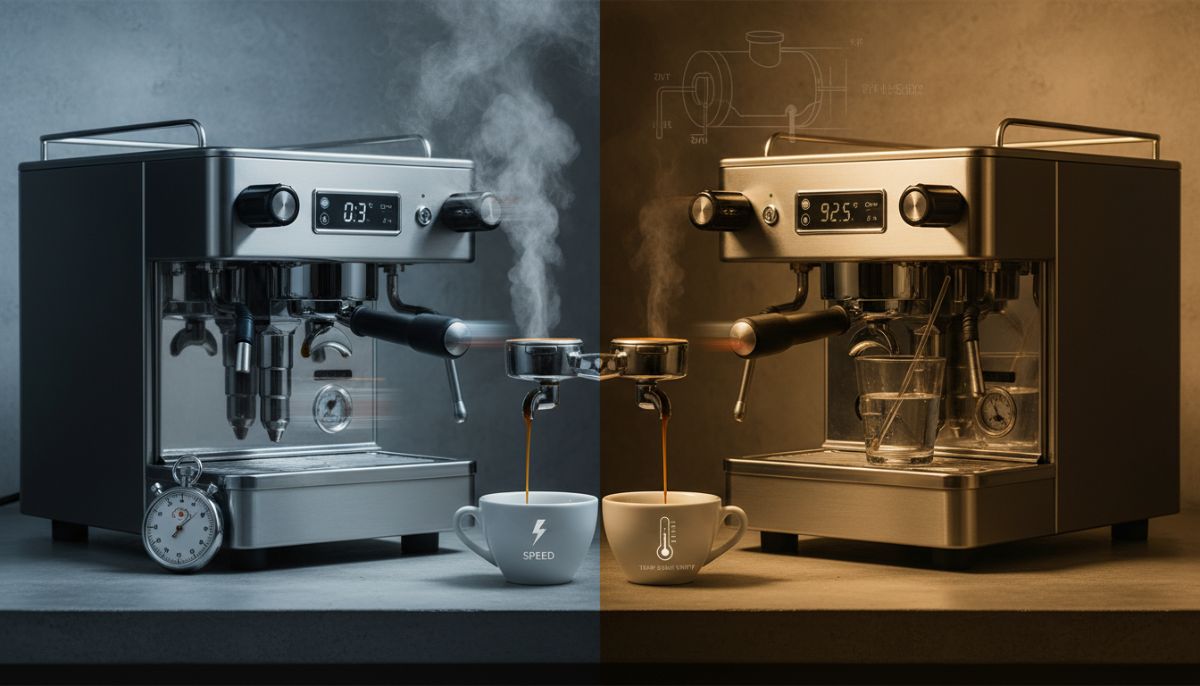
Choosing between a thermoblock and a boiler is the biggest decision when buying an espresso machine. We compare speed, temperature stability, and steam power to help you decide.
Key Takeaways
- Speed: Thermoblocks heat up in seconds, while boilers can take 15 to 30 minutes to stabilize.
- Stability: Boilers offer superior temperature stability due to thermal mass, which is crucial for consistent extraction.
- Steam Power: Boilers typically provide stronger, drier steam for texturing milk compared to the pulsing steam of a thermoblock.
- Cost: Thermoblocks are generally found in entry-level machines, whereas boilers dominate the prosumer and commercial market.
The heart of every espresso machine is its heating system. It dictates how long you wait for your morning coffee, how consistent your shots taste, and how easily you can froth milk for a latte. When shopping for a machine, you will inevitably face the showdown: Thermoblock vs. Boiler.
This isn’t just a technical specification; it is a choice between lifestyle and performance. Do you value speed and convenience, or are you chasing the perfect, temperature-stable extraction regardless of the wait time? Let’s dive deep into the mechanics, pros, and cons of each system.
What is a Boiler System?
The traditional boiler is the standard for commercial and high-end home espresso machines. It consists of a sealed metal vessel (usually copper, brass, or stainless steel) that holds a specific volume of water. An internal heating element brings this water to the desired temperature and holds it there.
The Pros of a Boiler
Thermal Stability: Once a boiler is hot, it stays hot. The large volume of water and the heavy metal construction create significant thermal mass. This means that when cold water enters the system during a shot, the temperature doesn’t plummet instantly. This stability is why many purists prefer single boiler, heat exchanger, and dual boiler configurations.
Steam Power: Because boilers hold water at high temperatures under pressure, they can release a powerful, continuous burst of dry steam. This makes creating microfoam much easier and faster.
The Cons of a Boiler
Warm-Up Time: You cannot simply turn it on and brew. A boiler needs time to heat the water and the metal surrounding it. Depending on the size, this can take anywhere from 15 to 45 minutes.
Energy Consumption: Keeping a large tank of water hot requires more energy than flash-heating small amounts, especially if the machine is left on for long periods.
What is a Thermoblock?
A thermoblock is an on-demand heating system. Instead of holding a reservoir of hot water, it takes cold water from the tank and pumps it through a narrow, heated labyrinthine pipe inside a metal block. The water is flash-heated instantly as it travels through the block.
The Pros of a Thermoblock
Speed: This is the biggest selling point. A thermoblock machine can be ready to brew in as little as 30 to 60 seconds. If you are rushing out the door in the morning, this speed is unbeatable.
Compact Size: Thermoblocks are significantly smaller than boilers. This allows manufacturers to design smaller footprints, making these machines perfect for compact kitchens where counter space is limited.
Fresh Water: Since water isn’t sitting in a heated tank for hours (or days), every shot is brewed with fresh water pulled directly from the reservoir.
The Cons of a Thermoblock
Temperature Inconsistency: Because the water is moving fast, it can be difficult to maintain a precise temperature throughout the entire shot. However, modern technology is narrowing this gap.
Weaker Steam: Thermoblocks produce steam by pulsing small amounts of water through the superheated block. This often results in “wetter” steam with less pressure, which can make texturing milk more challenging.
The Battle for Temperature Stability
Temperature stability is arguably the most critical factor in brewing espresso. If your water is too cool, your espresso will taste sour and underextracted. If it fluctuates too much, you can’t replicate a good shot.
Boilers generally win here because of thermal mass. However, modern thermoblocks have improved significantly. Many now include PID controllers which are crucial for regulating the heating pulses hundreds of times per second. While a cheap thermoblock might vary wildly, a high-end thermoblock (or “thermocoil”) with a PID can rival entry-level boilers in stability.
Steam Performance and Milk Texturing
If you drink straight espresso, the steam wand doesn’t matter. But if you love cappuccinos, the difference is noticeable. Boilers act like a steam engine—there is a reservoir of pressure ready to go. This allows for the rolling motion required for great latte art.
Thermoblocks often create a “thumping” sound when steaming. This is the pump pushing bursts of water into the heating element. It takes longer to heat the milk, and because the steam is wetter, it can dilute the milk slightly. To achieve cafe-quality microfoam, you often need to employ different techniques when using a thermoblock machine.
Maintenance and Longevity
Both systems fight the same enemy: scale. Mineral buildup from tap water can clog the narrow passages of a thermoblock more easily than it can fill a boiler. However, descaling a thermoblock is usually faster because there is less internal volume to flush.
Regardless of the system you choose, understanding your local water chemistry is vital to preventing damage. Boilers are generally more robust and easier for a technician to repair, whereas a clogged thermoblock often needs to be replaced entirely.
Which One Should You Buy?
The choice ultimately comes down to your budget and your morning routine.
Choose a Thermoblock If:
- You want to drink coffee within 2 minutes of waking up.
- You have limited counter space.
- You are looking at entry-level espresso machines under $500, as this technology keeps costs down.
- You mostly drink Americanos or straight espresso and steam milk only occasionally.
Choose a Boiler If:
- Flavor nuance and consistency are your top priorities.
- You steam multiple milk drinks back-to-back.
- You enjoy the ritual of coffee making and don’t mind a warm-up period.
- You want a machine that is built to last decades with proper maintenance.
Conclusion
There is no single “best” heating system, only the best one for your lifestyle. The boiler offers the consistency of a coffee shop, while the thermoblock offers the convenience of a modern appliance. Assess your need for speed against your desire for perfection, and you will find the right machine for your home bar.
Frequently Asked Questions
Yes. While early models struggled with pressure and temperature, modern thermoblocks are capable of generating the necessary 9 bars of pressure and maintaining adequate heat to brew true espresso.
Thermoblocks generate steam on demand by pumping water through a heated element. They lack the stored pressure of a boiler, resulting in lower volume and slower steaming speeds.
The chemical process is similar, but the procedure differs. Thermoblocks pass solution through quickly, while boilers often require the solution to sit inside the tank. Always follow the manufacturer’s specific instructions to avoid damage.