
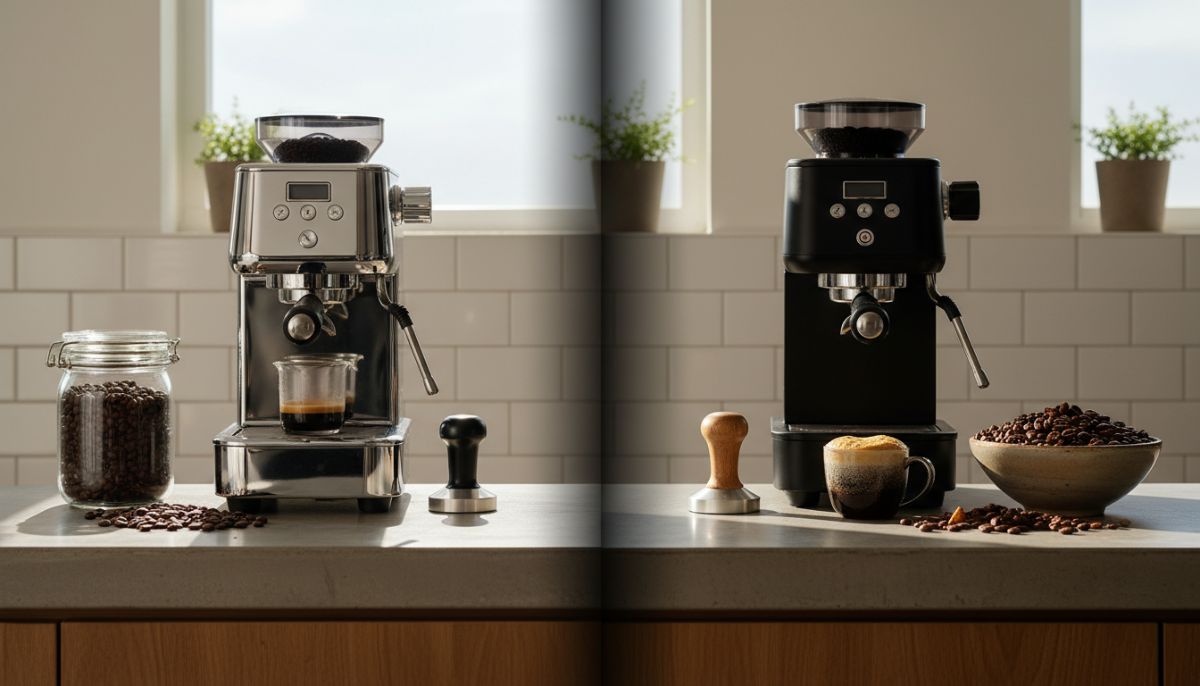
Not all beans extract the same. Learn how to adjust your temperature, grind size, and ratios based on whether your coffee is washed or natural processed.
Key Takeaways
- Washed Coffees usually require higher temperatures and longer yield ratios to highlight clarity and acidity.
- Natural Process Coffees are more soluble, often needing coarser grinds and slightly lower temperatures to avoid harsh, fermented flavors.
- Resting Matters: Natural coffees typically need more time off-roast to degas compared to washed varieties.
- Fines Production: Natural beans tend to be more brittle, creating more fines that can clog your basket, requiring careful puck prep.
You bought a bag of specialty coffee, used your standard recipe, and the shot tasted incredible. A week later, you buy a new bag from the same roaster, use the exact same settings, and the espresso tastes awful. It might be sour, or perhaps it tastes like burnt rubber.
Before you blame your grinder or assume the roast is bad, look at the bag again. You likely switched from a washed process coffee to a natural process coffee (or vice versa).
The processing method—how the fruit is removed from the coffee seed—drastically changes the cellular structure of the bean. It alters solubility, density, and how the coffee reacts to heat. If you aren’t adjusting your recipe based on processing method, you are missing out on the full potential of your beans.
Understanding the Difference: What’s Happening Inside the Bean?
To dial in your shots correctly, you need to understand what you are actually extracting.
The Washed Process (Wet Process)
In this method, the fruit flesh (cherry) is removed from the seed before drying. The beans are washed thoroughly to remove mucilage. This results in a cleaner cup with higher acidity. The flavors are intrinsic to the bean itself rather than the fruit.
The Natural Process (Dry Process)
Here, the coffee cherry is dried intact with the seed inside. The bean absorbs sugars and flavors from the fermenting fruit flesh. This creates a heavier body, lower perceived acidity, and intense fruit notes. However, it also changes the sugar structure of the bean, making it more brittle and more soluble.
How to Dial In Washed Process Espresso
Washed coffees are prized for their clarity, complexity, and sparkling acidity. However, they can be difficult to extract fully. Because the sugars haven’t caramelized or fermented on the exterior of the bean during processing, the structure is denser.
1. Temperature: Turn It Up
Washed coffees generally resist extraction more than naturals. To get the sweetness out and balance the acidity, you need energy. Start your machine between 201°F and 203°F (94°C – 95°C).
If you use a lower temperature, you risk under-extraction. This is a common reason why your espresso tastes sour. The water isn’t hot enough to dissolve the sweeter compounds that balance the natural citric acids.
2. Ratio: Stretch It Out
Traditional 1:2 ratios (e.g., 18g in, 36g out) work, but washed coffees often shine with a slightly longer ratio. Try aiming for 1:2.2 or even 1:2.5.
The extra water flow helps wash out the hard-to-extract compounds. This reduces the viscosity slightly but opens up the flavor profile, allowing you to taste specific notes like jasmine or green apple rather than just generic sourness.
3. Grind Setting
Because these beans are dense, you can usually grind finer without choking the machine compared to naturals. However, always respect the flow rate.
How to Dial In Natural Process Espresso
Natural coffees are booming in popularity due to their blueberry, strawberry, and wine-like profiles. However, they are volatile. They are “easy” to extract but difficult to extract well.
1. Temperature: Keep It Moderate
The sugars in natural coffees have already undergone significant development during the drying phase. They are highly soluble. If you hit them with 203°F water, you might burn those delicate fruit sugars, leading to flavors of rot, compost, or bitterness.
Start lower, around 198°F to 200°F (92°C – 93°C). This gentle approach preserves the fruitiness without extracting the harsh, funky notes.
2. Ratio: Keep It Tight
Naturals usually have excellent body and texture. To emphasize this, stick to a shorter ratio, typically 1:1.5 to 1:2. For a standard 18g dose, aim for 27g to 36g out.
If you run a natural shot too long, the water will quickly begin extracting dry, woody tannins once the sugars are dissolved. If you need a refresher on the math, check our guide on how to dial in espresso ratios.
3. Grind and Puck Prep
Natural beans are more brittle. When crushed, they shatter into more “fines” (microscopic dust) than washed beans. These fines can migrate to the bottom of the basket and clog the holes, causing flow restrictions.
You may need to grind slightly coarser to compensate for this. Furthermore, because fines cause uneven flow, your puck preparation must be flawless. Using distribution techniques is non-negotiable here. For a deep dive on managing fines, read about the science of puck prep and why the WDT tool matters.
The Texture Factor: Grinders and Baskets
Your hardware choices also interact with the processing method.
Burr Geometry
If you are exclusively drinking light-roast washed coffees, you might prefer large flat burrs, which provide high clarity. If you love the heavy, syrupy body of a natural, conical burrs often excel at highlighting texture. Understanding flat vs. conical burrs can help you decide which beans to buy for your specific setup.
Basket Choice
High-flow precision baskets (like VST) are unforgiving with natural coffees. The high volume of fines produced by natural beans can clog precision holes faster than standard baskets. If you are struggling with channeling on a natural coffee, try a standard basket or grind coarser.
Conversely, washed coffees love precision baskets because the high flow allows you to grind finer and push extraction higher. Learn more about how filters impact flow in our comparison of stock vs. precision baskets.
Resting and Freshness
Finally, patience is a variable. Natural process coffees generally contain more CO2 immediately after roasting because the bean structure is less porous, trapping the gas.
While a washed coffee might be ready to brew in 7-10 days, a natural often peaks between 14 and 21 days. Brewing a natural too fresh results in excessive crema that dissipates quickly and a sharp, carbonic bite in the cup. Always check the dates. For a professional approach to bean age, refer to our guide on coffee roast dates.
Conclusion
Espresso is not a “set it and forget it” hobby. The bean is a biological ingredient that changes based on how it was treated at the farm. By categorizing your beans into Washed or Natural before you even turn on your grinder, you give yourself a head start.
Remember the rule of thumb: Washed needs energy (heat, finer grind, more water) to shine. Naturals need gentleness (lower heat, coarser grind, less water) to stay sweet. Adjust your variables accordingly, and you will find the sweet spot much faster.
Frequently Asked Questions
Washed coffees generally perform best at higher temperatures, typically between 201°F and 203°F (94°C – 95°C), to aid in extracting the denser bean structure.
This is usually a sign of over-extraction or using water that is too hot. Natural coffees are very soluble; try lowering your temperature to 198°F and coarsening your grind slightly.
Yes, natural process beans often produce more crema than washed beans due to the higher presence of lipids and sugars remaining from the fruit, as well as trapped CO2.
To maximize body and sweetness while avoiding dry tannins, a shorter ratio of 1:1.5 to 1:2 (e.g., 18g in, 27-36g out) is usually ideal for naturals.