
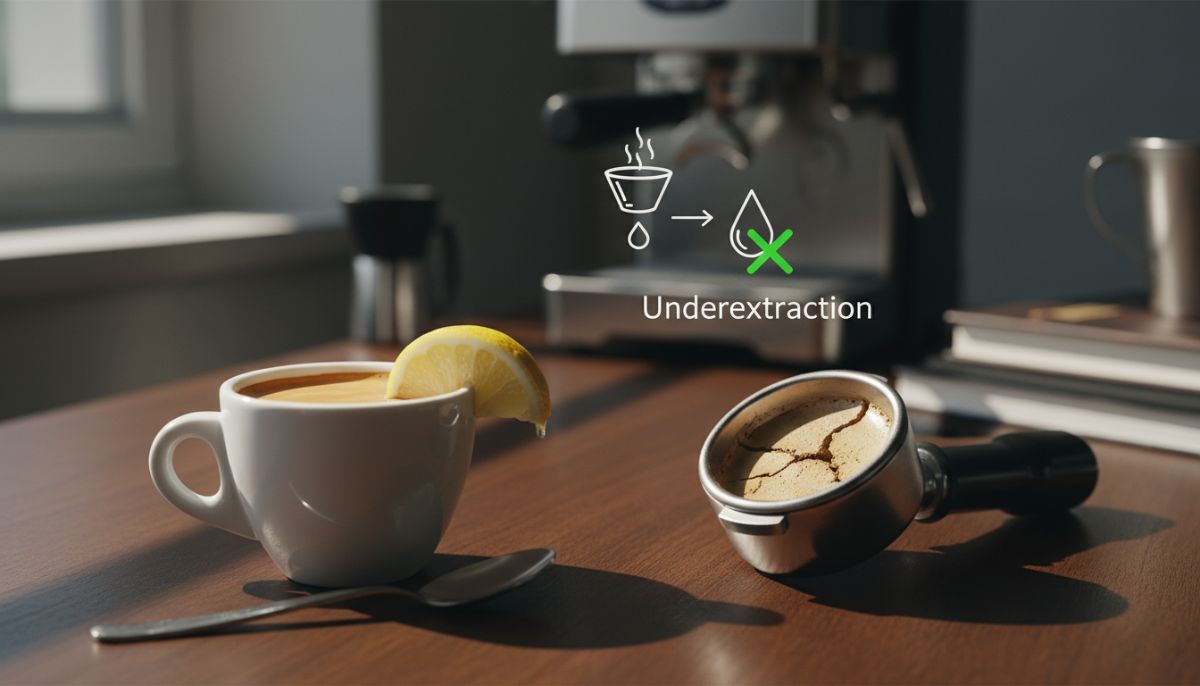
Is your morning espresso puckering your mouth like a lemon? Discover the science of underextraction and learn the specific steps to fix sour espresso shots.
Key Takeaways
- Sourness indicates underextraction: The water passed through the coffee too quickly or wasn’t hot enough to dissolve the sweet and balancing compounds.
- Grind size is the primary suspect: A grind that is too coarse prevents the water from extracting enough flavor; grinding finer is often the first fix.
- Ratio matters: Increasing your yield (output) relative to your dose (input) can help extract more from the puck.
- Temperature plays a role: Light roasts require higher temperatures to avoid sour, grassy notes compared to dark roasts.
There is nothing quite as jarring as anticipating a rich, chocolatey shot of espresso, only to be met with a flavor that punches you in the jaw with intense acidity. If your face instinctively scrunches up like you just bit into a raw lemon, you are dealing with one of the most common issues in home brewing: sour espresso.
While acidity is a desirable trait in specialty coffee—providing fruitiness and vibrancy—an overwhelming sour taste is a defect. It creates an unbalanced, hollow, and unpleasant experience. The good news is that this is not necessarily a problem with your beans or your machine. It is a problem with the extraction process.
In this guide, we will break down exactly why sourness happens and provide a systematic approach to fixing it, ensuring your next shot is sweet, balanced, and syrupy.
The Science: What is Underextraction?
To fix sour espresso, you first need to understand what is happening inside the portafilter. When hot water hits ground coffee, it dissolves chemical compounds. This process happens in a specific order.
First, the water extracts acidic and salty compounds. Next, it extracts sugars and sweet aromatics. Finally, if the water keeps flowing, it extracts bitter, dry plant fibers.
If your shot tastes sour, you are experiencing underextraction. This means the water didn’t spend enough time or didn’t have enough energy to pull out the sugars that balance the natural acids. You essentially stopped the brewing process during the “sour phase” before getting to the “sweet phase.”
Distinguishing Sour vs. Bitter
Before you start adjusting your grinder, you must be 100% certain that what you are tasting is actually sourness. It sounds simple, but for beginners, the intensity of espresso can make it difficult to distinguish between sour (underextracted) and bitter (overextracted).
The Sensory Test
Sourness hits the sides of your tongue. It causes an immediate salivation reaction, similar to eating a green apple or yogurt. It feels sharp and thin.
Bitterness hits the back of the tongue. It feels dry and astringent, like unsweetened cocoa powder or aspirin. It lingers in the throat.
If you confirm the sensation is a mouth-puckering sharpness, proceed with the troubleshooting steps below.
Variable 1: Grind Size
The most common culprit for underextracted, sour espresso is a grind size that is too coarse. When coffee particles are large, water flows through the gaps between them very quickly. There isn’t enough surface area or contact time for the water to dissolve the sweet compounds.
The Fix
Adjust your grinder to a finer setting. Even a small adjustment can drastically change the resistance in the puck. By grinding finer, you increase the surface area and slow down the flow rate, allowing the water to work harder to pass through.
Aim for a shot time between 25 and 30 seconds. If your current sour shot is pulling in 15 seconds, grinding finer is your immediate solution.
Variable 2: Brew Ratio and Yield
If your grind size seems correct and your shot time is within the standard window, but the espresso is still sour, you likely need to adjust your brew ratio. This is a critical concept in the brewing process.
A short shot (like a Ristretto) is naturally more acidic because it uses less water to extract the same amount of coffee. By pushing more water through the puck, you continue the extraction process, moving past the acidic compounds and grabbing more sugars.
The Fix
Try increasing your yield. If you are currently dosing 18 grams of coffee and getting 36 grams of liquid out (a 1:2 ratio), try aiming for 40 or 45 grams out. This longer ratio often balances out sourness.
For a deep dive into the math behind this, read our guide on how to dial in espresso ratios and yield. Understanding these numbers is the fastest way to gain control over your flavor profile.
Variable 3: Brew Temperature
Temperature is a measure of energy. The hotter the water, the more energy it has to dissolve coffee solids. If your water is too cool, it will struggle to extract the stubborn compounds that provide sweetness and body.
This is particularly important for light roast coffees. Light roasts are denser and more acidic by nature. They resist extraction and require higher temperatures to open up.
The Fix
If your machine allows for temperature control (PID), check your settings:
- Dark Roasts: 195°F – 200°F (90°C – 93°C)
- Medium Roasts: 200°F – 202°F (93°C – 94°C)
- Light Roasts: 203°F – 205°F (95°C – 96°C)
If you are brewing a light roast at 195°F, it will almost certainly taste sour. Bump the temperature up to assist extraction.
Variable 4: Channeling
Sometimes, you do everything right—perfect grind, right ratio, good temperature—and the shot is still sour. This is often due to channeling.
Channeling occurs when the high-pressure water finds a weak spot in the coffee puck. It rushes through that single tunnel instead of soaking the puck evenly. The coffee along that tunnel gets overextracted (bitter), but the rest of the puck remains dry and underextracted (sour). The overwhelming flavor in a channeled shot is usually sourness mixed with a harsh astringency.
The Fix
Improve your puck preparation. Use a WDT (Weiss Distribution Technique) tool to break up clumps before tamping. Ensure your tamp is level and firm. Channeling is the enemy of consistency, which is vital when you are learning how to dial in espresso.
Step-by-Step Troubleshooting Workflow
When you encounter a sour shot, follow this order of operations to save beans and time. Do not change multiple variables at once, or you won’t know what fixed the problem.
Step 1: Check Your Prep
Ensure your basket is dry before dosing. Distribute the grounds evenly. Tamp level. If you see pinholes in the puck after brewing, fix your distribution technique first.
Step 2: Adjust Grind Size
This is the most effective lever to pull. Grind finer until you hit a 1:2 ratio in about 25-30 seconds. If the shot slows down but still tastes sour, proceed to Step 3.
Step 3: Increase Yield
Keep the grind size the same but let the shot run longer. Instead of stopping at 36g, let it run to 40g or 42g. Taste the difference. This relates directly to the principles of adjusting yield for better extraction.
Step 4: Increase Temperature
If the shot is flowing well and the ratio is long, but the acidity is still sharp, increase your boiler temperature by 2-3 degrees Fahrenheit.
When Sourness is “Good”
It is worth noting that some modern “Third Wave” espresso styles lean toward high acidity. This is often described as bright, sparkling, or citrusy. If you are buying single-origin Ethiopian beans, for example, a bit of lemon-like acidity is characteristic of the terroir.
However, this acidity should be supported by sweetness. It should taste like lemonade, not lemon juice. If you prefer traditional, chocolatey espresso, avoid light roasts and stick to medium-dark blends which naturally have lower acidity.
Conclusion
Fixing sour espresso is a rite of passage for every home barista. It requires patience and a willingness to taste bad coffee to find the good coffee. Remember that sourness equals underextraction. Your goal is to give the water more opportunity to dissolve the coffee, whether by grinding finer, brewing longer, or increasing the heat.
Don’t be afraid to experiment. Use a scale, take notes, and trust your palate. Once you find that sweet spot, the morning struggle will be worth every sip.
Frequently Asked Questions
Espresso tastes sour due to underextraction. This means the water passed through the coffee too quickly, was too coarse, or wasn’t hot enough, failing to extract the sugars that balance out the natural acids.
Sourness is the hallmark of underextraction. Conversely, bitterness and dryness indicate overextraction.
You should generally grind finer. A finer grind increases surface area and slows down the water flow, allowing for a more complete extraction of sweet flavors.
Yes. If your brewing water is too cold (below 195°F/90°C), it may not have enough energy to dissolve the coffee solubles properly, resulting in a sour taste. This is especially true for light roasts.
You can try increasing the yield (output). By running more water through the puck (e.g., a 1:2.5 ratio instead of 1:2), you extract more compounds, potentially reaching the sweeter flavors.