
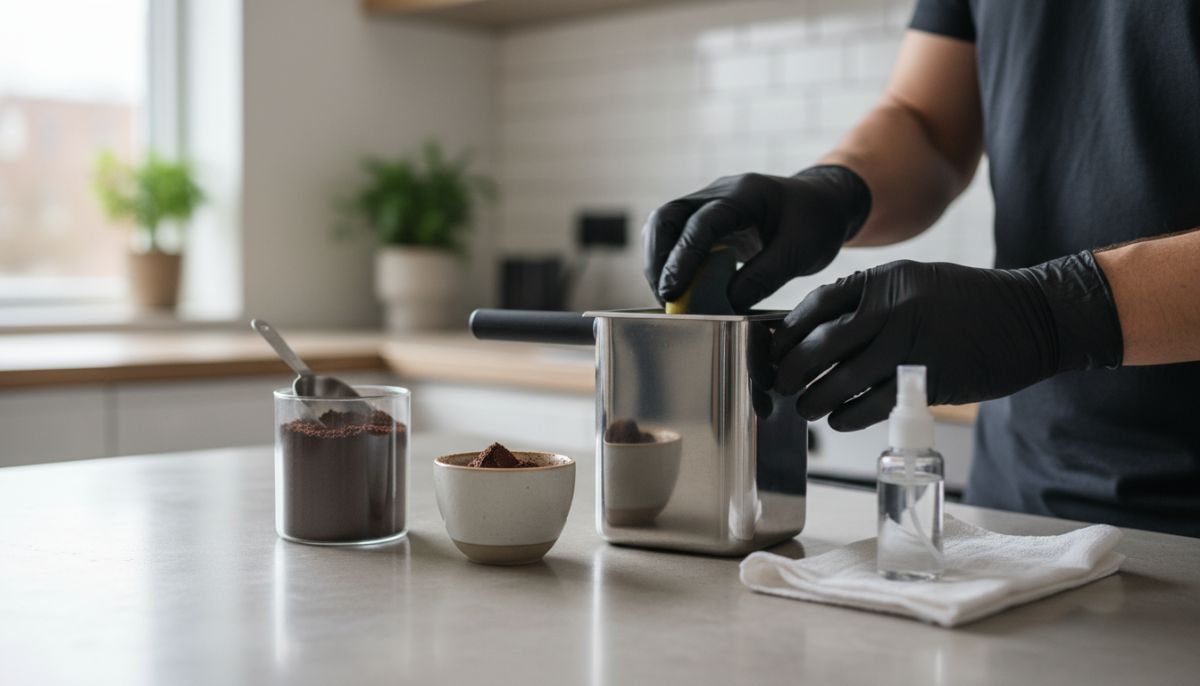
Don’t let your espresso station become a science experiment. Discover the essential hygiene protocols for maintaining your knock box and managing coffee waste effectively.
Key Takeaways
- Mold accelerates quickly: Warm, damp coffee pucks can develop visible mold spores in as little as 24-48 hours.
- Material matters: Stainless steel and plastic knock boxes require different cleaning approaches to prevent bacterial buildup.
- Puck consistency reflects health: Soupy pucks create more mess; drier pucks are easier to manage and indicate better extraction.
- Sustainability options: Used grounds are nitrogen-rich, making them perfect for composting rather than landfill waste.
The Forgotten Zone of the Espresso Bar
You have likely spent hours researching the perfect grinder. You have probably invested significantly in your espresso machine. You likely have a rigorous routine for backflushing your group head. Yet, sitting right next to your gleaming equipment is a potential biohazard that most home baristas ignore: the knock box.
It is the final step of the workflow. The satisfying “thwack” of the portafilter signifies the end of the brewing process. However, once the coffee puck lands in the bin, it is often forgotten until the container is overflowing. This oversight is a hygiene mistake.
Coffee grounds are organic matter. When you combine them with the moisture from the extraction and the ambient heat of a kitchen, you create the perfect incubator for mold and bacteria. Managing coffee waste is not just about tidiness; it is about maintaining a sanitary environment for food preparation.
The Biology of the Bin: Why Hygiene Matters
Used coffee grounds are wet and warm. In a closed or semi-closed environment like a knock box, humidity stays trapped. This environment invites fungal growth remarkably fast. If you only empty your knock box once a week, you are likely breathing in mold spores every time you open it to discard a fresh puck.
Furthermore, old coffee oils go rancid. While these oils are mostly contained within the waste bin, the smell can permeate your station. If you are meticulous enough to follow a cleaning manifesto for your machine, that same level of care should extend to where you dump your waste.
The Impact of Puck Consistency on Hygiene
The state of your spent puck dictates how messy your knock box becomes. Ideally, a spent puck should be firm and dry, knocking out in a single solid cake. This leaves minimal residue on the knock bar or the sides of the box.
However, if your pucks are consistently wet, sludge-like, or “soupy,” they splatter. This coats the interior of the box with a wet slurry that is much harder to clean and encourages bacterial growth faster than dry grounds. Often, wet pucks are a symptom of extraction issues. If you are seeing this frequently, you may need to look into troubleshooting underextraction or dosing adjustments.
Material Selection and Maintenance
Not all knock boxes are created equal, and the material you choose impacts your cleaning workflow. Generally, they fall into three categories: stainless steel, plastic, and wood-lined.
Stainless Steel
These are the gold standard for hygiene. They are non-porous, can withstand high-temperature water, and are usually dishwasher safe. However, they can be loud. The acoustic resonance of metal-on-metal can be jarring in a quiet morning household. If you are trying to implement strategies for quieting your coffee bar, you might find a metal box counterproductive unless it is heavily rubberized.
ABS Plastic
High-quality plastic bins are durable and lighter. They dampen sound better than steel. However, plastic is softer. Over years of use, the interior can develop micro-scratches from the abrasive coffee grounds. These scratches can harbor bacteria that are difficult to scrub out.
Wood-Clad
These are aesthetically pleasing but require a removable inner liner. Never knock coffee directly into a wooden box. Wood is porous and will absorb rancid coffee oils, eventually smelling permanently stale.
The Ideal Cleaning Workflow
To keep your station sanitary, adopt a tiered cleaning schedule similar to how you treat your milk pitchers and portafilters.
The Daily Ritual
Ideally, the knock box should be emptied at the end of every brewing session. Leaving grounds overnight allows them to cool and begin the decomposition process. If you brew multiple times a day, empty it every evening.
Once empty, give it a quick rinse with hot water. You don’t need to scrub it with soap every single day, but rinsing removes the loose oils and grounds.
The Weekly Deep Clean
Once a week, the knock box needs a detergent bath. Use a mild, unscented dish soap. Strong scents can linger in plastic bins and interfere with the aroma of your fresh espresso. Scrub the knock bar (the rubber bar you hit) thoroughly. Coffee oils accumulate on the underside of this bar, which is a common hiding spot for mold.
If you use accessories like puck screens, you are likely retrieving them from the knock box after dumping the puck. This cross-contamination makes knock box hygiene even more critical. You do not want to fish your stainless steel screen out of a moldy bin and then place it back on top of fresh coffee.
Managing the Mess: Tips for a Cleaner Station
Beyond cleaning the box itself, how you manage the waste affects your workflow.
1. Use Biodegradable Liners
For high-volume home baristas, biodegradable bags are a game-changer. They act as a barrier between the grounds and the bin itself. When full, you simply lift the bag out. This reduces the frequency of deep scrubbing required.
2. Combatting Moisture
If you live in a humid climate, moisture management is key. Even your water source plays a role in the overall chemistry of your station. While we focus on water chemistry for scale prevention, remember that excess moisture in the air speeds up mold growth in your waste bin. Keep the knock box in a ventilated area, not tucked inside a dark cabinet.
3. The “Knock” Technique
Violence is not necessary. A controlled, firm tap is better than a violent bash. Violent knocking creates splatter, sending microscopic coffee particles onto your counter and backsplash. If you find yourself having to hammer the portafilter to dislodge the puck, check your basket. Some baskets, particularly precision baskets like VST or IMS, have straight walls that release pucks easily, whereas tapered stock baskets can sometimes hold onto the puck more stubbornly.
Sustainability: Where Do the Grounds Go?
Finally, treating coffee waste as “garbage” is a missed opportunity. Hygiene includes the responsible disposal of waste.
Coffee grounds are rich in nitrogen, making them an excellent addition to a compost pile. If you garden, acid-loving plants (like hydrangeas or blueberries) thrive with coffee grounds mixed into the soil. However, avoid dumping them directly onto indoor potted plants without composting first, as the moist grounds can encourage fungus gnats in your home.
Conclusion
The knock box is the unglamorous workhorse of the espresso setup. It handles the mess so you can enjoy the cup. However, ignoring its maintenance is a recipe for bacterial growth and unpleasant odors. By selecting the right material, emptying the bin daily, and understanding the relationship between extraction quality and waste consistency, you can keep your coffee bar professional, sanitary, and smelling like fresh coffee—not old garbage.
Frequently Asked Questions
Ideally, you should empty your knock box daily. Moist coffee grounds are a breeding ground for mold within 24 to 48 hours. If you cannot empty it daily, ensure it has a sealed lid, but expect to deep clean it more frequently.
Coffee pucks are warm, wet, and organic—the perfect conditions for fungal growth. If your knock box is kept in a warm area or lacks ventilation, mold spores can develop rapidly. Emptying the bin more often is the only sure prevention.
It depends on the material. Stainless steel knock boxes are generally dishwasher safe. However, plastic or rubberized components may degrade or warp under high heat. Always check the manufacturer’s care instructions before dishwashing.
It is not recommended to use bleach, especially on plastic or rubber parts, as it can degrade the materials and leave a chemical smell that interferes with your coffee tasting. Hot water and mild, unscented dish soap are usually sufficient.