
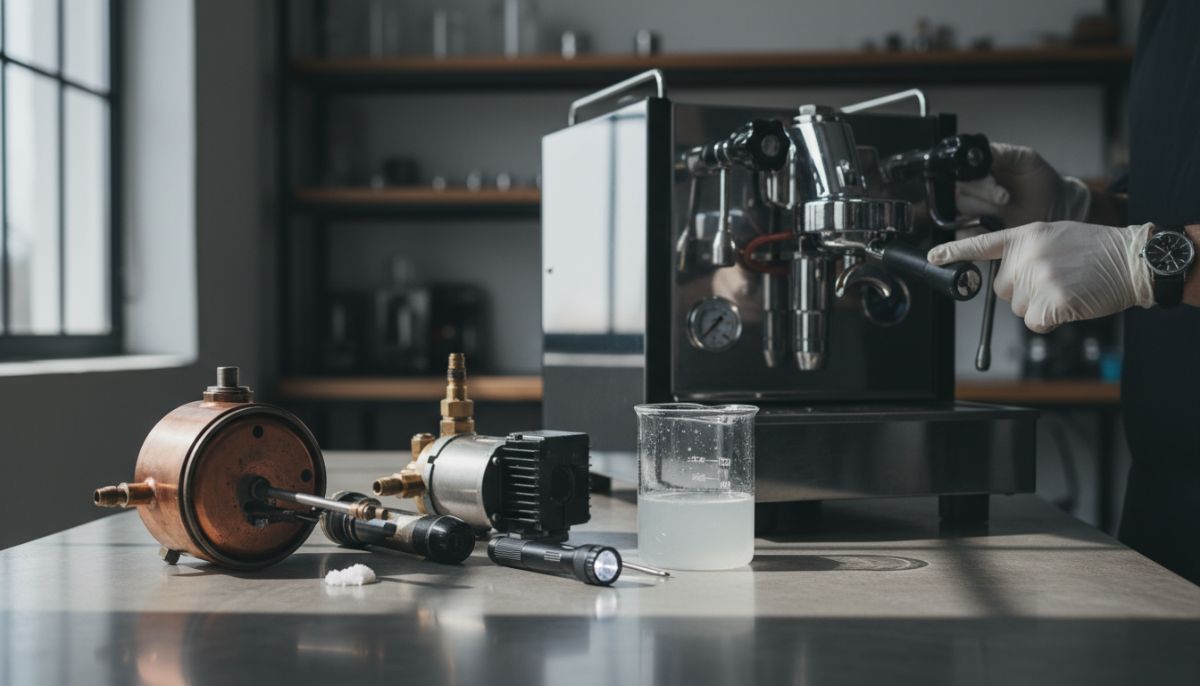
Don’t buy a lemon. Our comprehensive inspection guide covers boilers, pumps, and scale buildup to help you score a high-end espresso machine for a fraction of the price.
Key Takeaways
- Inspect the internals: A shiny exterior can hide severe scale damage or corroded wiring.
- Test the vitals: Verify pump pressure, heating elements, and steam power before handing over cash.
- Know the history: A lack of maintenance records is a major red flag for component longevity.
- Factor in repairs: Budget for immediate replacements like gaskets, shower screens, and burrs.
The dream of owning a café-quality espresso setup often hits a wall when you look at the price tag. A new dual boiler machine can easily cost as much as a used car. This is why the second-hand market is thriving. It offers the enticing possibility of scoring a high-end machine for half the retail price.
However, buying used is not without risks. Espresso machines are complex appliances dealing with high pressure, high heat, and electricity. A machine that looks pristine on the counter could be a calcified disaster on the inside. Without a proper inspection strategy, your bargain find could turn into a money pit.
This guide serves as your tactical checklist. Whether you are meeting a seller from Craigslist or inspecting a machine at a garage sale, follow these steps to ensure you are buying a reliable workhorse, not a paperweight.
1. Identify Your Target Machine Type
Before you even arrange a viewing, you must know what you are looking for. Not all machines hold their value equally, and repair difficulty varies significantly by design. You need to understand the architecture under the hood.
Are you looking for a Single Boiler, a Heat Exchanger (HX), or a Dual Boiler? A Single Boiler is simple and cheap to fix but frustrating for milk drinks. A Dual Boiler offers elite performance but has twice the components that can fail. Understanding the pros and cons of single boiler vs. heat exchanger vs. dual boiler systems is critical before you start shopping.
2. The Visual Inspection: Beyond the Shine
Sellers usually polish the stainless steel case before taking photos. Do not be fooled by the mirror finish. You need to look closer at the wear points that tell the true story of how the machine was treated.
Check the Drip Tray and Chassis
Pull out the drip tray. Is there rust underneath it on the frame? Powder-coated steel frames are notorious for rusting if the previous owner didn’t dry spills immediately. Surface rust is manageable, but structural rot is a dealbreaker.
Inspect the Steam Wand
Unscrew the steam tip if possible. Is it caked with dried milk? This indicates the user rarely cleaned the wand after steaming, which suggests they likely neglected other cleaning duties as well. Proper hygiene is key, and you can learn more about the standards required in our cleaning manifesto for daily and monthly maintenance.
3. The Silent Killer: Scale and Water Quality
The number one reason espresso machines fail is limescale buildup. If the previous owner used hard tap water without filtration, the boiler and pipes are likely coated in calcium carbonate. This ruins heating elements and clogs sensors.
Ask About Water Habits
Ask the seller, “What kind of water did you use?” If they say “straight from the tap” and they live in a hard water area, walk away. Serious enthusiasts understand that water chemistry is vital to preventing scale and protecting high-end machines.
The Mushroom Check (E61 Specific)
If you are looking at a machine with an E61 grouphead, ask to remove the “mushroom” (the top nut of the group). It takes two minutes with a wrench. If the components inside are bright green (corrosion) or covered in white rock (scale), the machine needs a full descaling and overhaul.
4. Operational Testing: Pump and Pressure
Never buy a machine you haven’t seen running. You need to verify that the pump is healthy and that the machine can build appropriate pressure.
Listen to the Pump
Engage the brew lever. Listen to the sound. A vibratory pump should have a steady hum. A rotary pump should be nearly silent. If the sound is surging, rattling, or incredibly loud, the pump or its mounts may be failing. Understanding the expected noise profile of rotary vs. vibratory pumps will help you identify anomalies.
The Backflush Test
Insert a blind basket (a basket with no holes) into the portafilter and engage the pump. Watch the pressure gauge. It should rise quickly to roughly 9 or 10 bars and hold steady. If the needle flutters wildly or fails to reach 9 bars, you may have a dying pump or a faulty expansion valve.
5. Temperature Stability and Heating
A machine that can’t hold heat is useless. Turn the machine on cold and time how long it takes to reach operating pressure or temperature.
If the machine has a PID display, watch the numbers. Do they stabilize at the set temperature, or do they jump around erratically? Erratic jumps can indicate a failing temperature probe or a logic board issue. Reliability in temperature is the main reason why PID controllers are preferred for temperature stability.
For Heat Exchanger machines, run a “cooling flush.” The water should hiss and sputter initially (flash boiling) and then settle into a steady stream. If there is no hiss, the machine might be running too cold due to a calcified pressurestat.
6. Grouphead and Gasket Condition
Lock the portafilter into the grouphead. Does it lock in at the 6 o’clock position? If it goes way past to 4 or 5 o’clock, the group gasket is worn out. While gaskets are cheap, this is a good bargaining chip.
Inspect the shower screen inside the group. Is it clogged with old coffee oils? This affects water dispersion. If you buy the machine, plan to replace the screen immediately. This is also a great time to decide if you want to upgrade components. You might consider switching to precision parts; check our guide on stock vs. precision baskets to see if the investment is worth it for your setup.
7. Steam and Hot Water Performance
Open the steam valve fully. You want to see a powerful, sustained blast of dry steam. If the steam is weak or wet, the boiler water level might be too high, or the heating element is on its last legs.
Test the hot water tap as well. If the water smells stale or metallic, the boiler hasn’t been drained in a long time. This isn’t a mechanical fault, but it indicates the machine needs a thorough flush.
8. Leaks and Hoses
If the seller allows it, take the top panel off (usually just a few screws). Look inside with a flashlight while the machine is under pressure (blind basket inserted).
Look for hissing sounds or droplets of water at the fittings. Boiler fittings often develop small leaks that evaporate before hitting the ground, leaving behind white mineral trails. These are “slow leaks” that will eventually cause electrical shorts.
Conclusion
Buying a used espresso machine is a treasure hunt. You are looking for a machine with “good bones”—a solid chassis, a scale-free boiler, and a working pump. Cosmetic issues like scratches or worn gaskets are easily fixed and can help you negotiate a lower price.
Remember, even a “perfect” used machine will likely need a tune-up. Set aside $50 to $100 of your budget for a new silicone gasket, a shower screen, and perhaps a new precision basket. By following this checklist, you mitigate the risks and get straight to the reward: exceptional espresso at a fraction of the cost.
Frequently Asked Questions
Yes, provided you inspect it thoroughly. Commercial and prosumer machines are built to be repaired. Avoid cheap consumer appliances with plastic internals, as these are often disposable.
The electronic control board (PCB) and the boiler are usually the most expensive components. If a boiler has cracked due to freezing, the repair cost often exceeds the machine’s value.
Ask to remove the mushroom on E61 machines, check the flow rate (slow flow can indicate clogging), or look for white mineral deposits around fittings and the hot water tap.
Yes, if the price is right. Vibratory pumps are inexpensive (around $30-$50) and easy to replace. Rotary pumps are more expensive ($150+) but are also replaceable.
A well-maintained used machine typically sells for 50% to 70% of its current retail price. Machines needing repairs should be significantly cheaper.