
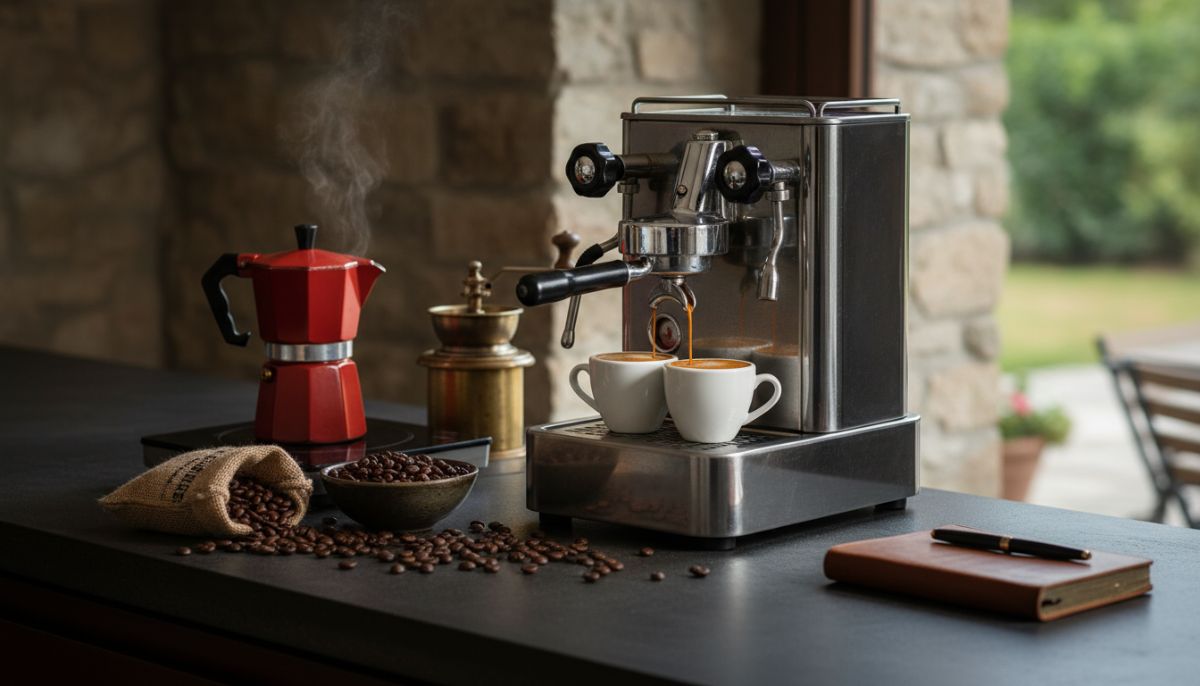
Forget the “100% Arabica” marketing hype. We explore the rich history, thick crema, and bold flavors of Robusta in traditional Italian espresso blends and why they belong in your grinder.
Key Takeaways
- Crema Powerhouse: Robusta beans produce significantly thicker, more persistent crema than Arabica due to lower lipid content and higher CO2.
- Texture and Body: Adding Robusta to a blend creates the syrupy, heavy mouthfeel characteristic of classic Neapolitan espresso.
- The Flavor Profile: High-quality Robusta offers notes of dark chocolate, nuts, and earth, balancing the acidity of Arabica in milk-based drinks.
- Caffeine Content: Robusta contains nearly double the caffeine of Arabica, providing a stronger morning kick.
For decades, the specialty coffee wave has taught us a specific mantra: “100% Arabica” equals quality, and anything else is inferior. We have been conditioned to chase floral notes, bright acidity, and fruit-forward profiles, often turning our noses up at bags that don’t boast that single-species purity.
However, if you have ever stood at a zinc bar in Naples or Rome and marveled at the thick, tiger-striped shot of espresso that tastes like liquid dark chocolate, you have likely enjoyed Robusta. The demonization of Coffea canephora (Robusta) ignores a massive segment of coffee culture and the specific mechanics of espresso extraction.
It is time to reopen the case for Robusta. By understanding its role in traditional Italian blends, home baristas can unlock textures and flavors that pure Arabica simply cannot replicate.
The Reputation Problem: Commodity vs. Quality
Robusta has a bad reputation, and admittedly, much of it was earned. For years, the commercial coffee industry used the lowest grade Robusta as a filler for instant coffee and cheap supermarket blends. These beans were often defect-heavy and processed poorly, resulting in the burnt rubber and medicinal flavors that specialty drinkers despise.
But just as there is low-grade Arabica, there is high-grade Robusta. The “Fine Robusta” movement is gaining traction, where farmers treat the crop with the same care as high-altitude Arabica. When grown and processed correctly, Robusta sheds its rubbery stigma and presents deep, bold flavors of cocoa, hazelnut, and whiskey.
In the context of espresso, we aren’t usually looking for a 100% Robusta shot (though they exist). We are looking for the synergy found in blending.
The Italian Philosophy: The Art of Blending
Italian coffee culture views espresso differently than the modern “Third Wave” movement. While modern specialty shops often highlight the unique terroir of a specific farm, the Italian tradition focuses on consistency, body, and the ability to cut through milk.
To achieve this, roasters blend beans. A classic breakdown might be 80% Arabica and 20% Robusta, or even 60/40 in Southern Italy. The Arabica provides the aroma and sweetness, while the Robusta provides the backbone. This is essential when deciding between single origin vs. blends for espresso, as the goal determines the bean choice.
The Crema Factor
If you are chasing that Guinness-like cascade of foam, Robusta is your best friend. Robusta beans produce more gas during roasting and contain approximately half the sugar and lipid content of Arabica. While lipids (oils) are delicious, they actually destabilize foam.
Because Robusta has fewer oils and structurally harder cell walls, it generates a massive, stable head of crema. This thick layer acts as a lid, trapping aromatics inside the cup until you take that first sip.
Flavor Profile and Mouthfeel
Robusta is naturally lower in acidity. If you struggle with the sharp, sour notes often found in modern light roasts, a blend might be the solution. While we often discuss techniques for taming light roasts with high heat, switching to a blend with 10-20% Robusta naturally mutes that acidity without requiring complex temperature gymnastics.
The flavors generally associated with quality Robusta blends include:
- Dark Cocoa
- Toasted Bread
- Hazelnuts
- Spice (Clove/Pepper)
This profile is why these blends excel in cappuccinos and lattes. A delicate, floral Ethiopian Arabica can easily get lost in six ounces of steamed milk. A robust Italian blend punches through the lactose sweetness, ensuring your coffee still tastes like coffee.
Brewing with Robusta: Adjusting Your Approach
If you decide to pick up a bag of “Bar Espresso” blend containing Robusta, you cannot brew it exactly like a delicate single-origin. Robusta is more soluble and extracts differently.
Temperature Management
Because Robusta is less dense but highly soluble, it extracts very quickly. High temperatures can easily draw out harsh, woody tannins. If you are using a machine with a PID, drop your temperature down to around 198°F (92°C) or even lower.
For those without digital control, you might need to utilize specific techniques to cool the water. Learning about temperature surfing on single boiler machines is crucial here to avoid scalding the beans and ruining the shot.
The Grind and Flow
Robusta produces more fines (tiny coffee particles) when ground. This means it offers more resistance to water flow. You may find you need to grind slightly coarser than you would for a pure Arabica to achieve the same flow rate.
This increased resistance affects the texture. The interaction between the burr geometry and the bean density plays a massive role here. If you are diving deep into equipment, understanding how flat vs. conical burrs change flavor profiles can help you maximize the heavy body that Robusta offers. Conical burrs often highlight the heavy body of blends beautifully.
Dosing and Ratio
Traditional Italian espresso is often pulled shorter than modern shots. Instead of the standard 1:2 ratio (e.g., 18g in, 36g out), Italian blends often shine at a 1:1.5 ratio or a “Ristretto.” This concentrates the body and minimizes the intake of bitter compounds that extract late in the shot.
For a detailed breakdown of these differences, review the spectrum of Ristretto, Normale, and Lungo ratios. Pulling a Robusta blend as a Lungo is generally not recommended unless you enjoy harsh bitterness.
The Caffeine Kick
It is impossible to discuss Robusta without mentioning caffeine. The plant developed high caffeine levels as a natural defense mechanism against pests, which is why it is so hardy (robust) in the field.
A shot of espresso made with a 50/50 blend can have nearly double the caffeine of a pure Arabica shot. This makes it a functional powerhouse for morning drinkers, but a potential hazard for the caffeine-sensitive. If you love the taste of traditional espresso but get the jitters, you might want to explore decaf brewing techniques for your afternoon cups, reserving the Robusta blends for your morning wake-up call.
Conclusion: Broadening the Palate
Being an elite home barista isn’t about adhering to a single set of rules or beans; it is about understanding the entire spectrum of coffee possibilities. Excluding Robusta entirely is like a chef refusing to use salt because they prefer sugar.
The next time you are shopping for beans, don’t shy away from the blend that admits to containing Robusta. You might just find that the thick, syrupy, chocolate-bomb you have been trying to dial in was waiting for you in the Italian section all along.
Frequently Asked Questions
No. While low-quality, commercial Robusta can taste rubbery or medicinal, high-quality ‘Fine Robusta’ offers deep notes of chocolate, nuts, and spice without the offensive defects.
Italians use Robusta to add body, increase caffeine content, and produce a thick, stable crema. It also helps the coffee flavor cut through the milk in cappuccinos.
Robusta beans typically contain almost twice the caffeine concentration (2.2-2.7%) compared to Arabica beans (1.2-1.5%).
Yes. Robusta is more soluble, so it generally benefits from slightly lower brewing temperatures (around 198°F/92°C) and tighter ratios (like Ristretto) to avoid extracting harsh bitterness.