
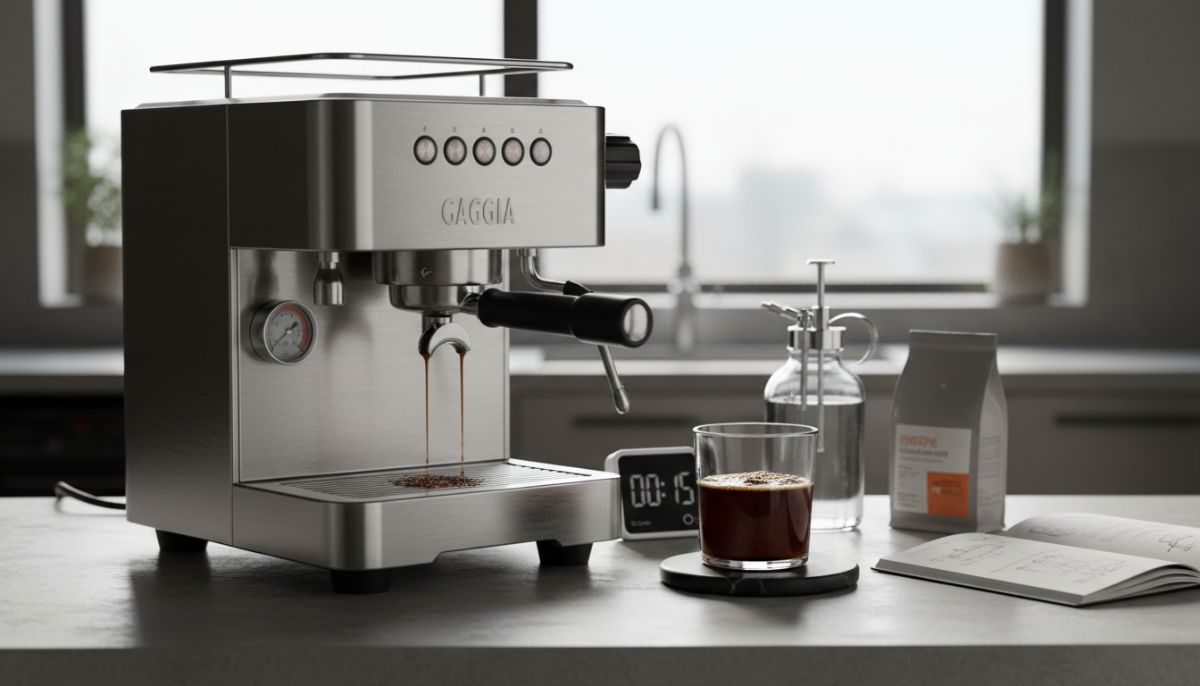
Think you need a $3,000 machine for perfect pre-infusion? Think again. Discover proven hacks to simulate flow control and improve extraction on standard espresso machines.
Key Takeaways
- Softens the Puck: Pre-infusion reduces channeling by saturating the coffee bed before full pressure is applied.
- Steam Wand Trick: Opening your steam valve during extraction can simulate lower pressure on single-boiler machines.
- E61 Middle Position: Lever machines often have a mechanical sweet spot that allows water flow without engaging the pump.
- Pump Pulse Method: A simple on-off rhythm can mimic pre-wetting, though it requires precise timing.
There is a common misconception in the home barista community that to achieve the luscious, sweet shots characteristic of high-end cafes, you need to spend thousands of dollars on a machine with variable flow control. While gear certainly helps, technique is the great equalizer.
Pre-infusion—the act of gently wetting the coffee puck at low pressure before the full 9 bars hit—is arguably the most critical variable for extracting light roasts and preventing uneven extraction. If your machine lacks a fancy paddle or a computerized pressure profile, don’t worry. With a few clever hacks, you can manually simulate this process and drastically improve your cup quality.
Why Pre-Infusion Changes the Game
Before diving into the “how,” we must understand the “why.” When 9 bars of pressure slam into a dry puck of coffee, the path of least resistance wins. This often leads to channeling, where water drills holes through the coffee rather than flowing evenly.
Pre-infusion solves this by swelling the coffee grounds. As the grounds expand, they fuse together to form a cohesive, solid cake. This resistance ensures that when the pump fully engages, the water is forced to extract oils and solids from the entire bed evenly. This is vital for maximizing your extraction yield and avoiding sourness.
Hack #1: The Steam Wand Trick (For Single Boilers)
This is the holy grail hack for owners of popular single-boiler machines like the Gaggia Classic or Rancilio Silvia. These machines typically have a Vibratory (Vibe) pump that ramps up quickly.
How it Works
The concept is simple hydraulics. By opening the steam valve while brewing, you create a secondary escape route for the water pressure. Instead of all the pressure going to the group head, some is diverted out of the steam wand.
The Workflow
- Prep your puck: Ensure your distribution is perfect. Consider using the Weiss Distribution Technique (WDT) to break up clumps.
- Start the shot: Hit the brew button.
- Open the valve: Immediately turn the steam knob open slightly. You will see water or steam exit the wand (catch this in a separate pitcher).
- Monitor the flow: Watch the espresso pour. It should start very slowly, like a drip.
- Close the valve: After 5-8 seconds of this low-pressure flow, close the steam knob. The pressure at the group head will rise to full bars for the remainder of the shot.
This method effectively acts as a manual bleed valve, giving you a crude but effective form of flow profiling.
Hack #2: The E61 “Middle Position”
If you own a machine with a classic E61 group head (like many heat exchangers or dual boilers) but it lacks a flow control mushroom, you likely have a mechanical pre-infusion feature hidden in the lever.
Finding the Sweet Spot
The E61 lever operates a series of cams. When the lever is fully down, the system is off. When fully up, the pump is engaged.
However, there is a middle ground. Lift the lever about 45 degrees—just before the pump engages. In this position, the valve from the boiler (or heat exchanger) opens, allowing water to flow into the group head under line pressure (if plumbed) or passive boiler pressure.
Hold the lever here for 3-5 seconds. You are gently wetting the puck without the force of the pump. Once you see the first drops form on the bottom of the basket, lift the lever all the way up to engage the pump. This is standard practice for those wanting to avoid channeling issues on lever-operated machines.
Hack #3: The Pump Switch Pulse
For machines that don’t have steam valves (like some thermoblocks) or E61 groups, you can try the “pulse” method. This is controversial because it can put extra wear on pumps and solenoids, but it is effective for occasional use.
The goal is to introduce water without building pressure. Simply flip the brew switch on for 2 seconds, then immediately flip it off. Wait 3 to 5 seconds. This introduces a small amount of water to the puck, which then sits and saturates the grounds. After the pause, flip the switch back on to complete the extraction.
Warning: On machines with a 3-way solenoid valve, turning the pump off usually vents the pressure and sucks water off the puck. This hack works best on machines without a 3-way solenoid, or if you time it so the pressure never builds high enough to trigger the vent.
Hardware Assists: Puck Screens and Baskets
If manual gymnastics aren’t your style, you can mimic the effects of pre-infusion through hardware choices that change how water interacts with the coffee.
Using a Puck Screen
Adding a puck screen on top of your coffee bed disperses the water coming from the shower screen. While it doesn’t lower the pump pressure, it drastically softens the initial impact of the water. This prevents the water from digging a hole into the puck immediately, simulating the gentle start of pre-infusion.
High-Resistance Baskets
Precision baskets (like VST or IMS) generally require finer grinding. However, if you are struggling with flow, switching back to a standard basket or a basket designed for lower flow can help maintain puck integrity during that initial high-pressure hit.
Is It Worth The Effort?
If you drink dark roasts, you might not notice a massive difference. Dark roasts are porous and extract easily. However, if you are diving into modern, light-roast espresso, these hacks are essential.
Light roasts are dense and resist water flow. Without pre-infusion, they often result in sour, underextracted shots. By using the steam wand trick or the E61 middle position, you allow the water to penetrate the dense particles before high pressure is applied. This helps in dialing in your ratio for those brighter, floral coffees.
The Next Step: Modding or Upgrading
Eventually, you may tire of these workarounds. If you fall in love with the results of low-pressure extraction, you might consider installing a dimmer switch mod (which controls pump voltage) or finally upgrading to a machine with a dedicated dedicated flow control device.
Until then, these hacks prove that the barista’s skill is always more important than the machine’s price tag. Experiment with these techniques, taste the results, and find the workflow that suits your morning routine best.
Frequently Asked Questions
Not all methods work for every machine. The steam wand trick works best on single-boiler vibe pump machines, while the lever trick is specific to E61 group heads. Always check your machine’s mechanics first.
Excessive switching can wear out the pump or solenoid valve over time. It is generally safe for occasional use, but not recommended as a permanent daily workflow for years.
A standard pre-infusion time is between 3 to 8 seconds. For very light roasts, you might extend this to 10-15 seconds to fully saturate the dense puck.
Yes, pre-infusion usually allows you to grind finer. Because the puck is more stable and less prone to channeling, a finer grind can increase extraction without choking the machine.
No, but it helps. A puck screen improves water dispersion and reduces impact, acting as a buffer, but it does not actually lower the pump pressure like true flow control or these hacks do.