
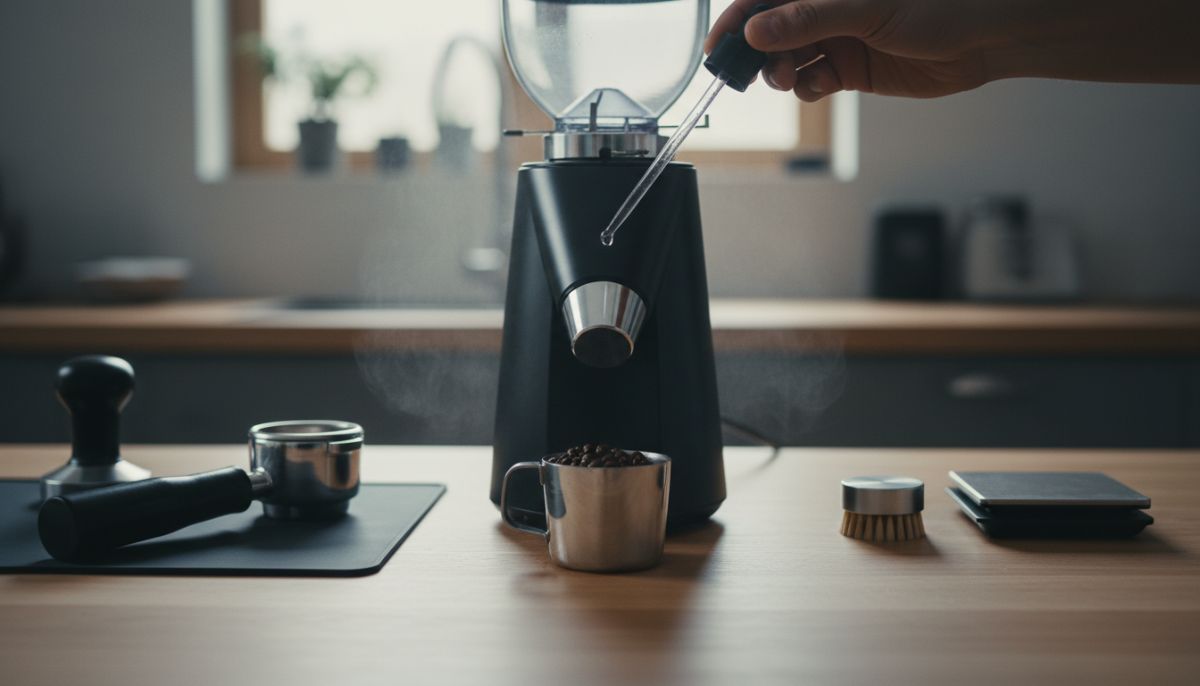
Tired of coffee grounds sticking to your grinder and counter? Learn how the Ross Droplet Technique (RDT) uses a single drop of water to eliminate static electricity, reduce retention, and streamline your espresso workflow.
Key Takeaways
- The Problem: Friction during grinding creates static electricity, causing grounds to fly everywhere and stick to the chute.
- The Solution: RDT involves adding a tiny amount of moisture (a drop or spray) to beans before grinding to dissipate the charge.
- The Benefit: drastically reduces mess, minimizes retention, and improves dosing accuracy.
- The Caution: Only recommended for single-dosing workflows, not for full hoppers.
If you have ever ground fresh coffee beans only to watch the chaff cling to the side of the catch cup or stick stubbornly to the grinder chute, you have battled static electricity. It is the invisible enemy of a clean coffee station.
For years, home baristas accepted this messy reality as part of the ritual. Then, a simple, almost counter-intuitive hack emerged from the forums: adding water to the beans. Known as the Ross Droplet Technique (RDT), this method has revolutionized single-dosing workflows.
In this guide, we will break down the science behind RDT, how to execute it safely, and why it might be the missing link in your puck preparation routine.
What is the Ross Droplet Technique (RDT)?
The Ross Droplet Technique is named after David Ross, a coffee enthusiast who popularized the method on coffee forums in 2005. The concept is elegantly simple: you introduce a microscopic amount of moisture to your coffee beans immediately before grinding them.
While putting water into an electric grinder sounds like a recipe for disaster, the amount used in RDT is negligible—usually a single drop or a fine mist spray. This tiny amount of moisture is not enough to damage the motor or brew the coffee, but it is sufficient to alter the electrical conductivity of the environment inside the grinding chamber.
The Science: Why Grinders Create Static
To understand why RDT works, we have to look at what happens when burrs crush beans. Coffee beans are insulators. When they are shattered at high speeds against metal or ceramic burrs, friction generates a significant static charge (triboelectric effect).
In dry environments, this charge has nowhere to go. The positively or negatively charged coffee particles repel each other (flying over the edges of your portafilter) or attract to surfaces with an opposite charge (sticking to the grinder chute).
This is particularly problematic for different grinder geometries. Whether you are debating flat vs. conical burrs regarding flavor profiles, both types generate friction. However, large flat burrs spinning at high RPMs often generate more static than slower conical burrs.
By adding a droplet of water, you increase the surface conductivity of the beans. This allows the static charge to dissipate immediately rather than building up. The result is a fluffy, neat pile of grounds that falls straight down.
How to Perform RDT: A Step-by-Step Guide
Implementing RDT is incredibly cheap. You do not need expensive gear, though a small spray bottle is the tool of choice for most prosumers.
1. Weigh Your Dose
RDT is strictly a single-dosing technique. Weigh out your 18g or 20g of beans into a small vessel.
2. Apply Moisture
There are two ways to do this:
- The Spray Method (Preferred): Use a small atomizer (2oz spray bottle) filled with filtered water. Give the beans one single spray. Shake the dosing cup to distribute the moisture evenly.
- The Spoon Method: Run the handle of a spoon under a faucet, shake off the excess, and stir your dry beans with the damp handle.
3. Grind Immediately
Pour the beans into your grinder and grind as usual. You should notice an immediate difference: the grounds will exit the chute vertically without spraying sideways.
RDT and Grinder Retention
One of the biggest advantages of RDT is the reduction of retained grounds. In many grinders, static causes a gram or two of coffee to get stuck in the chute or crushing chamber. Over time, this stale coffee mixes with your fresh dose.
By neutralizing the static, RDT ensures that what you put in is what you get out. If you weigh 18.0g of beans, you are more likely to get 18.0g of grounds out. This minimizes the need for wasteful purging. For a deeper dive into why clearing old grounds matters, read our guide on why purging your grinder is non-negotiable.
Is RDT Safe for My Grinder?
This is the most common question. Will putting wet beans in a grinder cause rust?
The Short Answer
Generally, yes, it is safe, provided you do not overdo it. You want the beans to feel slightly humid, not wet.
The Nuance: Burr Materials
Most modern burrs are made of stainless steel, which is highly resistant to corrosion. However, some high-end grinders use high-carbon steel burrs for edge retention. High-carbon steel is more susceptible to rust.
If you live in a humid climate and use RDT aggressively with carbon steel burrs, surface oxidation is possible over long periods. Regular maintenance is key here. If you are using RDT, you should inspect your burrs periodically.
When NOT to Use RDT
RDT is specific to the single-dosing workflow. If you are comparing single dosing vs. hopper fed workflows, understand that you cannot spray water into a full hopper of beans.
Moisture trapped in a hopper with a pound of beans creates a breeding ground for mold and bacteria. Furthermore, the moisture will eventually evaporate or absorb unevenly before the beans at the top reach the burrs.
RDT vs. WDT: Clearing the Confusion
In the world of espresso acronyms, it is easy to get mixed up. RDT helps you grind cleanly. WDT (Weiss Distribution Technique) helps you distribute the grounds in the basket.
RDT prevents clumps from forming due to static; WDT breaks up clumps that formed despite your best efforts. For the best extraction, you often need both. While RDT handles the mess, the science of puck prep suggests the WDT tool is still vital for ensuring even water flow through the puck.
Alternative Solutions to Static
If you are uncomfortable putting water in your grinder, there are other ways to manage the mess, though they address the symptom rather than the cause.
Dosing Funnels
A tall magnetic dosing funnel sits on top of your portafilter. It catches the flying grounds that static throws around. It won’t stop the grounds from sticking to the chute, but it keeps your counter clean. Check out our guide to dosing funnels to see if this accessory fits your workflow.
Plasma Generators
Some newer grinders come equipped with ionizers or plasma generators at the chute exit. these actively neutralize static charge without water. If you are in the market for an upgrade, this feature is worth looking for.
Conclusion
The Ross Droplet Technique is a rare example of a coffee “hack” that costs nothing yet delivers professional-grade results. By neutralizing static, you save coffee, reduce mess, and improve the consistency of your dose.
If you are struggling with messy grinding or high retention, grab a small spray bottle and give RDT a try. It might just be the single drop that changes your morning routine.
Frequently Asked Questions
It is unlikely if you use a very small amount of water (one spray or drop). However, if you have high-carbon steel burrs rather than stainless steel, you should be cautious and check for surface oxidation regularly.
No. RDT is strictly for single-dosing. Adding moisture to a hopper full of beans can lead to mold growth and bean spoilage due to trapped humidity.
RDT does not negatively impact flavor. In fact, by reducing retention and ensuring your full dose makes it into the basket, it helps maintain consistent brew ratios, leading to better tasting espresso.
RDT (Ross Droplet Technique) uses water on beans to reduce static during grinding. WDT (Weiss Distribution Technique) uses needles to stir the grounds in the portafilter to break clumps before tamping.