
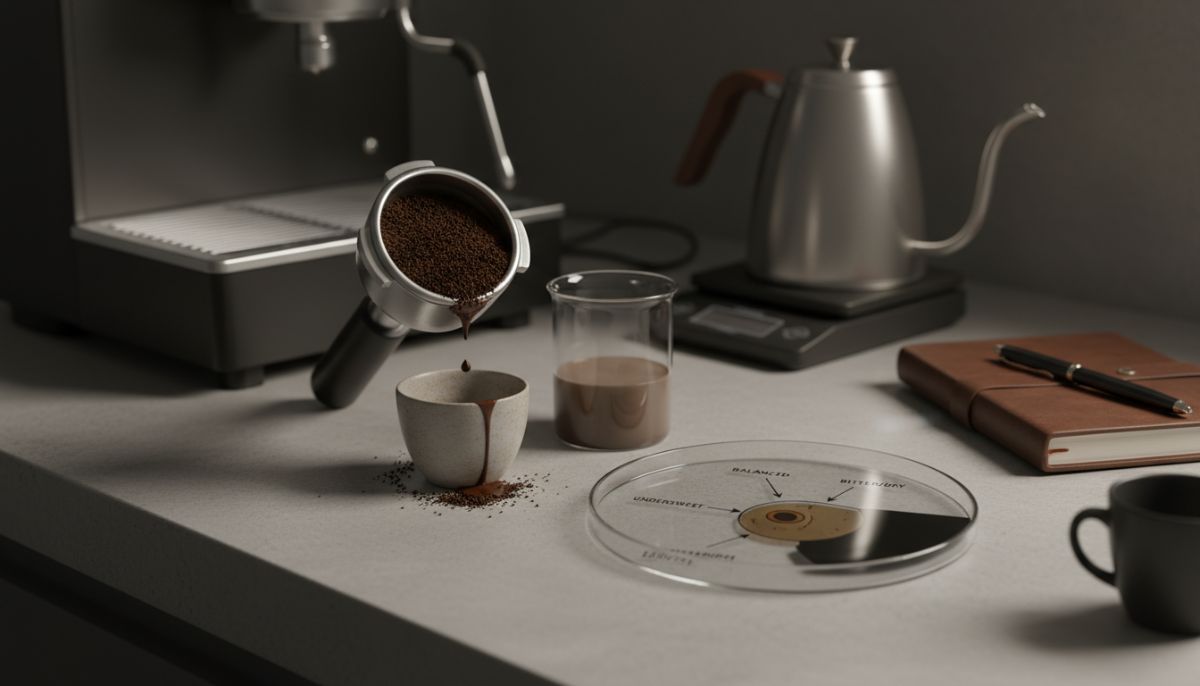
Is your espresso tasting harsh, bitter, or drying out your mouth? You are likely dealing with overextraction. Learn the science behind it and how to fix it for a sweeter, balanced cup.
Key Takeaways
- Define the Taste: Overextraction is characterized by intense bitterness, a hollow flavor profile, and a drying, astringent sensation on the tongue.
- Identify the Cause: The primary culprits are usually a grind that is too fine, water temperature that is too high, or a brew ratio that runs too long.
- Visual Cues: Look for a pale, translucent flow (blondeing) happens too early or a puck that looks degraded.
- The Fix: Adjust variables one at a time—coarsen your grind, drop the temperature, or cut the shot short.
There is nothing quite as heartbreaking as the anticipation of a morning espresso, only to be met with a flavor that assaults the palate. Instead of the rich, chocolatey, or fruity notes you were promised, you taste charcoal, ash, and a lingering dryness that makes you reach for a glass of water. This is the hallmark of overextraction.
In the pursuit of the perfect shot, many home baristas swing the pendulum too far. They chase high extraction yields hoping for more flavor, but end up dissolving the unwanted compounds that ruin the cup. Understanding exactly what is happening inside your portafilter is the first step to reclaiming sweetness.
The Science of Overextraction
Coffee extraction is a process of dissolving soluble solids from ground coffee into water. Not all of these solids taste good. The first compounds to extract are acids and salts (sour and salty), followed by sugars and aromatics (sweet and complex). The final compounds to dissolve are heavy plant fibers, tannins, and caffeine.
Overextraction occurs when you take too much from the coffee bean. You have moved past the sweet spot and have begun pulling out those heavy, undesirable compounds. It is akin to steeping a tea bag for twenty minutes; the result is dark and strong, but completely unpalatable.
Bitterness vs. Astringency
While often grouped together, bitterness and astringency are distinct sensory experiences. Learning to separate them is crucial for your palate development and ability to taste espresso notes.
- Bitterness: This is a flavor. Think of unsweetened cocoa powder, aspirin, or burnt toast. A little bitterness can be pleasant (like in dark chocolate), but overextracted bitterness is harsh and dominating.
- Astringency: This is a physical sensation, not a flavor. It is a tactile dryness or “roughness” on the tongue, similar to the feeling of drinking a very dry red wine or eating an unripe banana. This is caused by polyphenols (tannins) binding to the proteins in your saliva.
Common Culprits of Overextraction
If your shot tastes burnt or dry, one of your brewing variables is likely too aggressive. Let’s break down the usual suspects.
1. The Grind is Too Fine
The surface area of your coffee grounds dictates how easily water can dissolve flavor. The finer the grind, the more surface area is exposed, and the faster extraction happens. If your grind is powdery, the water will struggle to pass through (increasing contact time) and will strip every particle of its desirable and undesirable oils.
This is where understanding your equipment is vital. Whether you are debating flat vs. conical burrs, the alignment and consistency of your grind are paramount. Fines (microscopic dust) generated by poor alignment can clog the basket, leading to inevitable bitterness.
2. Water Temperature is Too High
Heat is a catalyst for extraction. Water that is boiling or near-boiling is highly effective at dissolving those heavy, bitter compounds mentioned earlier. Darker roasts are particularly susceptible to this.
If you are using a dark roast with water set to 205°F (96°C), you are almost guaranteed a bitter cup. This is why investing in a machine with better thermal management is often recommended. Understanding PID controllers and temperature stability allows you to lower the heat to a safer range (e.g., 195°F–200°F) to avoid scorching the extraction.
3. Channeling and Uneven Flow
Ideally, water flows through the coffee puck evenly. However, if the puck has a crack or a low-density area, water will rush through that path of least resistance. This is called channeling.
While the rest of the puck might be underextracted, the area around the channel is being assaulted by a high volume of water, leading to localized overextraction. The result is a confusing cup that tastes both sour and bitter. Learning to spot and fix uneven water flow is essential before you start adjusting grind size.
Visual Diagnostics: What to Look For
You can often predict an overextracted shot before you even taste it. Watching the extraction flow provides immediate feedback.
The Blondeing Point
As the shot pulls, the color changes from dark reddish-brown to a golden honey color, and finally to a pale, translucent yellow. This final stage is “blondeing.” If your shot runs clear or extremely pale for the last 10 seconds, you are diluting the body and pulling in bitter water.
Flow Rate
A shot that drips agonizingly slowly is a prime candidate for overextraction. The water is in contact with the coffee for too long. Using a diagnostic tool like a naked portafilter can help you visualize these flow issues instantly, showing you if the basket is clogging or flowing too slowly.
How to Fix Overextraction
Once you have identified the bitterness, it is time to dial in your recipe. Do not change all variables at once. Follow this hierarchy of adjustments.
1. Cut the Ratio Short
The easiest fix is to simply stop the shot sooner. If you are currently pulling a 1:2.5 ratio (e.g., 18g dose to 45g yield), try tightening it to a 1:2 or even a 1:1.5 (Ristretto). By reducing the amount of water that passes through the puck, you avoid the tail end of extraction where the tannins live.
For a deep dive on the math behind this, refer to our guide on how to dial in espresso ratios.
2. Coarsen the Grind
If reducing the yield makes the shot too salty or strong, keep the ratio the same but coarsen your grind setting. This reduces the contact time and the total surface area, slowing down the chemical reaction. Make small adjustments; a tiny nudge on a precision grinder makes a massive difference.
3. Lower the Temperature
If you enjoy the texture and body of your shot but find a lingering smokiness or ash flavor, try dropping your boiler temperature by 2–4 degrees. This is highly effective for medium-to-dark roasts.
The Relationship Between Sour and Bitter
It is important not to confuse the two extremes. While overextraction tastes bitter and dry, underextraction is sharp, sour, and grassy. If you make an adjustment to fix bitterness (like grinding coarser) and suddenly your face puckers from acidity, you have gone too far in the other direction.
Finding the “sweet spot” is a balancing act. If you are struggling to distinguish between the two, read our guide on why your espresso tastes sour to ensure you are diagnosing the problem correctly.
Conclusion
Overextraction is the enemy of a smooth, sweet espresso, but it is also a sign that you are pushing the boundaries of what your coffee can offer. By recognizing the difference between pleasant intensity and harsh bitterness, you gain control over your morning ritual.
Remember, the goal isn’t just to extract more; it is to extract the right compounds. Trust your palate, watch your flow, and don’t be afraid to waste a few beans in the service of a better cup.
Frequently Asked Questions
Sourness is a sign of underextraction (too little flavor dissolved), often tasting like lemon or unripe fruit. Bitterness is a sign of overextraction (too much flavor dissolved), tasting like burnt toast, ash, or medicine.
That dry sensation is called astringency. It is caused by tannins and large molecules extracting into your cup, usually due to channeling or grinding too fine. It strips the saliva from your tongue.
Yes. Higher temperatures extract compounds more efficiently. If your water is near boiling (over 205°F/96°C), you are more likely to extract bitter, burnt flavors, especially with darker roasts.
Absolutely. Old coffee oils stuck to the shower screen or portafilter eventually go rancid and bitter. Regular backflushing is essential to ensure the bitterness isn’t coming from the gear itself.