
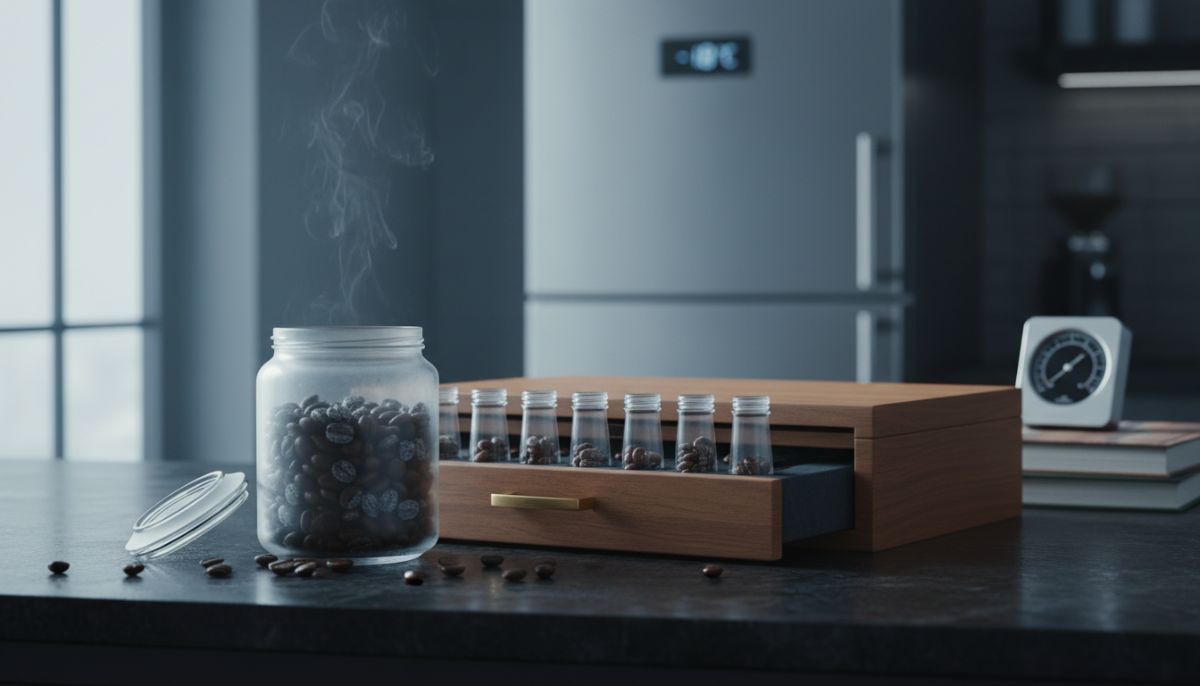
Discover how to stop coffee staling in its tracks. Learn the science of freezing beans, how to build a single-dose bean cellar, and why your freezer is the ultimate tool for preserving specialty coffee.
Key Takeaways
- Freezing pauses aging: When done correctly, the freezer acts as a time machine, preserving peak flavor for months or even years.
- Moisture is the enemy: Vacuum sealing or using airtight single-dose tubes is non-negotiable to prevent condensation and freezer burn.
- Grind straight from frozen: You do not need to thaw beans before grinding; frozen beans often yield a more uniform particle distribution.
- Workflow integration: A bean cellar is the perfect companion to a single-dosing routine, allowing you to rotate between different coffees daily.
We have all been there. You buy a bag of incredible, limited-run Geisha or a perfectly roasted Ethiopian natural. It is spectacular for the first week. But by week three, the vibrant acidity has dulled, and the aromatics have faded. You feel the pressure to drink it all before it dies, turning a pleasure into a chore.
It does not have to be this way.
Building a coffee bean cellar—a dedicated system for freezing coffee portions—is the secret weapon of elite home baristas. It allows you to build a library of vintages, save seasonal releases, and enjoy variety without the fear of staling. In this guide, we will break down exactly how to freeze coffee the right way, dispel common myths, and set up a workflow that lasts.
The Science: Why Freeze Coffee?
Coffee staling is primarily driven by oxidation and the loss of volatile organic compounds (aromatics). Temperature acts as a catalyst for these chemical reactions. According to the Arrhenius equation, the rate of chemical reaction doubles for every 10°C increase in temperature. Conversely, lowering the temperature drastically slows these reactions down.
By storing coffee at freezer temperatures (roughly -18°C or 0°F), you effectively hit the “pause” button. A bag of beans that would go stale in four weeks on the counter can remain fresh for indefinitely in the freezer. This is particularly crucial for expensive beans or when you are trying to understand roast profiles over time.
However, the freezer is not without risks. The environment inside a freezer is humid and filled with odors (like last month’s lasagna). If you just toss a bag with a rolled-up tin tie in there, your coffee will absorb moisture and odors, ruining the cup.
The Two Methods of Freezing
There are two primary ways to approach a coffee cellar: Bulk Vacuum Sealing and Single Dose Centrifuge Tubes.
1. Bulk Vacuum Sealing
If you buy coffee in 2lb or 5lb bags to save money, this method is for you. You cannot simply put the original bag in the freezer because the one-way valve allows air to move, and the bag isn’t airtight against the humid freezer air.
The Process:
- Rest the coffee: Wait until the coffee has degassed and hit its peak flavor window. This requires understanding roast dates. For help reading these, check our guide on how to read roast dates like a pro.
- Portion: Divide the bulk bag into smaller bags (e.g., 250g or 1 week’s supply).
- Seal: Use a vacuum sealer to remove all air. If keeping the beans in their original bag inside a vacuum bag, place a piece of tape over the valve first.
2. The Single-Dose Bean Cellar
This is the gold standard for enthusiasts. It involves pre-weighing individual doses of coffee into glass or polypropylene test tubes (often called centrifuge tubes) and freezing them.
This method pairs perfectly with a single dosing workflow. Instead of opening a large bag and exposing the entire batch to air every morning, you simply grab one tube, grind it, and brew. Your remaining stock stays perfectly sealed at sub-zero temperatures.
The Workflow: From Freezer to Grinder
One of the most persistent myths is that you must thaw coffee before grinding. This is false. In fact, grinding frozen beans can actually improve your espresso.
Grinding Frozen Beans
Coffee beans are brittle. When they are frozen, they become even more brittle. When you put frozen beans through a grinder, they tend to shatter more uniformly, producing fewer “fines” (microscopic dust that clogs filters) and a more unimodal particle distribution.
This increased uniformity can lead to higher extraction yields and sweeter shots. However, because the beans fracture differently, you may need to adjust your grind setting slightly finer than you would with room-temperature beans. This behavior varies depending on your equipment, specifically the geometry of your burrs. If you are curious about how burr types affect flavor, read our comparison on flat vs. conical burrs.
Managing Condensation
The biggest fear people have regarding freezing is condensation. Water ruins coffee. However, condensation only forms when cold objects come into contact with warm, humid air.
The Golden Rule: If you take a large bag out of the freezer, do not open it until it has reached room temperature (usually 4-6 hours). If you open a cold bag, moisture from the air will instantly condense on the beans, accelerating degradation.
This is why the single-dose bean cellar is superior. You take one tube out and dump it immediately into the grinder. The beans are ground and brewed before condensation has time to form or impact the puck integrity.
Addressing Static
Grinding frozen beans does have one side effect: increased static electricity. Cold, dry beans generate a significant charge during grinding, which can cause retention in your grinder chute.
To combat this, the Ross Droplet Technique (RDT) is essential. A single spray of water or a damp spoon handle stirred into the beans before grinding dissipates the static. For a deep dive on why this works and how to do it safely, refer to our guide on the RDT method. Just be careful not to use too much water, as you don’t want to rust your burrs.
Building Your Setup
Ready to build your cellar? Here is what you need to get started.
The Gear
- Centrifuge Tubes: Look for 50ml polypropylene tubes with screw caps. These are airtight, food-safe, and durable. For a premium look, borosilicate glass vials with caps work well, though they are more fragile.
- A Digital Scale: Precision is key here. You want to weigh your dose down to 0.1g before freezing so you don’t have to weigh it again while groggy in the morning. If you haven’t upgraded your weighing setup yet, consider looking into smart scales.
- The Freezer: A standard kitchen freezer works, but a deep freeze (chest freezer) is even better as it undergoes fewer defrost cycles, keeping the temperature more stable.
Step-by-Step Filling Guide
- Dial In First: Do not freeze coffee that hasn’t degassed. Drink the coffee for the first week. Once it hits that “sweet spot” of flavor, freeze the rest.
- Weigh Doses: Set up your tubes. Weigh 18g (or your preferred dose) into each tube. Using a funnel makes this significantly cleaner. If you are tired of messy counters, check out our article on dosing funnels.
- Cap Tight: Ensure the seal is tight. You do not want freezer smells entering the tube.
- Label: Use a label maker or masking tape. Write the coffee name, roaster, and the date you froze it.
Conclusion
Freezing coffee is the ultimate hack for the home barista. It liberates you from the tyranny of the “freshness window” and allows you to enjoy a variety of coffees on your own terms. Whether you are saving a delicate light roast or a comfort blend, a bean cellar ensures the last cup tastes as magical as the first.
Start small. Buy a pack of centrifuge tubes, freeze half of your next bag, and taste the difference a month later. You will likely find that the freezer is the most underrated tool in your coffee arsenal.
Frequently Asked Questions
No. Refreezing coffee introduces moisture through condensation and temperature fluctuations, which degrades the cell structure and flavor. Only remove the amount of coffee you plan to brew immediately.
Not if done correctly. Freezing preserves flavor by slowing oxidation. The ‘freezer taste’ only happens if the container isn’t airtight. Vacuum sealed bags or centrifuge tubes prevent this.
If properly sealed (vacuum or airtight tubes) and stored in a deep freeze, coffee can remain fresh for years. For standard kitchen freezers, 6 to 12 months is a safe bet before minor changes might occur.