
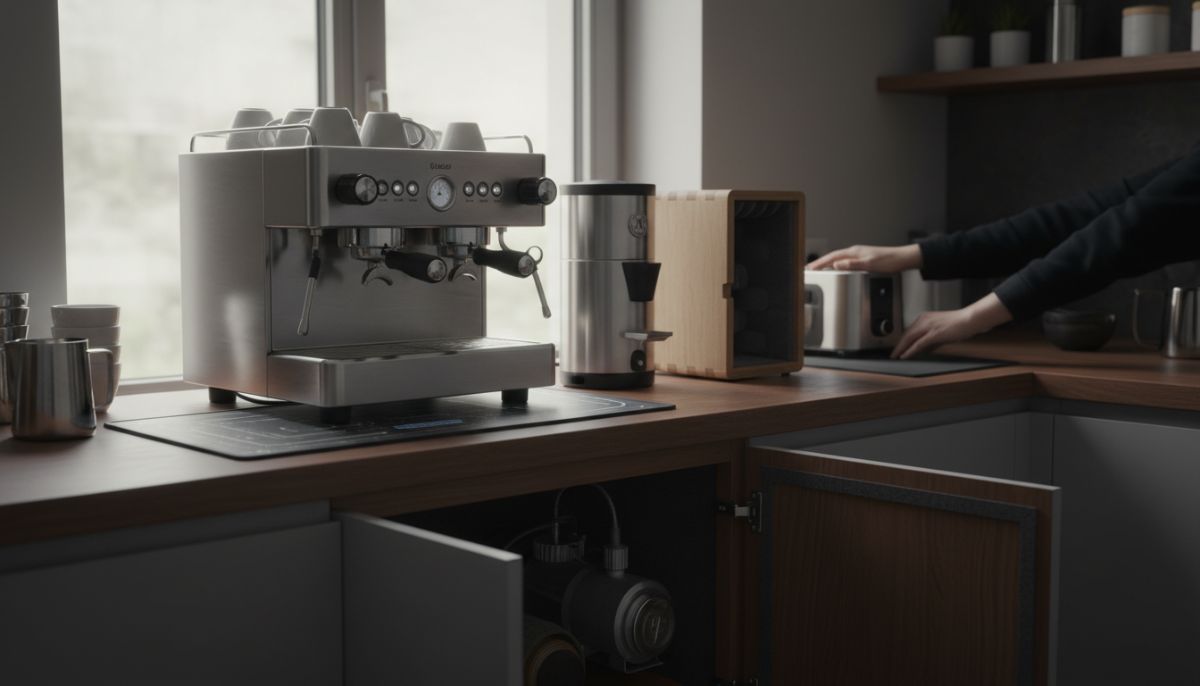
Tired of waking up the whole house with your morning latte routine? We uncover the science of machine noise, compare pump types, and provide actionable hacks to soundproof your home espresso setup.
Key Takeaways
- Pump Type Matters: Rotary pumps are significantly quieter than the vibratory pumps found in most entry-level machines.
- Surface Vibration: A large portion of the noise comes from the machine vibrating against your countertop, which can be fixed with simple dampening mats.
- Grinder RPM: High-speed grinders create a high-pitched whine; lower RPM or manual grinders offer a stealthier workflow.
- Maintenance Checks: Loose body panels and internal components often cause unnecessary rattling that mimics mechanical failure.
There is nothing quite like the ritual of a morning espresso. The smell of freshly ground beans, the warmth of the cup, and the anticipation of that first sip. But for many home baristas, there is a jarring interruption to this Zen-like process: the noise.
If firing up your machine sounds more like a construction site than a café, you aren’t alone. The harsh buzz of a vibratory pump or the scream of high-RPM burrs can shatter the peace of a quiet morning, potentially waking up family members or roommates. Is silence a luxury reserved only for commercial cafés, or can you achieve a stealthy setup at home?
In this guide, we will dissect exactly where that noise comes from and provide concrete strategies to turn the volume down on your coffee bar.
The Heartbeat of the Noise: The Water Pump
When diagnosing a loud espresso machine, the first suspect is almost always the pump. The mechanism that forces water through your coffee puck requires immense pressure—usually 9 bars. How the machine achieves that pressure dictates the decibel level.
Vibratory Pumps (The Buzzer)
Most home machines, especially those in the budget to mid-range category, utilize a vibratory pump. These work by using an electromagnetic coil to move a piston back and forth at incredible speeds (usually 60 times per second). This rapid oscillation creates a distinct buzzing sound.
While effective and compact, these pumps are naturally loud. Because they rely on vibration to generate pressure, that energy often transfers to the machine’s casing and the counter it sits on. If you are looking to start your journey with a budget-friendly setup, check out our guide on the top entry-level espresso machines, but be aware that noise is often the trade-off for the lower price point.
Rotary Pumps (The Hummer)
On the other end of the spectrum lies the rotary pump. Found in commercial machines and high-end prosumer gear, these use a motor to spin a specialized vein mechanism. The result is a fluid, consistent pressure build-up that sounds like a gentle hum rather than a rattle.
The acoustic difference is night and day. If silence is a priority for your morning routine, upgrading to a machine with a rotary pump is the most effective (albeit expensive) solution. To dive deeper into the mechanics and performance differences, read our detailed comparison on Rotary vs. Vibratory Pumps: Noise, Pressure, and Performance.
The Grinder: A Symphony of Crushing Beans
Even if you have a silent espresso machine, your grinder might betray you. Grinding roasted coffee beans into a fine powder requires significant force, and the motor combined with the shattering of beans creates noise.
Burr Geometry and Speed
The pitch of the sound often depends on the speed of the motor. High-speed motors tend to produce a high-pitched whine that cuts through walls. Low-RPM motors, often found in larger, more expensive units, produce a lower frequency rumble that is less intrusive.
Interestingly, the type of burrs you use can also influence the grinding experience. While the debate usually centers on flavor, the structural design of the grinder housing around these burrs plays a huge role in sound dampening. Learn more about how burrs affect your cup in our guide to Flat vs. Conical Burrs.
Dampening the Rattle: Actionable Hacks
You don’t always need to buy new gear to lower the volume. Often, the noise is amplified by the environment. Here is how to dampen the sound of your current setup.
1. Isolate the Machine
When a machine vibrates, your countertop acts as a soundboard, amplifying the noise. Placing a thick rubber bar mat or a dedicated vibration-dampening pad under your machine can absorb this energy. This is one of the cheapest and most effective upgrades you can make.
2. Check Your Cup Rails and Trays
A common source of metallic rattling is the cup warming tray. Ceramic cups vibrating against stainless steel rails create a piercing clatter. You can solve this by placing a silicone mat on top of the cup warmer or using a tea towel to buffer the contact points.
3. Internal Insulation
Some advanced hobbyists open their machines (ensure this doesn’t void your warranty) to apply sound-deadening sheets, similar to those used in automotive audio, to the inside of the body panels. This adds mass to the metal, preventing it from vibrating sympathetically with the pump.
Silence Through Maintenance
Sometimes, a machine gets louder over time. If your once-quiet brewer has started to rattle, it might be a cry for help. Scale buildup in the pump or loose body screws can increase operating noise significantly.
Regular maintenance ensures that all components are tight and functioning smoothly. If you are buying second-hand, this is critical to check. A used machine might just need a screw tightened to return to its glory days. Use our ultimate checklist for buying used espresso machines to spot these issues before you buy. Furthermore, sticking to a routine schedule will prevent mechanical strain; consult our Cleaning Manifesto to keep your machine running quietly.
The Ultimate Silent Option: Manual Levers
If you want true silence, you might need to abandon electricity for the brewing process altogether. Manual lever machines use human force rather than an electric pump to generate pressure. This means the only sound you hear is the water hitting the puck and the espresso dripping into the cup.
It is a different workflow that requires more skill, but the acoustic reward is unmatched. If you are intrigued by a silent, hands-on approach, explore the rise of manual lever machines.
Conclusion
Creating a quiet coffee bar is about understanding the source of the sound. Whether you choose to invest in a rotary pump machine, switch to a manual lever, or simply apply some sound-dampening hacks to your current setup, a peaceful morning coffee routine is achievable.
Start by identifying if your noise is coming from the pump, the grinder, or external vibrations. A few small adjustments can turn a chaotic kitchen into a calm café sanctuary.
Frequently Asked Questions
The most common cause is a vibratory pump, which creates a buzzing sound as it oscillates to create pressure. Loose body panels, rattling cups on the warming tray, and vibrations transferring to the countertop also contribute to the noise.
Yes. You can place a rubber mat under the machine to absorb vibrations, ensure internal tubing isn’t touching the casing, and in some cases, add sound-deadening insulation to the inside of the machine panels.
Yes, rotary pumps are much quieter. They produce a low, consistent hum rather than a loud buzz. However, machines with rotary pumps are generally larger and more expensive.
Using a grinder with a lower RPM motor can help, as high-speed motors create a high-pitched whine. Ensuring the grinder is on a stable, non-resonant surface helps, but manual hand grinders are the only truly silent option.