
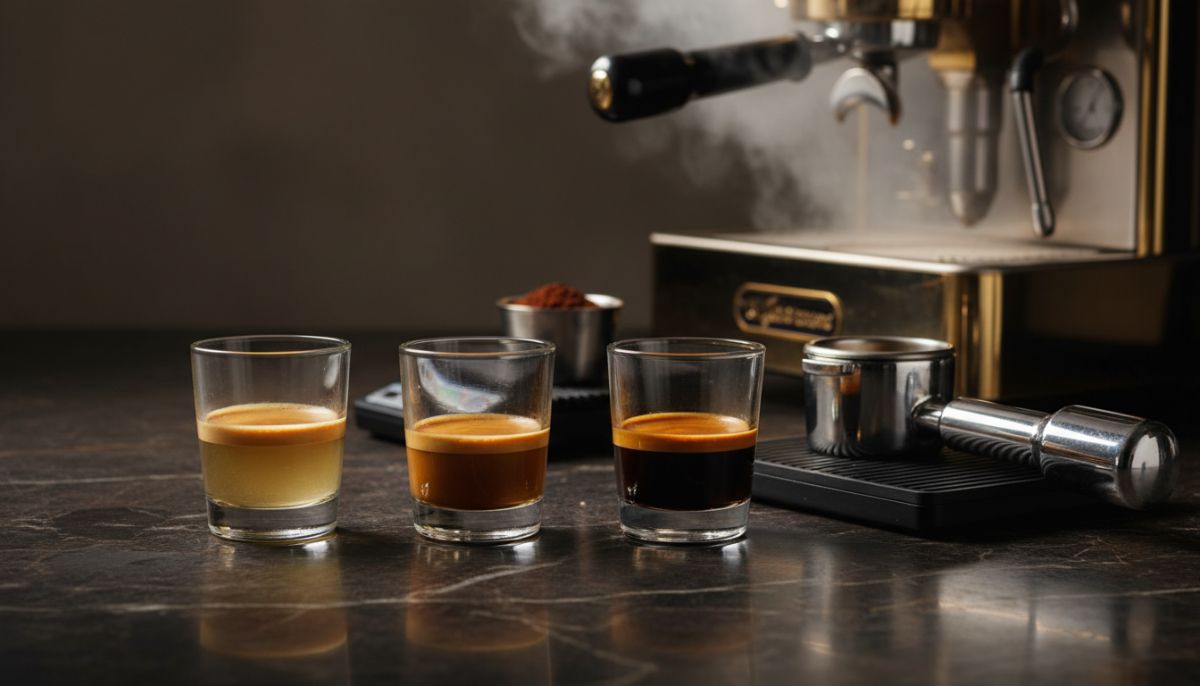
Master the art of dialing in by learning the Salami Shot technique. Discover how acidity, sweetness, and bitterness evolve during extraction to brew the perfect espresso.
Key Takeaways
- Concept: The "Salami Shot" involves splitting a single espresso extraction into multiple cups to isolate different flavor phases.
- Phases: Espresso extraction follows a predictable order: acids (sourness), sugars (sweetness), and bitter compounds (dryness).
- Application: This experiment teaches you exactly when to cut a shot to balance flavor, helping you troubleshoot sour or bitter coffee.
- Equipment: You need a standard espresso setup and 3–4 small cups to catch the liquid at different intervals.
Have you ever taken a sip of espresso and felt overwhelmed by a chaotic mix of sour, bitter, and sweet notes? For many home baristas, the tiny cup is a black box of flavor. You know when it tastes bad, but you might not know why.
Enter the "Salami Shot." While the name might sound like a deli order, it is actually one of the most effective educational experiments you can perform at your coffee bar. By physically slicing your espresso shot into segments, you can deconstruct the timeline of extraction.
This technique strips away the mystery of dialing in. It reveals exactly what happens during the first, middle, and last seconds of the brew, empowering you to make intentional decisions about ratio and time. Here is how to master the Salami Shot and train your palate like a professional.
What is a Salami Shot?
The Salami Shot is a sensory exercise where you change cups multiple times during a single extraction. Instead of letting all the liquid flow into one vessel, you "slice" the stream into three or more parts.
The goal isn't to drink these individual slices for pleasure—believe me, the first one will be intense. The goal is to taste them individually to understand the progression of solubility. Coffee compounds do not dissolve at the same rate. Acids dissolve fastest, followed by sugars and aromatics, and finally, the heavier, bitter plant fibers.
Understanding this progression is crucial. It connects directly to the science of TDS and extraction yield, helping you visualize how flavor builds over time.
The Three Phases of Extraction
To understand what you are tasting, you need to know what is happening inside the portafilter at each stage.
Phase 1: The Acid Bomb (0–10 Seconds)
The first liquid to hit the cup is dark, viscous, and oily. This initial phase contains the highest concentration of acids and salts because they are the most soluble compounds in coffee.
If you taste this cup alone, it will likely be incredibly sour, salty, and intense. It creates that "pucker" sensation. However, this phase is vital because it provides the structural backbone and complexity of the shot. Without it, your coffee would taste flat.
If your regular full shots taste like this cup, you are likely suffering from severe under-extraction. You can learn how to fix this in our guide on troubleshooting sour espresso.
Phase 2: The Sweet Spot (10–20 Seconds)
As the water continues to flow, the extraction shifts. The liquid lightens in color, transitioning to a caramel hue. This is where the magic happens.
In this middle phase, the sugars and caramelizing compounds dissolve. The texture becomes smoother and more syrupy. This cup will taste significantly more balanced than the first. It brings the sweetness required to tame the initial acidity.
Phase 3: Bitterness and Dilution (20–30+ Seconds)
The final phase involves the extraction of heavier organic compounds and plant fibers. Visually, the stream becomes pale, watery, and "blonding" occurs.
This cup will taste thin, dry, and bitter. While "bitter" sounds negative, a small amount of bitterness is necessary to add depth and a lingering finish to the espresso. However, letting this phase run too long introduces astringency, ruining the cup.
How to Perform the Experiment
Ready to try it? You will need your machine, a stopwatch, and three identical small cups.
- Prep Your Station: Line up three empty cups on top of your machine. Have your scale ready. Using smart scales with timers makes this process much smoother, as you can track the exact weight of each "slice."
- Prepare the Puck: Grind, distribute, and tamp as you normally would. Consistency is key here.
- Start the Shot: Place Cup #1 under the portafilter and start the pump.
- The Swap:
- 0–10 Seconds (or 10-15g): Let the first part fill Cup #1. Quickly move Cup #1 away and slide Cup #2 under the stream.
- 10–20 Seconds (or next 15g): Capture the middle section in Cup #2. Swap for Cup #3.
- 20–30 Seconds (to finish): Capture the tail end in Cup #3 and stop the pump.
Note: You can do this by time or by weight. Doing it by weight (e.g., every 10g) often yields more consistent data.
Analyzing the Results
Now that you have your three "slices" of salami, it is time to taste. Sip some water to cleanse your palate between cups.
- Taste Cup 1: Note the texture. Is it thick? Is the acidity sharp like lemon juice or vinegar?
- Taste Cup 2: Notice the drop in intensity. Look for notes of chocolate, caramel, or fruit sweetness.
- Taste Cup 3: Observe the mouthfeel. It should feel thinner. The flavor might be reminiscent of tea, wood, or dark cocoa.
- The Final Step: Pour all three cups into a larger glass and stir. Taste the combined shot. This represents your "Normale" espresso.
Applying This to Your Routine
The Salami Shot is not just a party trick; it is a diagnostic tool. Once you understand these phases, you can manipulate your recipe to suit your preference.
Adjusting the Ratio
If you loved the intensity of Cup 1 and the sweetness of Cup 2, but hated the bitterness of Cup 3, you should pull shorter shots. You essentially want a Ristretto. Conversely, if the combined shot was too punchy and needed more mellowing, you might want to include more of Phase 3, moving toward a Lungo.
For a deeper dive into how these ratios change flavor profiles, read our breakdown of Ristretto, Normale, and Lungo ratios.
Understanding High-Flow Shots
Advanced techniques alter this timeline. For example, turbo shots use coarser grinds and faster flow rates. In a turbo shot, the acidic and sweet phases blend together much more rapidly, often skipping the heavy bitterness of Phase 3 entirely. This is why fast shots can taste surprisingly sweet and clear.
Conclusion
The Salami Shot deconstructs the complex world of espresso into manageable pieces. It proves that a great shot is a balancing act between the sour beginning, the sweet middle, and the bitter end.
By mastering this concept, you stop guessing and start brewing with intent. Next time your coffee tastes "off," ask yourself: which slice of the salami is missing, or which one is dominating the cup? Your palate now holds the answer.
Frequently Asked Questions
The Salami Shot isolates the different stages of extraction (acidity, sweetness, bitterness) to help you understand how flavor evolves over time and how to adjust your brew ratio.
You can, but they won’t taste balanced. The first cup will be very sour, and the last will be watery and bitter. The experiment is for educational tasting, not enjoyment.
Typically, 3 cups are used to represent the beginning, middle, and end of the shot, but you can use 5 or more for a more granular analysis.
Yes, but the timing of the flavor transitions will vary. Dark roasts become bitter faster (Phase 3 starts earlier), while light roasts may remain acidic (Phase 1) for longer.